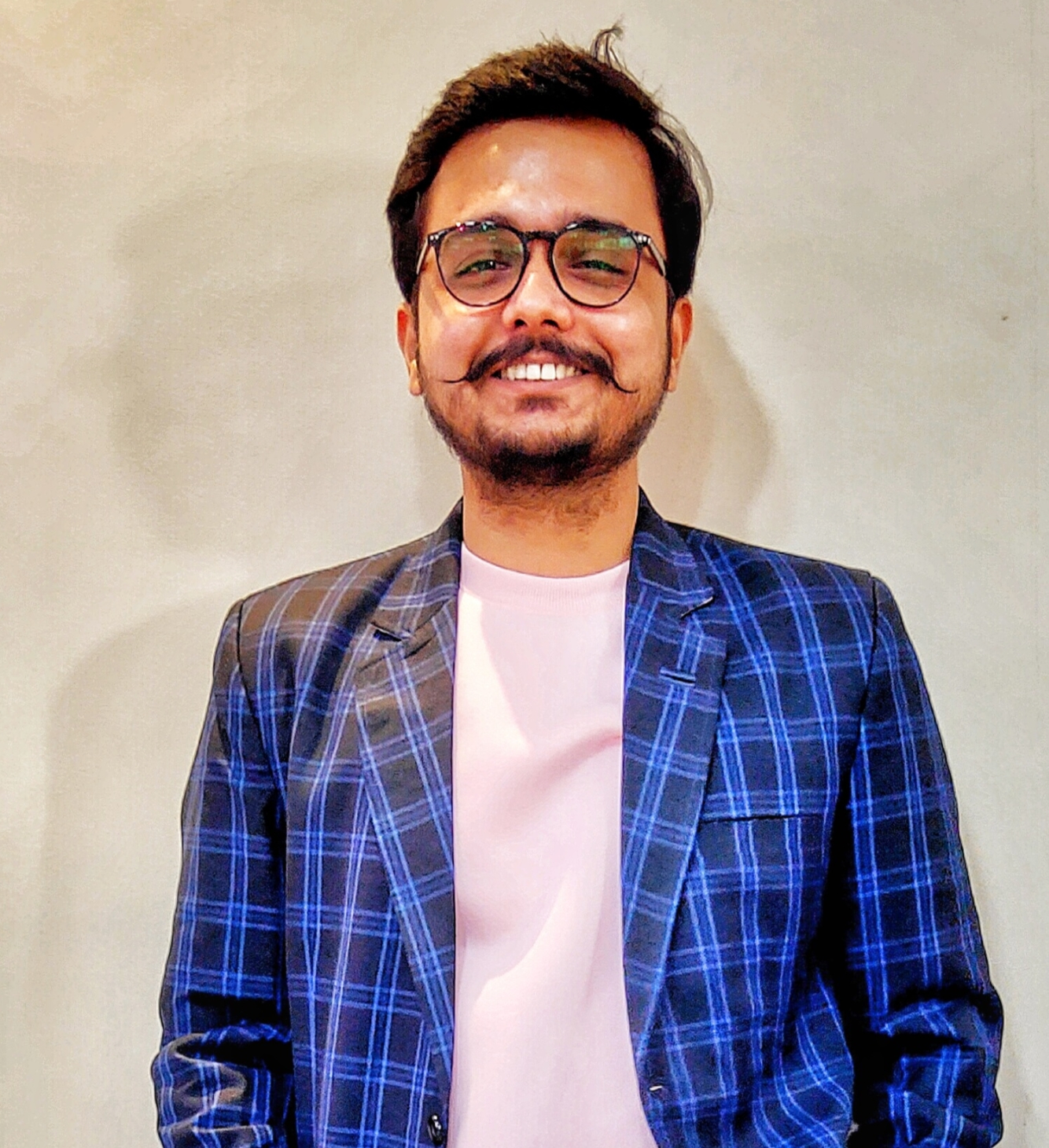
Akhilesh S Kulkarni
Proactive and results-driven sales and marketing professional with over four years of experience in SaaS, Ed Tech sales, and IT solutions. Demonstrated expertise in outbound prospecting, lead generation, and cold calling, particularly within the APAC & ANZ region. Strong command over English communication, with a proven track record of exceeding targets and driving revenue growth. Adept at building and nurturing relationships, creating persuasive email campaigns, and collaborating with internal and external teams.
- Role
Senior GTM Engineer | Revenue Ops & Partnerships Specialist
- Years of Experience
4.7 years
Skillsets
- account expansion
- Sales playbook
- revenue forecasting
- Retention strategy
- Product Adoption
- Make.com
- LinkedIn Sales Navigator
- LeadSquared
- La growth machine
- go-to-market
- Customer Onboarding
- Outreach - 2 Years
- Revenue Operations
- Process Automation
- pipeline management
- Pipedrive
- n8n
- Intercom
- Brevo
- Apollo.io
- Account mapping
- Salesforce - 2 Years
Vetted For
- Roles & Skills
- Results
- Details
 Account Manager (AU)AI Screening
- 73%

- Skills assessed :Crisis Management, cross selling, technical profeciency, Upselling, account servicing, Client Relationship Building, Client Relationship Management, Communication Skills, Cross-functional collaboration, Account Management, Project Management
- Score: 66/90
Professional Summary
- Mar, 2025 - Present1 yr 2 months
Senior GTM Engineer | Revenue Ops & Partnerships Specialist
Tyto Software - Aug, 2023 - Aug, 20241 yr
Business Development Specialist
Brevo & Pushowl - Sep, 2022 - Jul, 2023 10 months
Business Development Executive
Mindtickle - Jul, 2020 - Jan, 20221 yr 6 months
Sales and Marketing Specialist
Geneka Technologies - Jan, 2022 - Sep, 2022 8 months
Business Development Associate
Yocket Study Abroad
Applications & Tools Known

Slack

LinkedIn Sales Navigator

Salesforce lightning

Salesforce CRM

Zoho CRM

Cognism

LeadSquared

Sendinblue

Shopify Plus
Salesforce

HubSpot
Outreach
Brevo
Work History
Senior GTM Engineer | Revenue Ops & Partnerships Specialist
Tyto SoftwareBusiness Development Specialist
Brevo & PushowlBusiness Development Executive
MindtickleBusiness Development Associate
Yocket Study AbroadSales and Marketing Specialist
Geneka TechnologiesAchievements
- Generated & Qualified 55% more leads
- Successfully delivered customer experience with 98% positive feedbacks
- Successfully organised two cultural events with 30 volunteers in University (1K crowd)
- Brought in sponsorship worth 150K for an event
Major Projects
Implant Training At Prozone Intu Properties
Education
Master of Business Administration (MBA), Marketing
MGM Institute of Management (2020)Bachelor of Commerce (B.Com)
Dr. BabaSaheb Ambedkar Marathwada University (2017)
Certifications
Brevo, 2023 certification for email marketing
Prospecting Specialist
OutreachBD & B2B Sales for Start Ups- Sales Valley
UdemyBd & b2b sales for start ups- sales valley
Prospecting specialist
Certification for email marketing
Interests
AI-interview Questions & Answers
Hi. My name is Akhilesh. I'm an MBA graduate in marketing. I have been in the industry for 4 years in the sales and marketing field. I started my career as a sales and marketing specialist in an IT consulting solution firm. Later on, I have gained experience in the B to C sector as well, but I also have 3 years of B to B experience. I have worked as an SDR and BDR at Drevo and its sister company, Pushout. I have worked in different geographies, including the US region, the ANZ or APAC region, and the Indian region too.
How have you customized your sales approach to cater to clients in different industries? I have customized my approach many times when it comes to sales. It depends on the industry I'm targeting. If I'm targeting a vertical specific to healthcare or beauty and cosmetic products, the messaging part changes. Mainly, the approach towards messaging changes, and I look out for trigger points to see how my particular product fits in. For example, I'm pitching beauty products from Trego. It comes down to how the engagement is on the particular platform, whether it's a website or an app, and how they're getting engagement with the messaging they're putting out. My messaging also comes into play, and I put in a particular trigger point that will actually resonate with the client, explaining why I'm reaching out from Breville and how Breville could be beneficial to them. That's how I change my approach from industry to industry.
To analyze a client's budget and needs, I would use the following process: First, I need to understand the client's priority, which is, how urgent is the need. I have to determine if the priority is on a short timeline. I then need to assess how much they are willing to spend. This information gives me leverage to understand what services are feasible within their budget. I can then provide them with the right services that fit their needs at the moment. If future needs arise, I can use this information to provide services accordingly. For now, we can fit the services into the budget and move forward. This process will give me a good understanding of the client's vision and how we can proceed.
So this is quite an interesting question. So the negotiation skills for me, I have an example. I was walking into a B to C setup. There it was. The client was very interested. I'm so sorry. The client was very interested in actually onboarding with our services. But the reason they weren't actually getting onboarded was that we weren't offering a particular service, which was creating applications for their study abroad plans. Because we weren't providing hands-on application services. But then, after having a word with management and my manager, we came to a conclusion that we could give him a service where we could help him curate applications from the base by writing SOPs and all that sort of stuff. But the only catch was that he had to pay a certain amount on the same day if he wanted to avail the services. There were two key things that came up: creating urgency and making sure we were providing the services only to the specific client who was demanding them. So that created more towards building a relationship and building a long-term relationship so that they could give us a reference to their peers and others, making their own circle, so we could get more clients out of it. So that was a win-win situation for the client as well as for the company.
So there was an example of creating an upsell. I was walking into an IT solution setup where an account was already onboarded with us. However, I was having a back-and-forth call with them due to a very concerning situation. The website design they were looking for wasn't delivered or up to mark after a couple of months. They were not satisfied with that. That was a concern to them because it wasn't appealing in their own eyes. So I turned this particular concern into an opportunity because at that time, I was handling the account only for different services. But this came about because I built a rapport with that particular person. He shared with me that he wasn't actually happy with the website because he was exploring other websites to see how they looked. And after looking at the website, he wasn't that happy. So I came to a conclusion that we could move forward in this situation and give them a better design because it was like the design was created with some other company. He wasn't satisfied with that, and the entire project was given to us as a company of Genica Technologies. We actually brought that project into the streamlining process and made it live. That was the particular reason because two companies worked on a particular project and the client wasn't satisfied. So we actually revamped that, and the upselling opportunity came after that because it was an initial conversation we did. I told them that we could change their design without any cost. But later on, we signed an annual monthly contract, an AMC with them. That actually was an upselling for me. Before, AMC was not signed with them, and AMC was very low. After that, we signed an AMC and also gave them a particular renewal policy with their particular domain and also the particular server. We also provided them a server too. So that was an upselling opportunity for me. Providing them with a certain service, which was on the basis of creating a relationship, opened up a door for me to actually upsell and retain that client.
So sales methodology, I find very easy to follow the bank method or a CHAMP method when you are actually qualifying. Even the MEDDIC method is quite useful when you're doing the discovery calls or demo calls in the AU region. But speaking from my own experience, I have found that qualified leads are obtained over the CHAMP methodology, which is challenges, authority, monetary, and priority. That actually is very easy for me to pitch in and pivot around the conversation that I'm having on an initial call with them. So it opens up the opportunity for me to understand even more and what exactly I have to ask when you are qualifying the particular customer. So it's very easy for me to follow this method, and it opens up a lot of doors to understand the particular client.
It's been a matter of preparing your client report that the lines with senior elevation expectations provide. It's not an answer. So, client report, I haven't been prepared, to be honest, with the client report because everything was optimized, and we used to get the report on the dashboard of our CRM. Specifically, for clients, we didn't have any chance. But when it comes to upselling or maintaining my own data, I used to follow an Excel sheet. I would write down the account names, what I'm targeting, what I'm in touch with. Where the activity is with that particular account, and also what kind of communication I'm having with them and at what stage that particular account is. So that kind of report, I used to maintain for my own sake, and I would bring that up in weekly stand-ups that we were having with the leadership. This gave me, like, a clear insight into what exactly is happening with my accounts or, basically, with my work. It was easy for me to deliver that information whenever the leadership asked about a certain account or certain things. It was easy for me to bring that up.
So I have actually in terms of change in sales strategy, it came down to after doing sales, like, starting the sales before. So I was, like, founding BDR for the particular region in India for Prego. So when I started, the entire market was, like, they wanted to enter the Indian market before. So they were not, you know, having an idea of how exactly the market would work, how the competitors were working. So after getting my hands dirty, started doing the cold calling, started doing the outreach, the entire process, then I came to know certain things. And after the market research was done, like, understanding the market, like, in this particular market space or this particular vertical space, these prominent players are there and also where exactly our services stand. So that gave me an insight. So for example, in the current Indian market, it is mainly 40% of the communications into the marketing field are mainly related towards social media and messaging, which is mainly focused on WhatsApp. So these are the trending things going on in the Indian market. So we weren't into that particular space. They were mainly focusing on the emailing part. So they were actually quite, like, confident that we would enter the market and people would go for the email itself. They were actually building an entire 360-degree CRM suite. So that came in handy. And going into the pitch, instead of just saying, an email marketing platform or the particular marketing platform, which is primarily focused on the emailing side. We actually turned it towards the geography and because of the geography, we turned it towards, like, we were actually the platform that can provide you, like, majority of the channels, which includes WhatsApp, also push notification, and wallet system to actually gain the loyalty points for your particular clients and certain other stuff. So that was one of the examples of how exactly the market data actually changed my sales strategy.
So for example, when I'm calling a particular client, if the client says the pain area is towards the engagement part, but they are not able to get the engagement. They are using channels like email. They are using channels like push notifications and also other notifications, which are related to messaging, such as WhatsApp or SMS, certain things like that. So the pain area for me to address is, I have addressed, like okay. You are using all the channels. That is understood. So how exactly you're doing this and what is the primary focus channel for you? So one, the answer I would care about is, like, they are mainly focused towards doing the SMS part. So the majority of SMSes, they are actually engaging with that particular client on clients with SMS part. And later on, the second channel, they prioritize email because of the mostly transactional email, such as change of password, order delivery, and certain things like that. So that actually triggered a solution in my mind, like how exactly we could do it. So for that, for more understanding, I actually dug deep into the conversation and asked what is the exact open rate for your images and how exactly your SMS is performing for you, SMS campaign. So the numbers that they showed was significantly lower than that. They were, like, just spraying and praying kind of method that they were using with their campaigns. So they were just shooting in the dark and expecting something in return. So that doesn't actually work in the particular field when you're doing the marketing part. So that is where the solution for us came in. So we showed up because, like, we are actually having a 98% deliverability rate, with also providing SMS, WhatsApp, and we also provide a customer success manager. So they could actually help you to understand how exactly your campaign should be curated around the areas that you are focusing on. So you will be at a very good place with the numbers that you are actually expecting from your campaigns. So that was the solution that I provided to them because they were actually struggling to understand how exactly the campaigns are going to perform and what kind of campaigns they need to change. So by providing a CSM in that particular case, with the particular solution, so that was a trigger point for them to actually move in the right direction. And then the meeting happened, and the demo happened, and then they onboarded.
So prioritization would come down to, what actually obviously, how exactly I could prioritize the task. So by being, right, if there is another recent client issue, I have to address that first because the client would come first for me. And then with the deadline, I have to be on top of that and meet the sales report, on the timeline since day 1. If the situation comes up with the sales report, it shouldn't be the case. I have to prioritize my entire work schedule for the week. And if certain things come up like this, an urgent client meeting, I have to be on that. I have to prioritize accordingly, manage my calendars, and work accordingly.
The B to B sales experience has been a roller coaster, to be honest, because it is difficult to actually sell our digital service to a digital customer because they are already in a space where they have a particular tool or they are completely unaware and won't require anything. So, to understand how exactly you could fit in and meet that requirement or provide a solution or value, that's the best you can do. So, you have to do your research, you have to do your homework. That's the main priority for any sales folks in B to B sales.