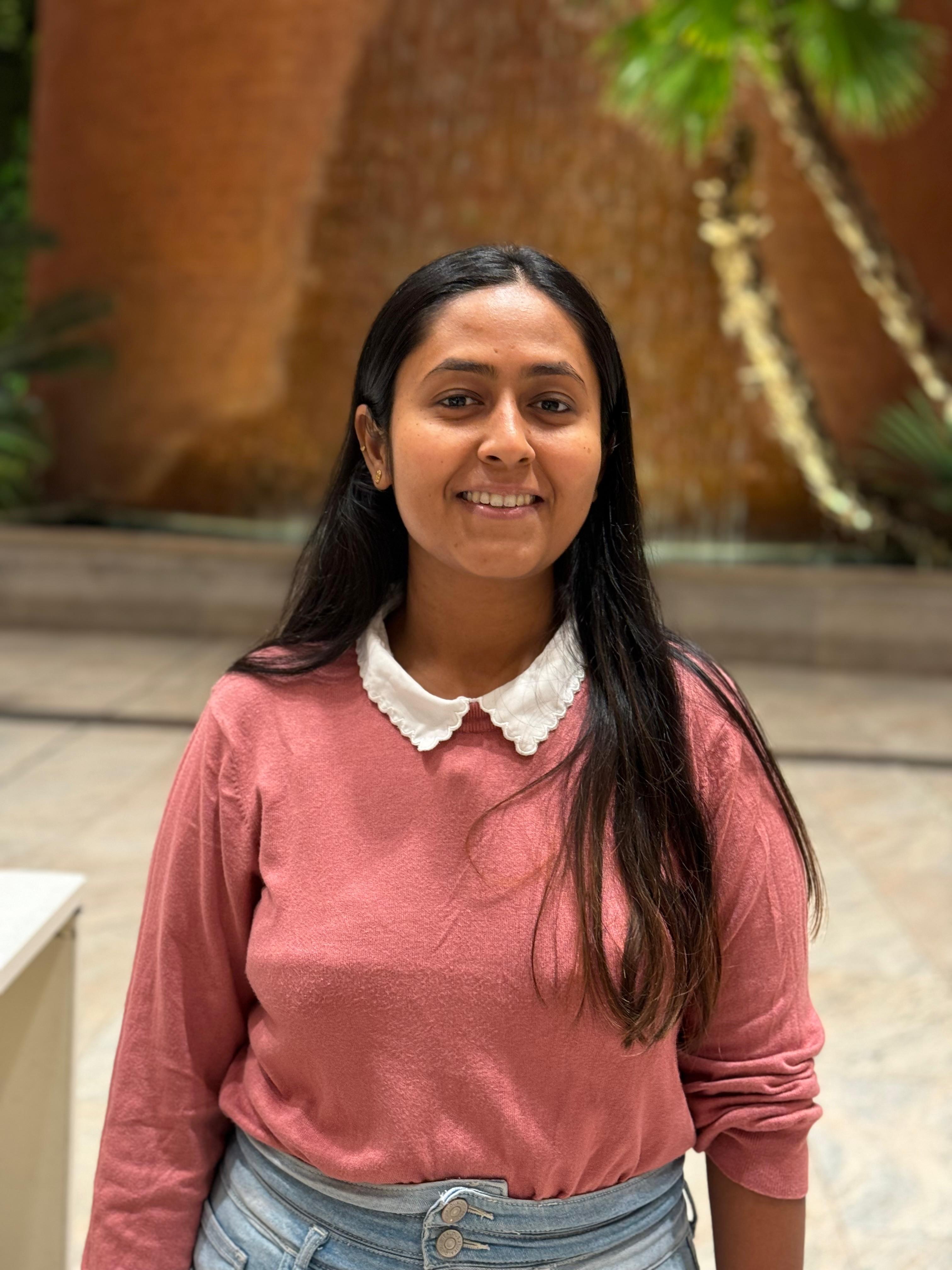
profile-pic
Vetted Talent

Swati Kumari

Vetted Talent

Results-driven Product Manager with expertise in software development and a strong commitment to user-centric product

innovations. Proficient in overseeing all aspects of the product lifecycle, I excel at turning initial concepts into impactful products

aligned with user needs. Proven track record in significantly boosting user engagement, improving customer experiences, and

driving growth in both B2B and B2C markets, contributing to increased customer satisfaction and business success.

  • Role

    Product Manager

  • Years of Experience

    6.2 years

  • Professional Portfolio

    View here

Skillsets

  • Market Research - 4.98 Years
  • Asana
  • Jira
  • Miro
  • Figma
  • SQL
  • Restful APIs
  • Postman
  • ML
  • Git
  • Git
  • Asana
  • API Testing
  • Product Lifecycle - 5 Years
  • B2B - 5 Years
  • Product Strategy - 4 Years
  • Product Management - 5 Years
  • Agile - 5 Years
  • testing - 5 Years
  • Mathematics - 5 Years
  • AI - 2 Years
  • Backend - 3 Years
  • Documentation - 5 Years
  • Stakeholder Management - 4 Years
  • Git - 3 Years
  • SQL - 5 Years
  • Figma - 4 Years
  • Miro - 4 Years
  • Jira - 5 Years
  • User Experience - 3 Years
  • Software Development - 3 Years

Vetted For

6Skills
  • Roles & Skills
  • Results
  • Details
  • icon-skill_image
    Senior Product ManagerAI Screening
  • 83%
    icon-arrow-down
  • Skills assessed :Product Lifecycle, Product Management, B2B, SDLC, UI/UX, MBA
  • Score: 75/90

Professional Summary

6.2Years
  • Nov, 2023 - Present2 yr 2 months

    Product Manager

    Cognome
  • Dec, 2022 - Nov, 2023 11 months

    Associate Product Manager

    Crio.Do
  • Jul, 2022 - Dec, 2022 5 months

    Associate Product Manager

    Product People GmbH
  • Dec, 2019 - Jul, 20222 yr 7 months

    Software Developer

    Goldman Sachs

Applications & Tools Known

  • icon-tool

    Asana

  • icon-tool

    Miro

  • icon-tool

    Jira

  • icon-tool

    Figma

  • icon-tool

    MySQL

  • icon-tool

    Git

  • icon-tool

    Postman

Work History

6.2Years

Product Manager

Cognome
Nov, 2023 - Present2 yr 2 months
    Overseeing comprehensive product lifecycle management for two innovative offerings: 'Search' tool and AI based 'NLP' Search tool. Effectively launched and customized features to meet the unique demands of 3+ B2B clients within 1 year. Acquired proficiency in User Research, Product Strategy, Roadmapping, and Agile Team Leadership, streamlining requirement collection and optimizing UX design processes. Successfully integrated third-party APIs, ensuring secure access to patient data for research and healthcare institutions through the IRB Manager platform. Led and coordinated a diverse cross-functional team of over 8 professionals through all stages of development, design, deployment, and testing. Worked closely with developers and stakeholders to define, test, and implement RESTful APIs, maintaining adherence to current industry standards. Conducted extensive product discovery sessions and collected feedback from customers to craft tailor-made solutions.

Associate Product Manager

Crio.Do
Dec, 2022 - Nov, 2023 11 months
    Acted as product owner for two essential offerings DSA + Backend catering to the diverse needs of both B2B and B2C segments. Achieved remarkable user growth, scaling by 6x per month over an impressive 10-month period, with weekly revenue soaring to 2 Cr INR. Oversaw user experience comprehensively from post-sales onboarding through ongoing engagement and referral strategies. Launched innovative product initiatives, including AI-based plagiarism checks for code and grading feature enhancements across development sprints. Boosted DSA interview success rates significantly, increasing from 30% to 50% within a swift 6-month timeframe. Performed in-depth market research, competitor analysis, and produced comprehensive PRDs.

Associate Product Manager

Product People GmbH
Jul, 2022 - Dec, 2022 5 months
    Worked collaboratively with two clients while assisting senior Product Managers on essential tasks for the successful launch of new product features. Served as a Technical PM for 'Cognigy', a conversational AI platform, where I worked on significantly enhancing logging functionality and UI design. Oversaw client engagement and project management for 'Douglas', a major European e-commerce beauty brand generating over $2 billion in revenue. Played a vital role in establishing key roadmap elements for future development quarters. Designed user flows for the web application to optimize functionality and enhance UI/UX pathways, facilitating increased purchase conversions. Engaged in cross-disciplinary stakeholder management, including interactions with C-Level executives, development teams, design professionals, and business analysts.

Software Developer

Goldman Sachs
Dec, 2019 - Jul, 20222 yr 7 months
    Played an integral role in backend project contributions as a member of the user platform engineering team, enhancing internal platforms. Engineered an automation packaging application within 2 months, enabling the creation of .msi files and decreasing manual workload by 18% for the support team. Designed, implemented, and tested RESTful APIs for internal tools, directly contributing to enhanced system scalability and performance. Extensively applied Postman and Swagger for comprehensive API testing, debugging, and documentation processes. Developed an automation system for scripts facilitating machine deployments, reducing manual intervention time significantly by 10x.

Achievements

  • Product Management Mentor, Topmate
  • eTech Mentor, IIE and Goldman Sachs
  • Visa Women Code UR Way Hackathon, Visa Achieved All India Rank 1 in Coding Hackathon conducted for girls in colleges across India

Major Projects

2Projects

Deconstructing User Psychology - Duolingo

    Duolingo is a free and interactive platform to learn a language. It uses several creative techniques like gamification to personalise a user's learning journey.

PRD for Improving Customer Service Experience - Slice

    Slice is a credit card alternative which enables users to split bills to be paid into months.

Education

  • Int. M.Sc. Applied Mathematics

    IIT Roorkee (2019)
  • Integrated Masters - Applied Mathematics

    IIT Roorkee (2019)

Certifications

  • Product management certification, upraised

Interests

  • Travelling
  • Trekking
  • Singing
  • AI-interview Questions & Answers

    Hey. So I am Swati. I am a product manager working at Cognom, which is a b to b health tech Saas startup based out of the US, and I work remotely from India. And I'm the lead product manager for the development team. And I interact with the clients based in the US and translate their requirements and complaints and requirements both into user stories and tasks for a dev team to work on. And once it's done, we shift that in following all the agile practices to our clients. So that's about my current role. Um, regarding my background, I am have been a product manager.

    What are some of the metrics you, um, you are tracked on for success in your role? What are some of the metrics you are tracked on for success in your role as a PM? Got it. So, um, I work with a product which is used by b to b clients in a SaaS startup structure. So we use a couple of metrics. Um, some of the quantitative metrics that we use is based out of heap. Io. It's similar to Mixpanel where we basically monitor and observe the uses of the different endpoints that we have exposed to our clients and how is it being utilized if a particular feature has been launched and if there is a dip or a spike in the usage. That's what we track using heap. Io as a quantitative, um, parameters. And for a qualitative measurements, we take help of the feedback that we get from researchers and clients who use the search tool and also in terms of complaints and things that they can bugs, etcetera, that they can report via, uh, like, an information pop up button at the top of each page, which helps them to reach out directly to us. So yeah.

    Do you get to meet the customers and is your role customer facing? Give an example of difficult customer or situation you managed. Okay, so I'll answer the first part of the question. Do I get to meet the customers and is the role customer facing? Yes. I don't meet the customers in person. The customers that I am working with right now, the clients are actually US based health tech SAS users in research institutes and hospitals. But I do get to meet them online and sit with them, understand their concerns, queries, and their ease of using the product and how can we improve their user experience. So yes, I do get to sit and understand the customer requirements. Once we have done a release, I sit down to get feedback on how a particular feature is performing. So that's where I interact with the customers. Give an example of difficult customer or a situation you managed. So example particularly would be of a time when a customer was very adamant on certain feature that they needed. But usually that what happens in product is that they might be asking for something else, like the customers might be asking for something else. But the real use case of the requirement might be a whole another thing. So that's where I come into picture where I don't exactly always say yes, yes to the customer. I sort of align with why exactly do they want that feature and I try to dig deep into the why. So one such requirement was when we were asked to build a feature with like say immediate effect to help the customers access certain data much more easily. But we were already working on something which would address this feature in a much more stable and elegant way eventually. But it would take us like a month or more, basically two more sprints of two weeks each to reach to that particular solution. So the way I managed it was that explained it pretty properly about what's coming up and if the requirement is that urgent or if we can wait for like two sprints or one month to get the product feature live and which would in turn address their problem as well. So it wasn't a difficult situation but it was definitely some form of delegation and interaction needed to explain our side of the things as in the development and the product side of things to the customer side of things.

    Describe the most complex product you manage and explain why it was challenging. So I will talk about the product that I'm working on right now. So I'm working on a search tool, as I mentioned in the first question, that is used by hospitals and researchers, uh, doctors and researchers and hospitals. So, uh, when I talk about, uh, this search tool, it the first search tool is actually similar interface of that of, like, a Google search, when which a user can search for something and a query would happen on a structured database. But the interesting problem came up when the doctors requested us to build a feature or a product that could work on searching through unstructured databases, which is, say, like, text scripts and other sort of notes which doctors write to the patients when they visit. So it was complex, uh, is to how would we implement this search on a nonstructured database, um, in just in terms of technically challenging, uh, and implementation brainstorming how you would go about it. Secondly, there was there was a lot of technical and, uh, I would say, medical jargon involved, which, uh, I did pick up pretty quickly and, uh, um, ramped up and synced up and made sure that all the different stakeholders from the business side of the team, the doctors, and, um, the development team, everybody was synced, aligned on how we would go about solving for this particular unstructured, uh, data search problem. And we are actually have rolled out a version 1, and our solution is basically a natural language processing based search solution, which works on top of these unstructured databases and helps the users, uh, the users being the doctors, search through different notes and prescriptions which were written and look for patients that fulfill certain of the research criteria. So it has definitely been, uh, challenging to, uh, you know, understand exactly what is needed and build something from scratch, but it has also been equally fun and interesting.

    What does your average day look like as a PM? Who are the key stakeholders you have to work with in your role? Okay. So for me, as a product manager, my day starts with a stand up call with my dev team, where I'm mostly an observer and making sure that I'm a part of the meeting to ensure there's no blockers. If there is any functional requirements or any, uh, nonfunctional requirements that I would need to clarify, or they would need an alignment on. So that's how usually it starts. Uh, throughout the day, I go through any messages and feedbacks and responses that we have had on any new feature launches and, uh, the releases that we have done across different clients that we work with. And then align those requirements into the backlog if it's not already something that we have put in the pipeline. Uh, the some parts of the day, uh, do go into brainstorming about how would we design a particular feature, how would we put that in the backlog, how would it look like in terms of user flow, like a like a wireframe. I sit with the designers and do that. And there is also an aspect of testing our feature that has been built, which I go ahead and do a product testing, and I also do sometimes technical testing with the queue analysts. Now coming to the key stakeholders that I work with, I heavily work with the head of product, um, the the CEO and the client representatives from the management side of things to understand um, the high level requirements from there. And I also interact on a day to day basis with developers, designers, QA, DevOps team in order to get the work done and product shipped.

    Who demonstrated success defining and launching excellent products or custom solutions explained in detail. So, um, if I talk about demonstrating success in defining and launching excellent products, I would say, yes. I have. Um, I would like to, uh, cite some show shine some light on one of the products that I built sort of from scratch at one of my previous companies called, uh, cryo.do. And it's an EdTech platform which helps learners upscale on certain tech stacks and career trajectory. So I was responsible for the back end track and the data structures track. And in data structures, you actually usually do a little bit of competitive coding, and you learn about skills and techniques to, you know, upscale yourself in how to code better. So there were a lot of coding questions which the users would do pretty well on the r platform and cryo's platform, but would not do so significantly well when they would go out for actual company interviews and take those tests. So one thing that we got from qualitative feedback and a little bit of insight on digging up ourselves was that the users were, some of them, definitely, were copying and cheating answers of GPT or Internet and then pasting those into the R code editors and then getting through our platform. But that's not how things work when you are actually giving a company interview a test. So the problem was identified. Um, it was defined as how do we stop this cheating and copy pasting of answers. And the way we decided to build a product or a feature solved for this was to do extensive plagiarism checks on our platform. So we didn't just launch, uh, like, a simple plagiarism check. We had to do a lot of internal testing to make sure that our product was good to be used by students. So if I shine a little bit more light on it in detail, the way we went about it was that because the coding questions are divided into, you know, easy, medium, hard difficulty in the sense that some would be pretty obvious straightforward, brute force solutions, and some would be could be possibly done in multiple approaches and ways. So there were some questions that even though the students don't want to copy, let's say it's in how do you calculate sum of two numbers, you would do the same solution even if you were trying to build it entirely differently. So those sort of questions had to be checked for plagiarism check very differently than the ones which were to be checked much more in-depth and detailed. So we did the segregation of questions. We first tested our different solutions internally with the dev team, setting different thresholds for plagiarism on these different categories of questions. And, uh, once launched, we did see a good response in from the students who actually said that they were not able to do it, which meant that, uh, they are facing challenges and difficulties, uh, you know, solving questions on our platform as well. And post that, we went ahead, solved for how to help them upskill better. And that's, uh, one of the defining products that I've built at cryo.

    Have you previously worked as a QA or software engineer? If yes, how has this experience helped you understand SDLC, and how can you contribute to a development team? So to answer this, uh, yes. I have previously worked as a software developer, a back end developer for initial close to 3 years of my career, um, at Goldman Sachs. And, um, the experience that I gained over there working on industry projects and building solutions for our internal users and customers has actually helped me understand the pain points and requirements from developers' perspective very clearly. So it's obviously, there is how the requirements get translated, how open ended do we want the, you know, the requirements to be so that the the dev team can actually brainstorm the best way to solve a problem. And, also, uh, it has helped me in understanding genuine timelines and estimates what a certain like like an implementation would take. So, uh, it helps me upscale and, um, you know, get ramp up very quickly on the requirements from a company or, you know, like a like a team's perspective, And I'm very quickly able to translate these requirements from the for the development team, and I'm able to understand their concerns better. And, hence, um, I can perform the function of a product manager, especially in a technical setting in a much more better way. Even in my current role, I have been working as a tester myself, a product tester, a little bit of technical testing as well because it's a startup. We are a lean team, and that's the requirement, um, of the situation. So, uh, yes, it has helped me, uh, be a better product manager.

    Do you have experience in UX or UI design? If yes, can you share how you've applied these skills with an example? Okay. So I, um, did upscale myself on how to understand the nuances of a design designing a particular feature or button requirement or, like, application both at a mobile and a desktop level, but it was definitely a personal endeavor. In my professional career, I didn't exactly had to work as a designer. But when I moved into product, um, I actively work with designers to align on what are the best practices and the correct ways in which certain things have to be designed. So that's something that I definitely picked up on my own independently through my own studies and also by working heavily with the design team here. So to the follow-up question, if yes, can you share how you've applied these skills with an example? So to give you an example of, uh, like, somewhere where I have actually put in my design thinking hat on, it has to be at, uh, my current firm itself at Cogno. As I mentioned in some question earlier that we were working on building this NLP based search tool, and this design of how the layout of this interaction of the user with the tool would look like, uh, was something that was heavily user centric. We had already been given this feedback that it's difficult to search through unstructured database. So our constant focus was, yes, that we want to make it technically super sound, uh, in terms of the search results being accurate. But the second most important thing that we were focusing on was that the design is very intuitive, easy for the doctors and researchers, people who are not that technically advanced, to also be used with a lot of ease. So, yeah, that's, uh, the place where I have shown an example of my UI skills. Uh, it would be super helpful if I could share some screenshots, but as there's restriction in this call, this is the max I can tell you.

    Types of products you managed with a short description about them. So, uh, throughout my product management career, I have worked and interacted with products across different spaces from both b2b and b2c. Um, my current experience is working on a product which is in the health tech space. It's a b2b SaaS offering. So that's a search tool which is used by developer sorry, by researchers and doctors at hospital. So understanding of technical sorry, medical jargon along with technical know how of how a search works and how we can use NLP techniques, AI techniques, and LLM to improve our search speeds and quality of the search has been something that I have been working on at present. Moving to the second product that I worked on at my previous experience at cryo.do was with an edge tech platform. So the product itself was a series of courses which were offered to learners to help them upskill in their career trajectory, usually in the technical domain. So for back end, QA testing, etcetera, I worked with I worked managing end to end life cycle of a learner entering our sales funnel, um, getting to purchase our product, utilizing the product across a couple of months of learning journey, and till the end, uh, when they got placed. Uh, or we would offer some placement support to help them land a job. So this was the product, uh, which I have exposure on. Apart from this, I have worked as a product manager for an ecommerce platform called Douglas. It's based in Europe. It's, like, a very fine brand for perfumes and other sort of products. And, uh, there, I worked with their omnichannel team to help them cross sell better in stores as well as online. So how can we basically improve the user's buying journey? Let's say if a user is at a store and they like a product and they can add to their cart directly, Or if someone is at online and has, you know, saved some products, how can they go to the store to try on those and purchase it with these? So this was another domain that I have exposure on. And finally, I have also worked with another product domain called Cognigy. The company's name is Cognigy, which is an AI chatbot con conversation tool and offering, which Cognigy gives to their clients, um, which include the names like Lufthansa, etcetera, which help them build advanced, informed, and smarter chatbots to interact with the users and address their concerns better. So in terms of product management, effectively, I have looked at these different domains. Apart from that, also, when I would work as a developer, I did dabble a little bit in product management. And at that time, I was working as, um, a developer learning about product management in, um, I would say, Fintech products at Goldman, uh, which were used internally by the team. So, yeah, that's about it.