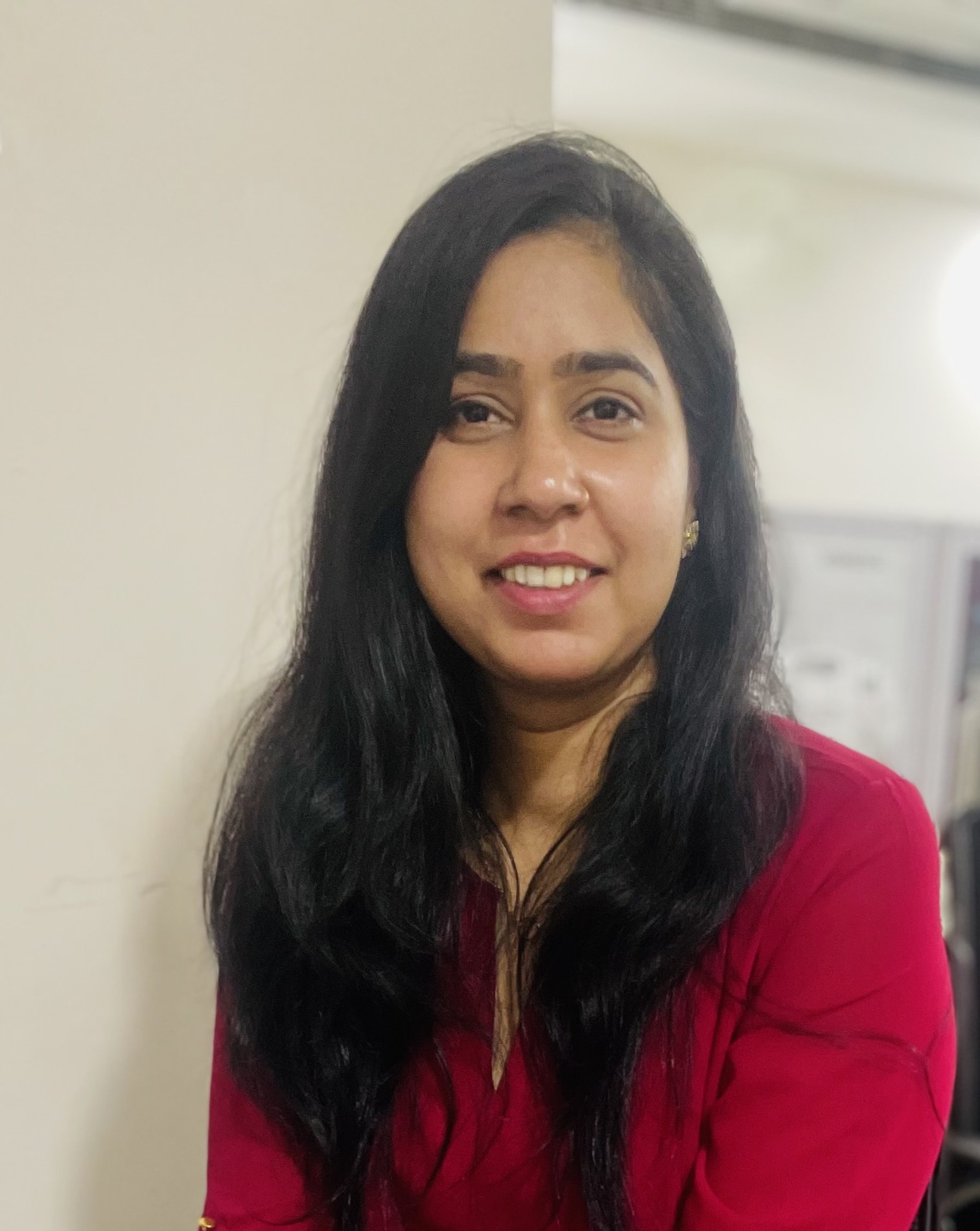
Tuba Bano
I’m a Direct Response Copywriter and Social Media Specialist with 6+ years of experience creating engaging brand and marketing content across digital platforms. I specialize in writing social-first campaigns, video ad scripts, and marketing copy that strengthens brand identity, drives engagement, and supports lead generation.
Most recently, I worked as an Executive Copywriter at ScaleX, where I collaborated with clients and performance marketing teams to develop strategic content plans and high-impact copy for social media campaigns and digital ads. I also managed major client projects independently, overseeing the content process from concept development to execution.
Previously, I worked as a Senior Content Writer & Strategist at Aptly Technology Corporation, collaborating directly with the CEO to deliver brand-aligned marketing content. At CedCoss Technologies, I contributed to B2B content marketing campaigns using SEO strategies and tools like Microsoft 365 Copilot to improve content performance.
I hold a Master’s degree in Journalism and Mass Communication from Amity University, Lucknow, and have experience writing across formats including social media campaigns, ad copy, video scripts, blogs, and editorial content.
I’m passionate about digital storytelling, brand voice development, and creating content that connects brands with audiences in meaningful ways.
- Role
Executive Copywriter
- Years of Experience
8.2 years
Skillsets
- Content Strategy
- Google Workspace
- Microsoft Outlook
- SEMrush
- Social Media Marketing
- Wordpress
- Ai writing
- Brand Voice
- Content Writing
- Copywriting
- SEO
- Video scriptwriting
Professional Summary
- Jan, 2024 - Jan, 20251 yr
Executive Copywriter
ScaleX Media - Jan, 2023 - Jan, 20241 yr
Senior Content Writer
Aptly Tech - Jan, 2020 - Jan, 20233 yr
Senior Content Writer
dCoss Technologies - Jan, 2013 - Jan, 20141 yr
Web Content Writer
Elite Technologies - Jan, 2017 - Jan, 20192 yr
Web Content Writer
RewardPay
Applications & Tools Known

WordPress

SaaS

Writesonic

Google Chrome

MS-Excel
PowerPoint
Adobe Photoshop
CorelDraw
InDesign

Work History
Executive Copywriter
ScaleX MediaSenior Content Writer
Aptly TechSenior Content Writer
dCoss TechnologiesWeb Content Writer
RewardPayWeb Content Writer
Elite TechnologiesAchievements
- Participated in Student Fellowship Program Organized by Pollinate Energy (Australian Social Business)
- Participated in Via Media: Abhirachna Creative Writing Contest Organized by Amity School of Communication, Lucknow
- Participated in Via Media: Radio Workshop Organized by Amity school of Communication, Lucknow
Education
Masters in Mass Communication & Journalism
Amity University, Lucknow (2017)Bachelor of Commerce
Isabella Thoburn College, Lucknow (2013)
Interests
A Few Screening Questions Before You Begin
I'm an experienced content writer by profession, and I'm also a copywriter. I've had 3 years of experience in copywriting at my previous company, which was a software development company. There, I did copywriting alongside content writing and technical writing. So, I've worked in 4 companies, and I'm currently looking for a job switch. That's why I'm here. I've had more than 6.5 years of experience in content writing, technical writing, copywriting, and social media marketing.
Describe a project where you effectively utilize. Okay, so recently I was in an IT company with a cloud-based system where I was asked to use Microsoft Office, and we used to use SharePoint and Word documents and spreadsheets. We used to do work and create content. And when I talk about the Google Suite, I have used Google Suite for almost three plus years in a previous software development company. We used Google Drive and there we used Google Docs, Google spreadsheets, and everything - presentations, everything - for creating blogs and technical documentation. Google Docs were used for creating content, and we used to store all data in a drive. We were provided with an official Google Suite account, and there we used to store all the data. And when we had to publish a blog or technical documentation for the website, I used WordPress. But for content creation and management, I have used both of these, and mostly Google Suite. So this is what I have used.
Okay, so the tools I have used for keyword research are Ubersuggest, Answer the Public, Semrush, and Google Analytics, a little bit of Google Analytics. Most importantly, I used to use Google Suggest and Google Search. I used Google Search firstly, and then I looked for the prompts and queries, and then I took those queries and searched for volume and all on Google Suggest. Likewise, I used to do it on Semrush. There are many tools on Semrush, including the keyword overview tool and the keyword idea tool, among everything else. So, I used to search for keywords on Google Suggest as well. And for query days when I wanted something with variations, I used Answer the Public. I had used Answer the Public as well for keyword idea generation. I had a generic keyword, and accordingly, I took that keyword and went to Answer the Public, and then I entered that keyword, and according to it showed a list of keywords with question-based keywords. There are multiple types of it, and it provided multiple types of keyword ideas. These are the three most used tools, or four most used tools, that I used for keyword research.
How do you balance the creative aspects of copywriting with the technical demands of SEO optimization? Creative aspects of copywriting, the technical demands of SEO are okay. So I always ensure that when I write technical documentation or creative writing, I ensure that content writing or writing anything is summing up something in the most simple and easy-to-understand, but yet engaging terms. So what I used to do when I wrote technical documentation was using technical terms and all in quantity in copywriting. I have done such copywriting. It's like using technical terms with easy-to-understand terms so that both the technical terms are highlighted and are there, and it gets searched in the search engine and the creativity is also there. For example, for a SaaS-based product called integration service pro, an integration service to a marketplace, you can say Shopify, Google Shopping integration. So Shopify, Myntra integration is a goal is a keyword. Now to get it SEO-wise optimized, what I will add is phrases before or after, such as any way. If I said go Shopify, go Myntra integration, please buy Shopify, Myntra integration or simplify selling with Shopify, Myntra integration, something like that. So this is how I balance the creativity and the technical demand of SEO.
So initially, I started with the website blog writing. It took a lot for me to understand what kind of blogs and how they're structured, because I was asked to promote products through blogs. With time, I understood the format of the blog. It takes time when it comes to blog writing for copywriting purposes. For sales purposes, it takes time, around 2 to 4 days to understand the topic and then come up with useful and engaging work. When it comes to writing any social media post, it hardly takes one day or, if it's more technical, more research is required, so I would say 1.5 days, but not more than that. But, yes, if it's a simple social media post, for example, I just have to update something regarding the workshop. So, it won't take much time, and as for me, I can write it in 2 to 3 hours. That's it. Depending on the knowledge I have. This is how it is. And if it comes to video and video ads, and also, a minimum of 2, a maximum of 2 days of time is needed if I'm not proficient enough or if I don't regularly write video ads. If I have the proficiency, if I'm used to writing video ads regularly, then it will take hardly one day or half a day. That's it. Otherwise, this is how I've taken time to write different styles. Yeah. Also, when there's a new platform like reels, and also for reels, it doesn't take much time. If you're proficient enough with the genre you're writing for, then it won't take, for example, if I have a food blog and I know everything related to food blogs, then it won't take me more than 2 hours to write the caption and come up with the video content. Editing the reel is a different part. But, yes, with the content part, it doesn't take much time. If I'm proficient with the genre, with the topic, and I have the knowledge also, this is how I would explain the time I've adopted for writing different digital platforms.
How do you measure the conversion rate of your content? What step do you take to open? Okay. So mostly I usually, I've written blogs and social media posts. So now, when I talk about vlogs, blogs, it's to know that if they have ranking or not, I've used Semrush. Semrush is the best tool for measuring the content conversion rate. The conversion rate of the content can also be measured from the comments of any blog, from the comments received or like that. Or, I look at how it's working, if I talk about the ranking for in terms of ranking for sprints, Ahrefs is the best one. It tells us what keyword my blog is ranking and what keyword it is not. Like, if I talk about the conversion rate of this, Google Analytics shows what the bounce rate, what the impression rate, everything. It talks about everything. So this is how it goes. And when I talk about the social media, social media platforms, we have an analytics section from where you can get to know that, at a given page and I have posted a reel and I need to know that this reel is working, how much impression it's getting, or whatever it is. So how many followers have come from this reel and how many existing followers are there who liked my post and what are the non-followers who have liked my post but haven't followed me. All this can be seen from the analytics section. So this is how I measure the conversion rate of the content. And, yeah, comments are the best one. If you get positive comments, that means your conversion rate is successful. If you get negative comments, that means your work is not up to the mark.
What strategies do you use to create content for QA platforms in a way that drives traffic to your website? First of all, I understand the topic, and I understand why the QA is required. We usually do QA when the topic is complex or when additional information needs to be known. So, if so, I will be curious about the purpose of writing that QA. What's the purpose of writing that content? And then I'll be understanding all aspects of it. I'll jot down all the possible questions that would arise, and I'll answer them. I'll note down all the possible questions, and accordingly, I'll update. And also, I will do a search and search analytics as well. I'll go to Google, search, and look at the query. Is this query right? If I talk about cloud computing, there are a lot of things. So, what I'll do is jot down the questions and check them with the Google search. I'll understand that this is the most requested because there are many things on Google from related search to relevant queries or more search results. Google is the best way to know what people actually want to know.
This is how I have used HubSpot Marketing Services in my actual experience. If I talk about the HubSpot marketing services, I didn't get a chance to work with it. Yes, I'm open to learning about it, but I have heard about it and not used it because nobody asked me to do this. So, yes, I'm open to learning about it and working with it.
The most challenging SEO and conversion optimization project I have encountered was a project where I was assigned to revamp the technical documentation for a cloud-based product. Okay, so I was assigned to a project at my previous company, which was a software development company that used to develop SaaS-based production services. Lately, we were also focusing on cloud-based production services. I was assigned to one of the product data cloud-based products, and when I was assigned, I found that the documentation was already written, but I was tasked with revamping that technical documentation. The most challenging thing was to learn and understand the topic of cloud computing, which is vast. The most challenging thing was also to learn and understand what the project was about. This was the challenge for me. So I started reviewing the official website resources and started understanding about it. Then, step by step and section by section, I started revamping and optimizing that content and started including relevant content and relevant SEO keywords in it. This is how I tackled the obstacle of an SEO and conversion optimization project for a cloud-based product. Likewise, in my previous company, I was assigned to AI projects, and AI is a vast topic. It's challenging to decide what to include and what not to include, especially for someone who's been writing content. The content is of varied form, so it took time for me to understand. I used Google Suggest and Answer the Public to understand what queries are relevant and what queries are not. This is how I overcame the obstacle.
How would you deliver storytelling technique in content creation to strengthen brand effort? Okay, so I'll start with a question-based introduction, for example, I'll take my experience of software development at my previous company. Initially, I didn't know what SaaS-based production services were. What is B2B? I didn't even know this either. So, I learned about it, and everything made sense. But then, I was asked what's the difference between my content and someone else's. My manager explained that including storytelling technique or question-based introductions would engage customers. So, first, when incorporating storytelling in my content creation, I try to start with a question like: have you been or are you tired of this? Are you struggling to juggle between apps? When the reader reads this, it automatically builds their engagement from the start. And then, I ensure that the story's essence is not missed throughout the content. I keep adding queries in between to maintain the storytelling essence.
I utilize A/B testing for headlines and content to improve engagement and performance by writing multiple headlines for my content and multiple subheadings for my content. So that whenever one section is not up to the mark, I can use it at another one. This is how I also jot down multiple headlines and then if one is not working, if one is not up to the mark, I use the other one. I have always published blogs through WordPress. So what I used to do is jot down multiple lists of headlines. And then if one is not suitable for the WordPress, Yoast, SEO score, I used to take the other one and put it there so that okay, this one is not working, so I can use the other headline. This is how I utilize A/B testing.