Snippet
A supermarket shelf runs on a plan called a planogram, and keeping those plans correct across a chain of stores can swallow half a day per store, every week. Deepwork Labs replaced that workflow with a photograph. For founder Pratham Bhatnagar, that is part of a larger bet: retail is moving from interfaces people browse to systems they simply ask.
A 40-branch grocery chain had a weekly problem.
Its shelf layouts needed to be checked and optimised across stores, but the process started long before anyone could actually analyse a shelf. Product data had to be exported from the retailer’s systems, cleaned up, imported into another tool, and then processed.
The software worked. Getting the software ready to work was the problem.
For every store, the workflow could take up half a day. Then the same thing had to happen again the following week.
Deepwork Labs approached it from the other direction.
Instead of asking the retailer to prepare the data, it asked for one thing: a photograph.
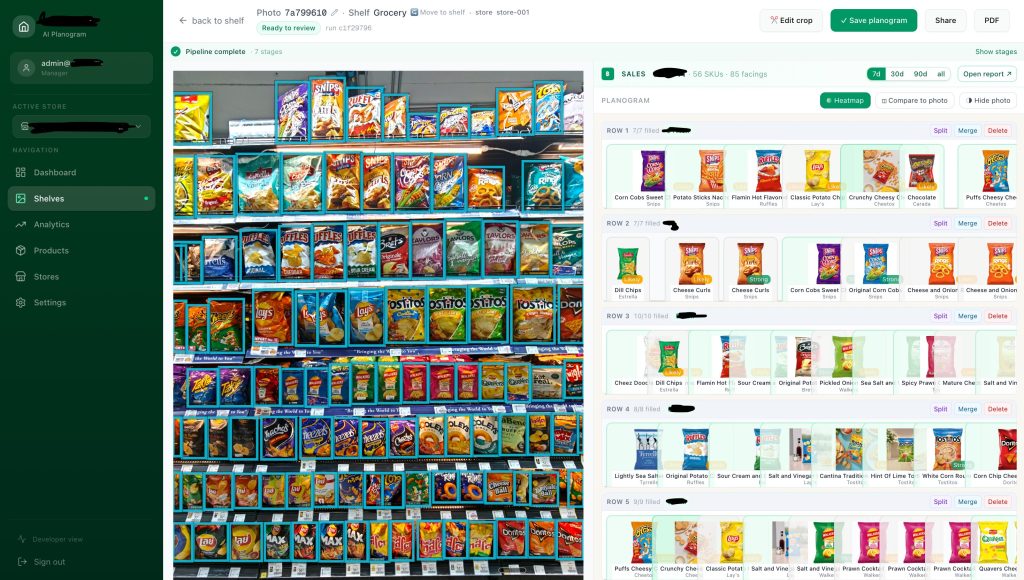
Someone in the store takes a picture of the shelf. Deepwork’s system reads what is actually there: the products, their positions, the number of facings, the gaps, and compares it with what the shelf is supposed to look like.
The complexity is still there.
The retailer just doesn’t have to deal with it.
That distinction sits at the centre of how Pratham Bhatnagar thinks about building with AI.
Start with the problem, not the technology
Bhatnagar is 24 and has been building since his time in SRM Chennai, but Deepwork Labs isn’t his first experience of being early to a technology.
Before retail, he spent his early years in crypto, working as a software and smart contract developer and winning more than fifteen hackathons over that period. The more substantial part of it was not the competing but what he built around it. At SRM, he ran one of the largest student blockchain communities in India, hosting hackathons and events, and turning a campus with almost no exposure to Web3 into one where the ecosystem was taken seriously.
The results were not confined to enthusiasm. Within a year of the community running properly, teams that had come out of it had collectively won more than $100,000 in prizes, and the college had become the most-represented in the country across the major hackathon organisers.
What that period produced was less a set of credentials than a habit: being inside a technology while it is still forming, when the tooling is poor, the use cases are unproven, and the people building are working from conviction rather than evidence.
It is the same stage Bhatnagar argues agentic commerce is at today, and the same reason he is building for it before the retail industry has agreed it is coming.
The interface is changing again
Retail has spent decades getting better at helping people browse.
First there was the physical shelf. Then catalogues. Then websites, search results, product pages and apps.
The surface changed, but the basic behaviour didn’t. The customer was still presented with options and asked to make the decision.
Bhatnagar thinks AI changes that relationship.
Instead of opening a grocery app, searching for products, comparing options and checking out, you could tell an AI agent what you need and let it handle the transaction.
“Reorder my usual groceries, but skip the dairy.”
There is no product grid in that interaction. No homepage. No search ranking to scroll through.
The customer gives an instruction. The system figures out what satisfies it.
That is what Bhatnagar means when he talks about agentic commerce. And he thinks it will arrive sooner than much of the retail industry expects.
The first purchases are likely to be the least exciting ones.
Nobody needs to spend twenty minutes browsing washing powder. Replenishment, household staples, routine groceries and repeat purchases are already highly predictable. They are exactly the kinds of transactions where the customer has little reason to browse in the first place.
But the implications go beyond convenience.
A large part of modern retail is built around getting in front of the customer: search placement, advertisements, recommendations, product pages, merchandising and promotions.
If an agent becomes the thing making the choice, those surfaces matter differently.
The retailer now needs to be understandable to the agent.
That means having accurate information about what is available, what it costs, where it can be found, and what is relevant to a particular customer.
For Bhatnagar, that is where the opportunity is.
The shelf is part of the same problem
At first glance, Deepwork’s computer vision work inside physical stores and its work on agentic commerce might look like two different businesses.
They aren’t.
Both are ultimately about giving AI a reliable understanding of retail.
The shelf product is one example. The system needs to understand what is physically sitting in a store and whether it matches what should be there.
The agentic side needs to understand the same retail world from another direction: what a customer wants, what the retailer can actually provide, and what should be recommended.
In both cases, the goal is to take complexity that currently sits with a person and push it into the system.
That is also why Deepwork works closely with design partners.
Retail problems vary dramatically between chains, countries and store formats. A solution that looks obvious from a distance can fall apart once it meets an actual store, an actual inventory system or an actual employee trying to use it on a busy morning.
Working alongside retailers gives the company access to those details early.
The shelf photograph, for example, came from seeing how much effort went into the existing workflow and questioning whether any of that effort needed to exist for the person using the product.
Building before everyone agrees
There is a thread connecting Bhatnagar’s early years in crypto with what he is doing now.
He is comfortable entering markets before there is enough evidence to make the decision feel obvious.
That doesn’t mean assuming every new technology will work. It means getting close enough to it to understand what changes when it does.
Agentic commerce is still early.
The tooling is improving, the use cases are developing, and retailers are still figuring out what an agent-first customer actually means for their businesses.
But waiting until the model is obvious creates a different problem.
By then, the infrastructure underneath it has to be built quickly.
For a retailer, becoming agent-ready isn’t something that can be switched on overnight. Product information, inventory visibility, pricing, store-level data and customer context all need to be reliable enough for another system to make decisions with them.
Deepwork is building into that gap now.
Its products span computer vision for physical stores, shelf and planogram intelligence, agentic commerce, chat-to-shop experiences and personalised AI advertising. The products are different, but they point toward the same shift: retail systems becoming capable of understanding intent rather than simply displaying options.
Before the page disappears
The interesting thing about Deepwork’s shelf product is that it doesn’t look futuristic.
There is no dramatic new interface. No complicated dashboard that a retailer has to learn.
There is a shelf, a photograph and an answer.
That may be a better picture of where Bhatnagar thinks AI is going than any futuristic demo.
The best AI products may not feel like AI products at all. They will simply remove the work that people currently have to do because the software isn’t capable of doing it for them.
Today, that might mean taking a photograph of a supermarket shelf instead of preparing a data import.
Tomorrow, it might mean telling an agent what groceries you need instead of opening a shopping app.
Bhatnagar is betting that both are part of the same transition.
Retail has spent years building better pages for people to browse.
He is building for what comes after.