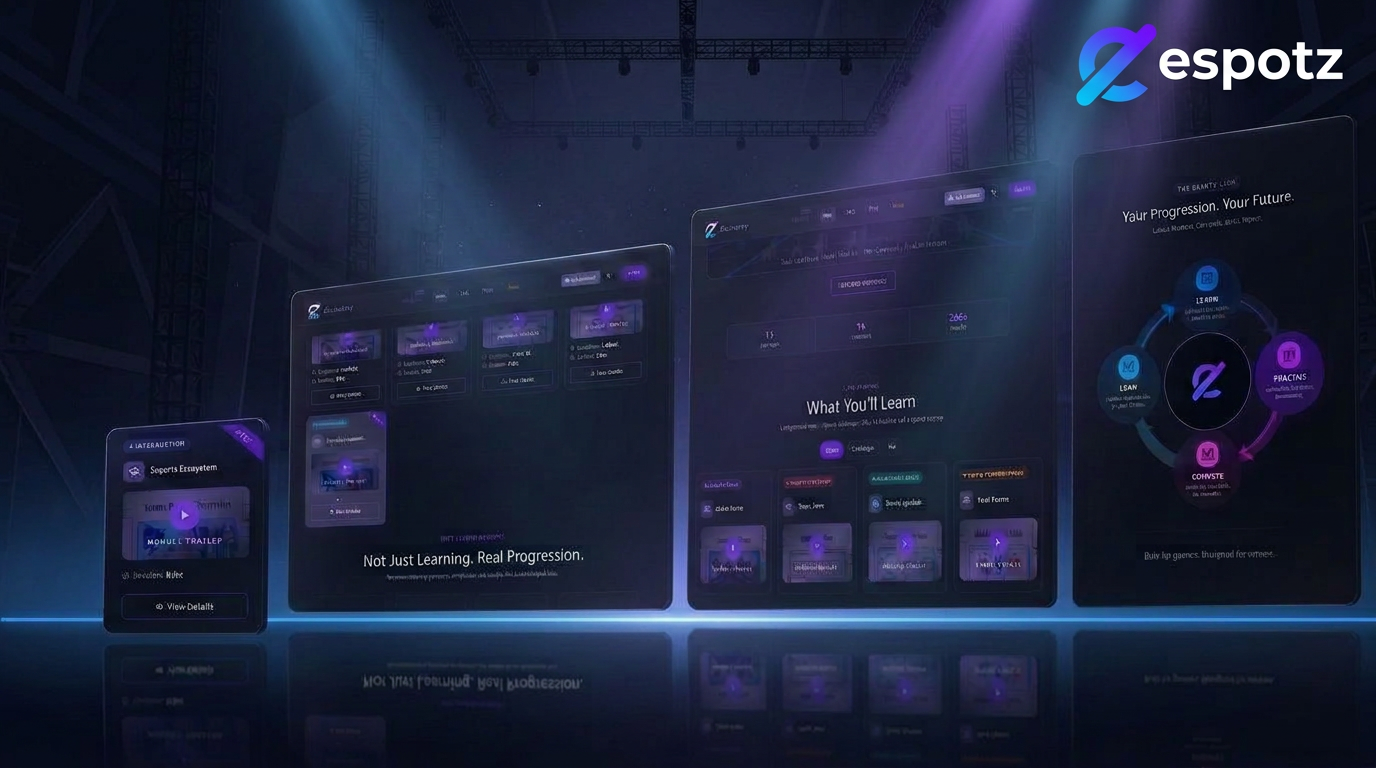
Snippet:
Parshavv Jain is a Chartered Accountant and lawyer with twenty years across Big 4 firms who founded Espotz, a global esports tournament platform, to fix a structural problem: at the team level, 94% of esports revenue is sponsorships, and the millions of semi-professional players below the tier-one bracket never see any of it. Espotz lets fans fund tournament prize pools directly, building a community-backed economy and player portfolio system before brand sponsors enter. The platform has 100,000 users across India, South East Asia and LATM, with over 10,000 registered teams and 15,000 matches completed.
Sixteen years old. The game is real: tournaments, teams, a win rate that means something.
They play through their college. Four years. Consistent. The record exists in group chats and result screenshots that disappear when the platform changes.
Eighty-seven percent of them cite financial instability as their primary concern. Not toxicity, not talent, not competition. Money.
Graduation comes. No brand has noticed. No sponsor has called. They take the corporate job.
Parshavv has watched this happen across the globe and not just India. He built Espotz to challenge the status quo.
The Chartered Accountant in the Arena
Parshavv spent twenty years as a Chartered Accountant and lawyer, working across Big 4 firms, startups, and entrepreneurial ventures. He brands himself, on LinkedIn and by instinct, as “eSports Bond.” It signals something about how he thinks: he is comfortable being the most unexpected person in a room and has no intention of pretending otherwise.
Most people with that professional profile aim for CFO seats or a being a partner in the Big 4. Parshavv’s reasoning for going elsewhere was blunt: after food, housing, and clothing, entertainment is the next place people spend. And within entertainment, gaming and esports had numbers that did not yet have infrastructure to match them.
He also wanted to stay connected with a younger generation. He says this simply, without dressing it up.
He has been following the industry for over a decade. Espotz is not his first esports company. Before COVID, he was building one: tournaments, multiplayer games, online events. The model was not scalable and he recognized it. COVID came. He stepped back.
During that break, he met the founder of Zoth, a Web3 platform for real-world assets. He needed someone to build the operational and legal structure from scratch. Parshavv joined as a founding team member and Chief Risk Officer, helped take it live, built the second layer of leadership, then stepped back.
This is his second inning in esports.
The Number That Started Everything
Ninety-four percent.
That is the share of esports revenue that flows from sponsorships at the team and organization level. Parshavv uses this number the way a diagnostician uses a reading: it tells him exactly where the fragility is.
The NIP Group, the first publicly listed esports club out of China, reported losses of 6.3 million dollars in 2022, then 13.3 million in 2023. Revenue was real. The audience was real. The losses came because building a budget around a single class of income means that when a sponsor exits or a brand cycle tightens, the whole payroll is exposed.
That is the tier-one problem. At every tier below that, the problem is different but worse. Red Bull and Acer sponsor events and organizations at the very top of the competitive structure. One percent of teams have access to those deals. The rest do not.
Which means a semi-professional player with six to eight years of tournament history has no path to monetization and no portfolio a brand can evaluate. The record exists only in their head.
They give up. Not because they are not good enough. Because the infrastructure to prove they are good enough does not exist.
The Fix
Espotz’s wedge is fan-funded prize pools.
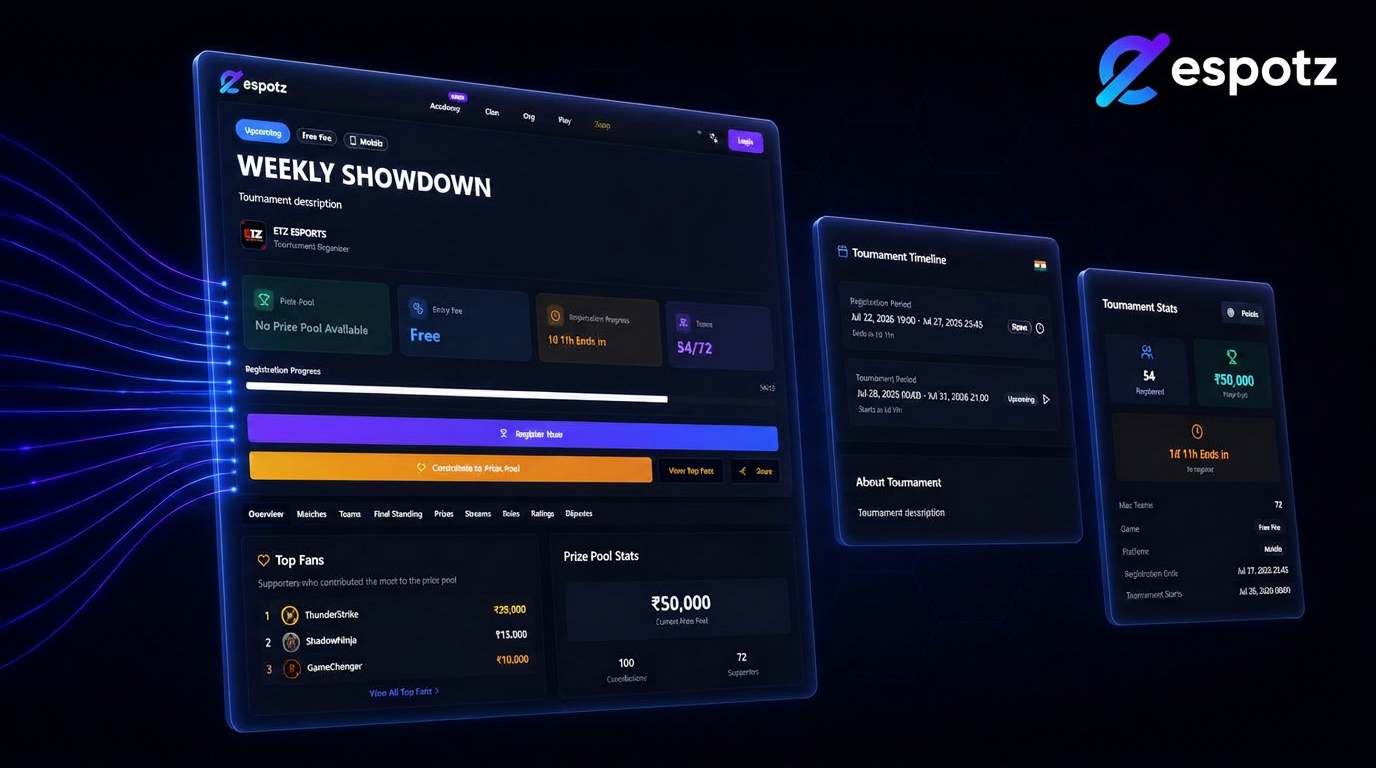
Before a brand sponsor enters, fans can contribute directly to a tournament’s prize fund. Not as a donation. Not as a super chat on a stream. As a contribution to a specific outcome they believe in. Their team competes. The pool grows. A leaderboard tracks who contributed and how much. The fans highlighted as a sponsor.
The mechanics will run on smart contracts. The prize pool locks when a tournament opens and distributes automatically when it ends. No manual payouts & delays. No banking infrastructure to navigate jurisdiction by jurisdiction.
What it does here is make a transparent, cross-border prize pool fundable by anyone with a PayPal account, with transaction caps of twenty to fifty dollars, settled without the platform needing to handle KYC directly.
Meanwhile, the player builds a portfolio. Every tournament is logged. Win ratio. Team tenure. Consistency across months and years. That data is the pitch a semi-professional player can eventually take to any brand: here is who I am, here is my record, here is who watches me compete.
The broader industry has been inching toward this. Analysts now describe the next phase of esports monetization as “Membership 2.0,” a shift away from pure sponsorship dependency toward fan and community revenue streams. Espotz was built around that idea before the label existed.
The Market Nobody Was Addressing
Espotz has 100,000 users across five countries: India, Philippines, Vietnam, Indonesia, and Colombia. Over 125 tournament operators. More than 10,000 registered teams and 15,000 matches completed.
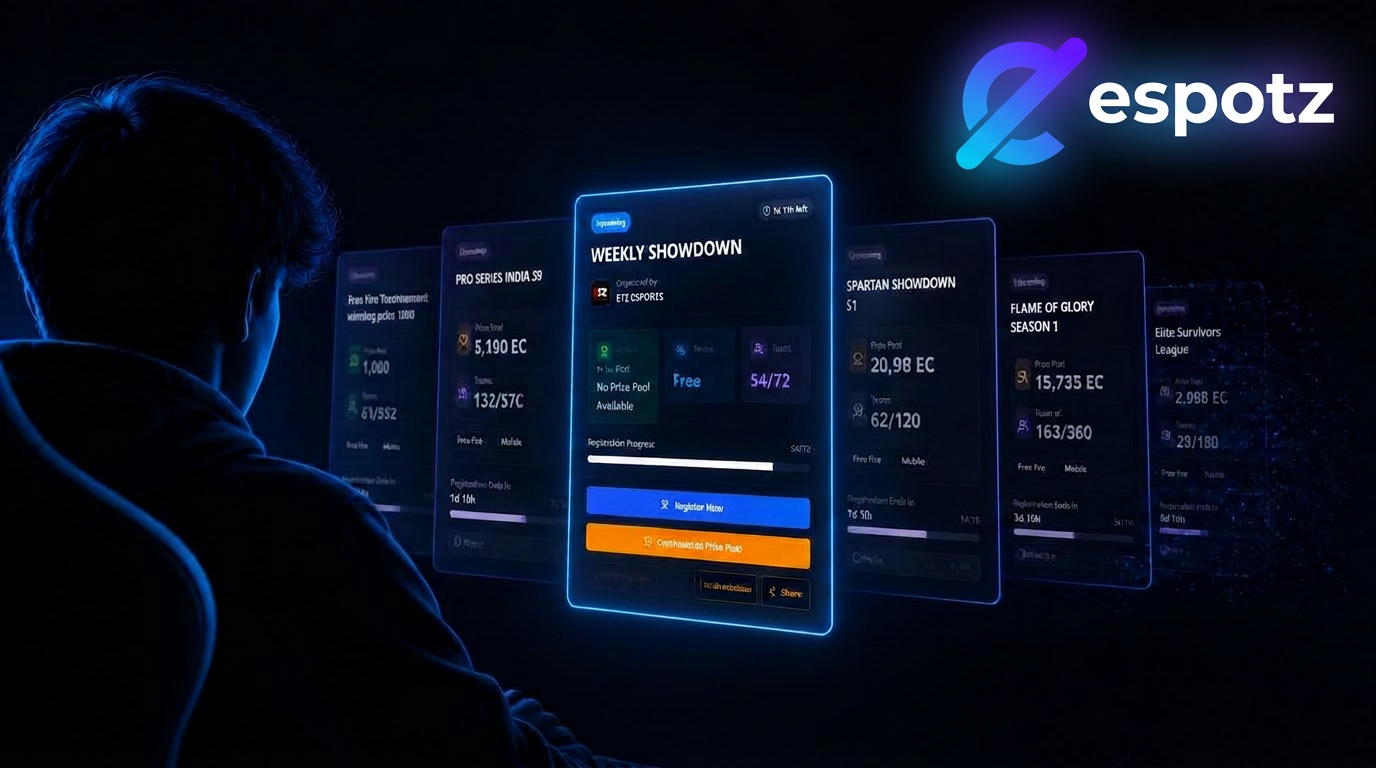
They are opening UAE, where Espotz is also regulated by the Dubai Sports Council and is in the process to partner with esports federations from different countries. The context matters. The UAE gaming market reached 1.26 billion dollars in 2025. Nine out of ten adults in the country play video games. Dubai has a formal program targeting one billion dollars in gaming GDP contribution by 2033 and 30,000 jobs in the sector. Parshavv’s legal and compliance background is what made navigating that regulatory process achievable where most esports platforms would not know where to start.
Africa is next: Nigeria, Kenya, Ghana, once local payment infrastructure is sorted.
The 24-month vision is a marketplace. Not a tournament platform hoping to attract big brands. A marketplace where a café that opened in Ahmedabad can sponsor the Ahmedabad University college team for a local tournament. Where the brand gets the community association and the brand recall without needing a multinational budget.
“Everybody can’t own Bunglow or Antilia,” Parshavv says. “But at least they can own their small house.” Not every brand can sponsor the Indian cricket team. Most brands can sponsor something. India’s esports market is projected to grow from 240 million dollars today to 765 million by 2033. The audience that regional brands want to reach, 16-to-25-year-olds with competitive gaming habits, is exactly who is on the platform.
The Team
The team is 14 to15 people, entirely remote across India, Canada, and Colombia. Bootstrapped, with one small check from a micro VC. Parshavv is technically a solo founder, with a co-founder potentially being formalized from the core team in the months ahead.
The filter for every hire is ownership. If Parshavv is on business travel, the team should not play around but take ownership of their work. Problems should still be getting solved. He built a second layer of leadership at Zoth before stepping back and is replicating the same model at Espotz. He says he can usually tell within fifteen minutes of a conversation whether someone operates that way.
The player who graduated and took the corporate job because no infrastructure existed for them: Parshavv thinks about that person a lot.
Espotz is not the product that finds them after the decision. It is the product that was supposed to exist before they made it.