Snippet
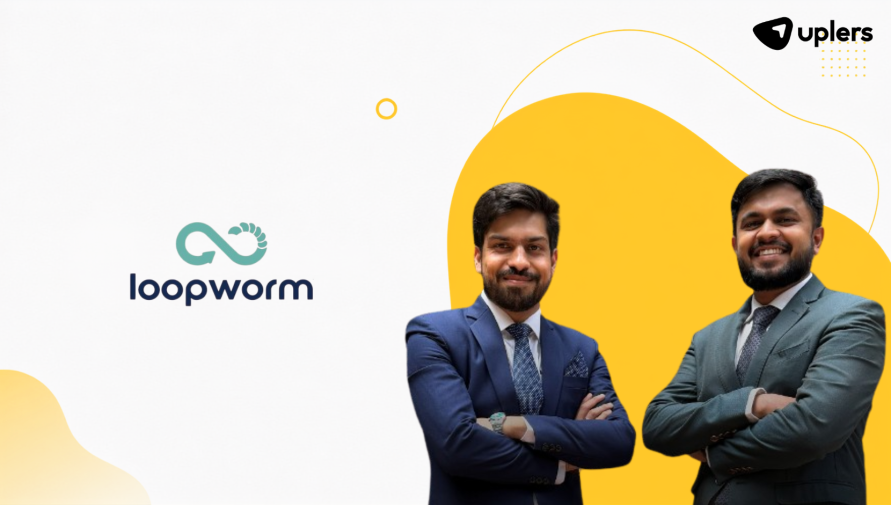
Loopworm is a Bangalore-based insect biotech company, founded in 2019 by Ankit Bagaria and Abhi Gawri, that turns silkworms into protein and fat ingredients for animal nutrition. The founders began with black soldier fly larvae, the insect many Western insect-protein startups were built around, then started working on silkworms in 2021. Silkworms are harder to work with, but come with thousands of years of domestication, deep scientific research, and an existing network of silk farmers in India. Loopworm collects silkworms from silk reelers after the silk has been reeled, which Ankit says raises the reelers’ income by 10 to 20%. He says the company recently became profitable overall. According to public reports, it has raised about $6.6 million across two rounds, with backers including Omnivore, WaterBridge Ventures, and Nadir Godrej.
For about two years, Ankit Bagaria talked publicly about one insect while building his company around another.
Loopworm, the Bangalore biotech company he started with Abhi Gawri in 2019, began with black soldier fly larvae, the insect that many well-funded Western startups were built around. By 2021, Ankit had quietly started working on silkworms instead, a more sensitive insect and a much harder one to work with. His public commentary stayed on the fly until the factory was running and silkworm products were on sale in 2024. “The industry didn’t know,” he says.
An Engineering Problem, Not a Biology One
Ankit and Abhi met as IIT Roorkee batchmates whose first ventures had both failed. Before they had an idea, they had agreed to skip campus placements and build something together. The split between them is clean. Ankit raises the money and cracks the deals. Abhi holds the money and runs everything after the sale. “He’s great at processes and operations, which I hate,” Ankit says. “Even I take his permission for my budgets.”
The idea itself was opportunistic, he says, with no hardship story behind it. Protein is not just food. It is also enzymes, antibodies, and the working part of diagnostic tests. After a United Nations report pointed them toward insects, they found plenty of research papers and patents but almost no one building the machines or quality controls to process insects at industrial scale. He read that as an engineering problem more than a biology one.
He compares it to milk. “A person who doesn’t understand milk can build a Tetra Pak,” he says. It looks like a milk problem, but it is really a packaging one. Insects, in his view, work the same way. How you process them decides what you can make.
Why the Harder Insect Won
Black soldier fly was the obvious choice. It is robust, easy to produce in volume, and Western investors were backing it heavily. Silkworms are far more sensitive. Ankit chose them anyway, for three reasons.
They are richer, with protein and fat making up about 85% of a silkworm against 65% for the fly. The science is already done: silkworms have been domesticated for 4,000 years, are the second most studied insect after the fruit fly, and come with more than 150 years of documented research. And India already has the supply, through the Central Silk Board, more than 10 lakh farmers who raise silkworms, and 175 institutes that teach silk science.
“I’m not going to recreate fundamental science,” he says. “We’ll do the scale-up, build the machinery, and make the products.”
Collecting Silkworms Like Milk
Loopworm does not compete with the silk industry. It comes in after the silk has been reeled, so none of the silk is lost. Ankit says reelers earn 10 to 20% more because they are now paid for the insect as well as the thread. A van collects from small reelers door to door every day of the year, much like a milk route.
It is harder than it sounds. Silk sells for about ₹5,000 a kilo, so to a reeler the worms are an afterthought. The reelers work from backyards in scattered clusters that a large truck cannot reach. The commitment runs 365 days a year, Diwali included. And not everyone wants to work with insects.
Rejected First, Profitable Now
The first funding round was long and hard. There was no ecosystem for insect biotech, and investors were often keen until a senior partner joined and said no to insects. The IIT name got him meetings, but each one cost hours of preparation, and for a long stretch one founder did little else but raise money. “Investors were used to seeing Dr. in front of a founder’s name, with fifteen years of experience behind it,” he says.
The turn came from a breakfast meeting he did not expect much from. WaterBridge Ventures, whose portfolio is mostly software, invited him, and the founders had spent two or three years living on cheap dosa and idli, so he went partly for the food. The meeting stretched to three or four hours. WaterBridge had done its research and asked sharp questions. “I judge investors by the questions they ask,” Ankit says. WaterBridge is now the company’s largest shareholder, he says. Omnivore, the agritech investor, needed far less explaining, and founders and industrialists, including Nadir Godrej, joined the cap table too.
Some of the investors who first said no later watched the factory get built and the certifications arrive. “Whatever we said a few years ago started happening,” Ankit says. “What matters is how far you are from your projections.” Loopworm is now profitable as a company, he says, with much of its R&D spend covered by sales. It got there only a few months ago.
Hiring for Character
Ankit says biotech talent is plentiful but markets itself badly, so it stays hidden. Loopworm goes the other way. He has written openly about the company since 2022, updates his views in public as the business changes, and so far avoids paid media. “I don’t want to buy awards or buy recognition,” he says. Some of his hires began as strangers who read his posts and reached out. He pitches the outcome, not the process, because the difficulty is what makes the work interesting. LinkedIn Recruiter does most of the rest, with specialist headhunters as a last resort.
He watches every new hire for a year before deciding where they fit best, and has moved people from operations to business development and from finance to the founder’s office. He would rather spend fifteen minutes interviewing someone himself than send them an hour-long AI interview. “There’s no real person in front of you,” he says. “It feels disrespectful.”
His sharpest filter is a simple one. He asks the most junior person in the hiring process, usually whoever schedules the calls, how the candidate treated them. “How someone treats my most junior person shows character,” he says. “That’s how they’ll treat my junior team.” Skills can be learned, and even faked, he says. Character can’t be.
Ankit thinks the next decade belongs to biotech. After space and defense, he expects AI to dominate for about two more years and then consolidate fast, since AI investing runs on quick returns. Biotech needs slower money: grants, debt, equity, and investment teams that include life-science PhDs, as they already do in the US.
He also expects the founder stereotype to fade. Nobody asks a civil engineer why he is building a software app, Ankit points out, because everyone knows most engineers end up in software. He thinks biotech will get there too, and asking why a chemical engineer is processing silkworms will sound just as odd.