
Snippet
MetaShot is a Bengaluru-based consumer gaming hardware startup, founded by Ranjit Behera, Prince Thomas, and Ajith Sunny, that makes a sensor-loaded smart cricket bat connecting to a phone and TV, letting people play virtual cricket in their living room. The company deliberately priced the product at roughly ₹6,999, well below the ₹40,000-50,000 range of console gaming hardware like PlayStation or the Nintendo Wii, on the belief that India’s mass consumer market had been priced out of console gaming entirely. Founded in 2021 and featured on Shark Tank India, where Anupam Mittal and Vineeta Singh invested ₹1.6 crore for 5% equity, MetaShot now sells online, on quick commerce platforms like Amazon, Flipkart, Blinkit, Instamart along with Hamleys, Iphone stores and around 300+ stores
Ranjit Behera spent fourteen years running performance and digital marketing at some of India’s biggest consumer brands. Zivame. Aditya Birla Fashion.BankBazaar. MyGate, where he was Head of Marketing while the app scaled past ten million homes. Then, in his late thirties, at the peak of that career, he co-founded a company that makes a sensor-loaded cricket bat.
The company is called MetaShot, and the founding decision behind it was as blunt as his old marketing instincts. If they couldn’t build the product to sell at five thousand rupees, they weren’t going to build it at all.
The Console Generation India Skipped
Console gaming in India has always meant PlayStation or Nintendo Switch, priced at ₹40,000 to ₹50,000. Ranjit and his co-founders knew that price point would only ever reach the top 1% of the market. So before writing a line of product spec, they talked to 300 or 400 people directly. Malls, housing societies, strangers. Simple questions about what they’d actually pay for something like this.
What they learned reframed the whole opportunity. India had effectively skipped the console generation entirely. Nintendo sold roughly 120 million Wii units globally, and almost none of them reached India, because the price never worked here. “If at all we have a product, we know there was a latent need,” Ranjit says. “But we cannot come up with a technology which is again a 30, 40k. It doesn’t solve any purpose.”
So they worked backward from a number instead of forward from a feature list. Whatever it took to hit a price the mass market would actually pay, that was the product. It took nearly two years to make the physics of a real cricket bat, sensors, and a TV connection work at that cost. Today it sells around 4,000 to 5,000 units a month, split between online and offline.
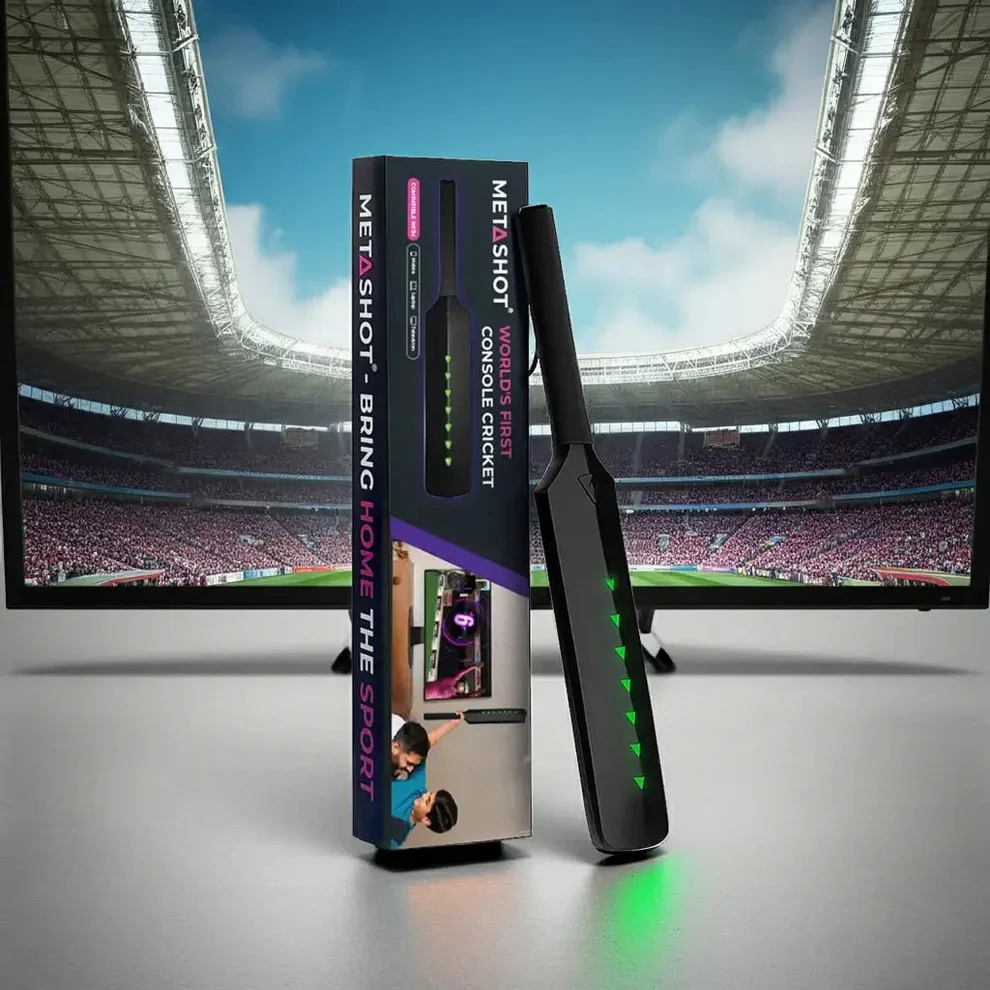
The bet had a second layer, too. Ranjit and his co-founders started with a specific hypothesis: men who play cricket every weekend, then move cities for work and lose access to it entirely. That’s still the core buyer. But the product turned out to have a wider pull than they expected. Mothers are playing it. Wives are buying it as a gift for husbands who miss the sport. What began as a fix for one specific kind of loneliness became, without much extra effort, a family product.
Cricket, a Tennis Ball Business, and a Decade of Trust
Ranjit met his co-founder Prince Thomas at BankBazaar, where he ran growth and Thomas ran brand. What actually bonded them wasn’t the job. It was weekend cricket, and the two hours of conversation that followed every match.
Before MetaShot existed, the two of them ran a side passion project together called GR8, a tennis-ball cricket equipment brand. It became a bestseller on Amazon and Flipkart within two months and ran profitably through the pandemic, until MetaShot took outside investment and they had to let it go. It’s easy to miss in the MetaShot story, but it means the founding team had already proven, once, that they understood what a cricket-obsessed Indian consumer would actually buy.
Ranjit is candid about why founding with a friend usually goes wrong, and why it didn’t for them. Most people who try it haven’t learned to separate two different relationships. “In our meeting rooms, we don’t mind haggling, fighting on ideas,” he says. “But once you move out of those rooms, you’re still friends.” Being in their mid-thirties when they started, with a decade of prior experience each, meant the basics of marketing, sales, and finance were already common ground before they ever had to fight about any of it.
What Changes When the Marketer Becomes the Owner
As an employee, Ranjit says, someone else was always paying for the mistakes. As a founder, every marketing decision now runs through unit economics before it runs through creativity. “The perspective of getting a sale, versus a sale which is meaningful from a commercial point of view, that completely changed,” he says.
It changed which channel and what marketing ideas to even consider. Paid ads on Meta and Google were the easier, faster route to a sale. The founding team chose the harder one instead: heavy investment in original content, because he’d decided the brand needed a long-term story, not just a short-term funnel.
That content strategy turned out to be the sharpest thing he’s built. MetaShot’s Instagram videos regularly cross ten million views, and the pattern behind them isn’t product features. It’s emotional entry points he identified through the same customer conversations that shaped the pricing. A modern father who feels guilty he doesn’t have time to play with his kids. A wife who knows her husband quietly misses cricket and wants to give it back to him. Neither is a product pitch. Both are the actual reason someone buys the bat.
What Happens in the Two Hours Nobody Sees
MetaShot appeared on Shark Tank India, and Anupam Mittal called the three founders “Bollywood villains” on air, a reference to Ranjit, Ajit, and Prince, the stock villain names of 1970s and 80s Hindi cinema. Ranjit didn’t even fully register the joke until afterward. “I understood that connotation wouldn’t have hit some of the younger people,” he says, “because it was probably before Anupam himself was born.” It worked anyway, as an icebreaker between us and the sharks.
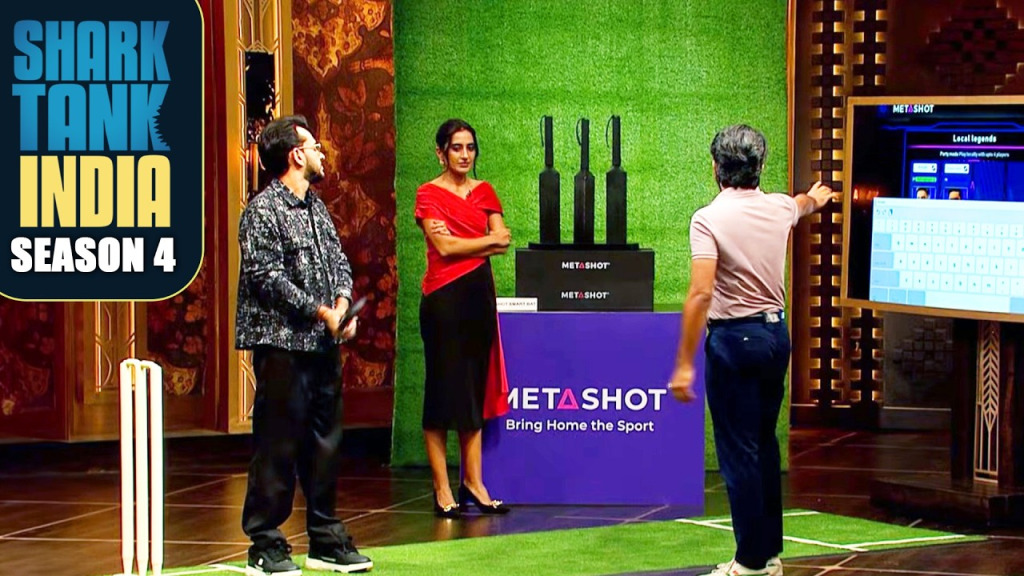
What airs on television is 15 or 16 minutes. What actually happens in the room is one to two hours, free-flowing, with 40 to 50 crew members working around five sharks and a set that looks calm on screen. Thousands of companies apply; roughly 150 to 180 make it to air. Sharks are normally supportive but, they spend the first ten minutes trying to find out how deep each founder’s knowledge actually goes.
Ranjit believes his team had a real advantage walking into the tank. All three had spent over a decade in high-pressure corporate roles, dealing with senior leaders and people of stature long before they ever sat across from the Sharks. The intimidation that many founders describe was never quite a factor for them. They went in asking for ₹80 lakh, but the Sharks saw enough in the business to offer more than double that amount. With offers from Anupam, Vineeta Singh and Piyush, they eventually walked away with ₹1.6 crore from Mittal and Singh together, in exchange for 5% equity.
But for Ranjit, the money was never the real reason to go on the show. It was the national exposure and the overnight trust that being featured on *Shark Tank India* could bring to the product. The visibility was an opportunity to put the brand in front of millions of people, build credibility almost instantly, and create momentum that could carry the business well beyond the show.
Built to Stay Small
MetaShot sells through its own site, Amazon and Flipkart, Blinkit, instamart and roughly 300+ offline retail locations, including placements inside a major electronics retail chain. The company has run this entire footprint without ever hiring a dedicated retail sales force.The design of product is simple and intuitive and the team is able to train any offline store member to give demos in just 10-15 mins, along with this comprehensive informational videos making it easy for potential customers.
The same instinct shows up in headcount. The company has held at roughly 30 people for two years, about half of them on the gaming side, and turnover has been almost nonexistent. Ranjit hires for willingness to learn over existing expertise, brings people in early in their careers, and mentors them from there. People who join that way tend to take on more than their job description asks for, which is a large part of why 30 people can run what usually takes far more.
AI has become the other lever. Building a game avatar used to take three to five days; it takes about an hour now. Roughly 80% of first-touch customer service is handled by bots and pre-built video answers, since most questions repeat. “AI is probably integrated in almost all departments,” he says. “It’s seeing significant value.”
MetaShot’s newest product is Pickleball, which went on Kickstarter in the US on October 6, with tennis, table tennis, and other racket sports planned for the same hardware within roughly six months. The long-term shape is one device, many games, something closer to a console for the masses than a cricket accessory.
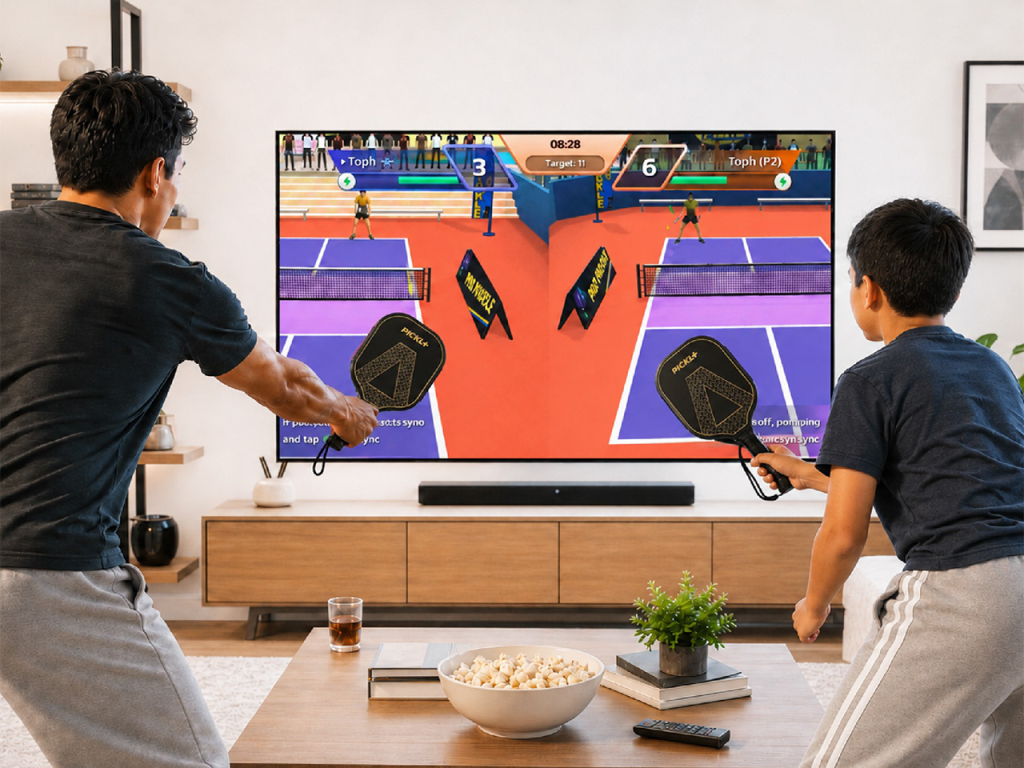
Geographically, the US and Canada come first, partly because a second sport widens the buyer beyond the Indian diaspora, and partly because the demand is already visible. Cricket units already sell there without any formal shipping, carried back by friends visiting India. The UAE and broader Gulf market already sells well through local distributors. Australia and parts of Europe are next.
Ranjit’s closing observation is the quieter one. For years, nobody took an Indian hardware startup seriously, because India had never been seen as a place that builds hardware. He thinks that’s genuinely changing now, and MetaShot’s own five years are as much evidence of that shift as anything else. The company’s whole existence started from refusing to build a product unless it could reach the people every other console had priced out.