Snippet
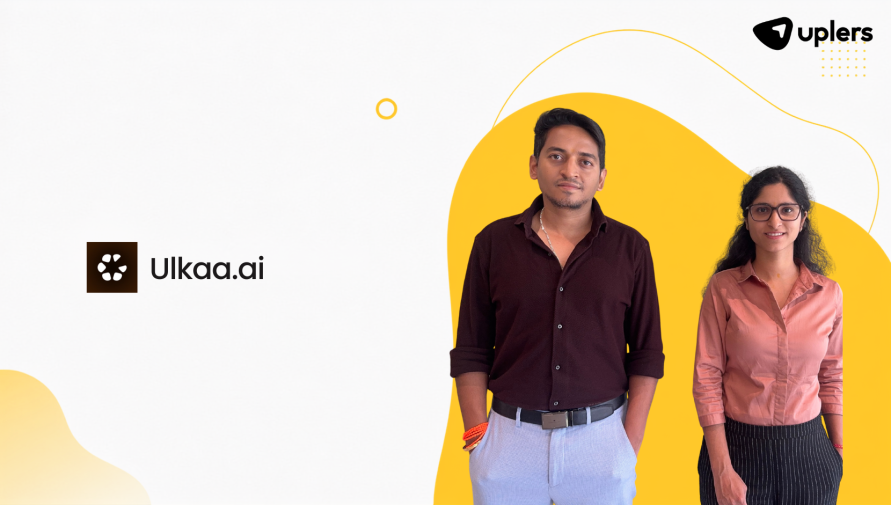
Ulkaa is an AI agent for creator marketing, founded by Rahul Gayakwad and Bhawana Tiwari in Bengaluru. It runs influencer campaigns end to end, including outreach, negotiation, content review, and payouts, instead of just helping brands discover creators. The company, previously known as Ryme.ai, rebranded in 2026 after concluding that creator discovery had been a solved problem for years while execution remained a manual, unscalable bottleneck. Ulkaa is angel-funded, runs on a team of under ten, and launched publicly in 2026.
Rahul Gayakwad once had $100,000 a month to spend on influencer marketing. He couldn’t actually spend it well.
Agencies would quote one price, then come back days later asking for more. He couldn’t talk to creators directly. Content promised for a specific date would slip by months, once by four months, with the excuse that the creator’s studio had flooded. “I was sitting on the money,” he says, “but there was no way to use it.”
The real problem wasn’t the money. It was that a brand can only run about ten collaborations a month before the coordination eats an entire person’s job: outreach, negotiation, chasing creators, reviewing content, all done by hand.
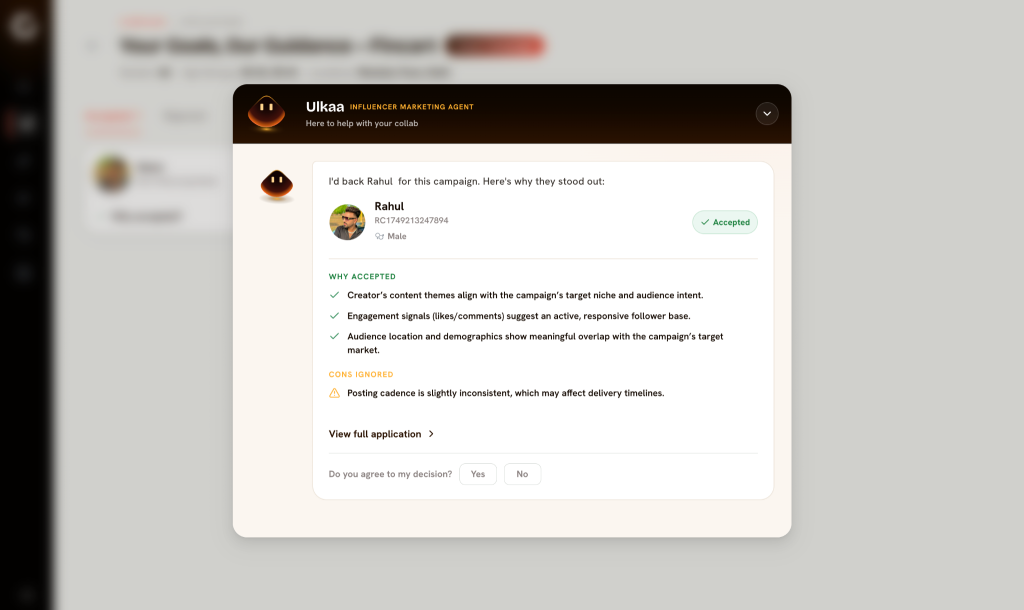
That frustration is why Gayakwad built Ulkaa, an AI agent that runs creator marketing campaigns end to end. It doesn’t just find influencers. It negotiates with them, briefs them, reviews their content, and chases them down, the way an employee would.
Where Everyone Gets It Wrong
Ask Gayakwad what people misunderstand about Ulkaa and he has a ready answer, because almost everyone reaches for it. “At the end of the day, you help us find creators,” they say. He corrects it every time. “Search, discovery, matching. That problem was solved five years ago. It no longer really exists. We start from where it ends.”
Where it ends is everything that happens after a brand already knows which creators it wants. That’s the part no marketplace or dashboard does for you, and the part that quietly consumes a marketing team’s entire month.
Proof the Upside Was Real
Gayakwad knows the upside is real because he watched it happen. At an earlier startup, a blockchain sports-betting product he’d helped raise $10 million for, a Polish YouTuber made a video about it in a language nobody on the team understood. It didn’t matter. Traffic crashed their servers, even though the company was already spending $25,000 a month on AWS to keep them up. “That was the point that made me feel what the power of influencer marketing actually was,” he says. It’s also the moment that put him in charge of marketing, and straight into the $100,000 budget he couldn’t spend.
What Ulkaa Actually Does
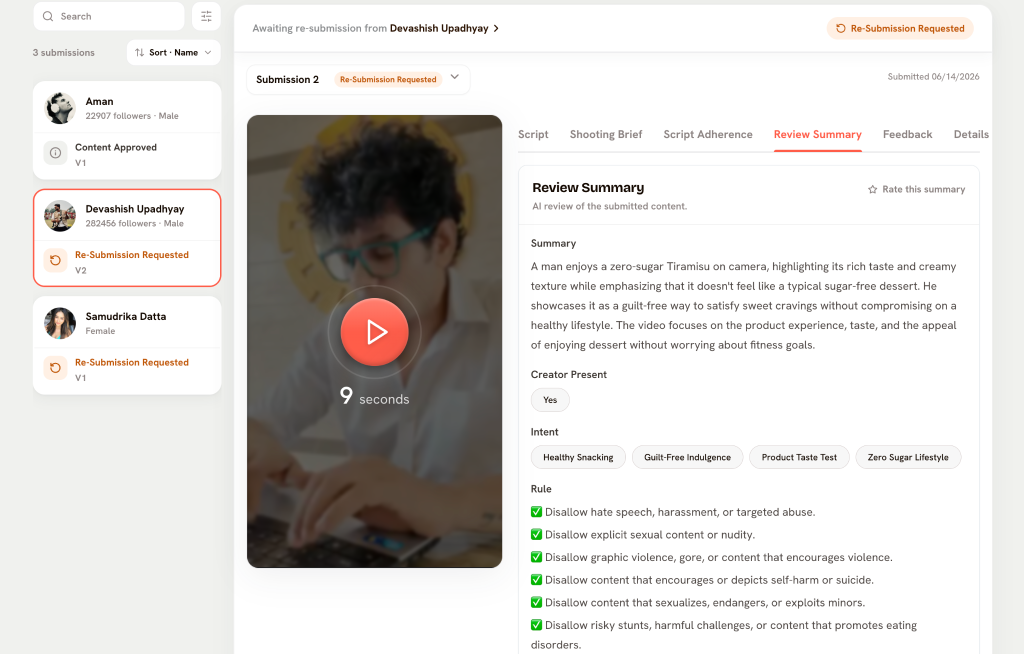
The fix is letting an agent run that execution instead of a person, with the brand deciding how much control to keep. It can shortlist creators, negotiate rates within limits the brand sets, chase for updates, and check content against the brief. Or it can pause and ask a human at any of those steps. Most brands start cautious and loosen the reins once they see it perform.
The clearest proof isn’t a feature. It’s a campaign. A sugar-free dessert brand worked with three creators: a yoga instructor, a fitness creator, and a food creator. The food creator underperformed, and Ulkaa traced why. Their past posts leaned on traditional Indian sweets, a mismatch nobody had thought to check for. The yoga instructor, whose audience already skewed wellness, performed best. Ulkaa explained its reasoning, got the brand’s sign-off, and adjusted its future recommendations. “It doesn’t just improve quietly,” Gayakwad says. “It tells you why, and it waits for you to agree before it changes anything.”
The Customer Nobody Expects
Startups, in his experience, plateau happily at ten or fifteen collaborations a month. It’s enterprise brands running hundreds of small barter deals, a product worth a few hundred rupees traded for a post, where the math breaks. Someone still has to manage every deal by hand, and the operational cost is often bigger than the value of what’s being traded. “Why would you want a person doing that,” he says, “when the thing you’re managing is worth less than the time it takes to manage it?”
There’s a bigger bet underneath that one. “Five years ago, if something was technical, you’d go to a colleague who knew tech. Now people go to Claude or ChatGPT first,” he says. His wager is that creator marketing follows the same path. Brands stop defaulting to a human “expert” and start trusting an agent that’s run more campaigns than any one marketer ever could.
What He Doesn’t Oversell
Their own customers live on LinkedIn. Ulkaa itself currently runs on Instagram, with YouTube, LinkedIn and other platforms planned.. “We haven’t actually used our own platform for that,” he says, no hedge attached. And the moat he actually worries about isn’t the AI. Generating content or matching creators is replicable by anyone, anywhere. It’s compliance. Every country regulates creator advertising differently, which is why entering the US is still a “when,” not a “how,” for Ulkaa.
The company’s name comes from the same instinct. Gayakwad and his co-founder, Bhawana Tiwari, landed on it after spending a break watching a meteor shower. Ulkaa means meteor – a shooting star in Sanskrit. They figured that if a brand could make one wish for its marketing team, it would be for someone who could take the entire creator campaign off its plate, from the first outreach to the final post.
Since this conversation, Ulkaa has taken that pitch public. Net Influencer covered it, and Gayakwad is set to present Ulkaa at Bengaluru’s Unicorn AI Summit alongside category-defining tools like Cursor and Figma AI. His summary of the whole bet, sharpened since the call into one line: “Humans for creativity, agents for intelligence and scale.” Close enough to exactly what he wished for.