Snippet:
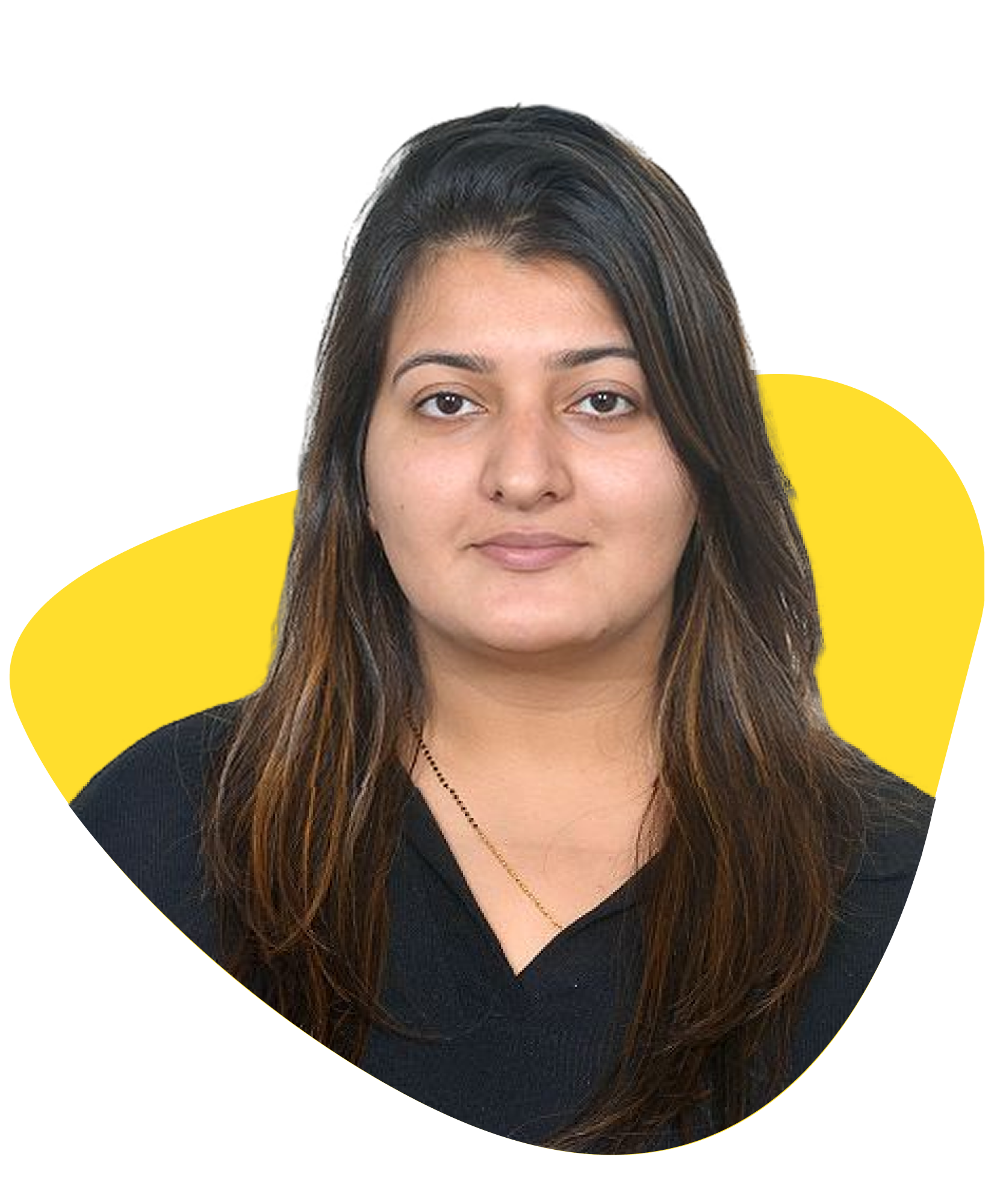
Richa Singh and Puneet Manuja met at their first job, D.E. Shaw, and started talking in the margins about something that had nothing to do with quant finance. She had lost a close friend to suicide. He had spent the first three months of his IIT gold-medal career without a job offer and remembered the silence of that. Neither of them came from psychology. What they built has 500+ institutional clients, a team of a thousand therapists, and no funding since 2018.
Richa Singh and Puneet Manuja met at D.E. Shaw & Co., where they both had their first jobs. It’s a quantitative research firm, not where you’d expect long conversations about emotional support. But somewhere in those early years, Richa told Puneet about a friend she had lost to suicide during IIT placements. A woman who hadn’t reached out to anyone. Who hadn’t asked for help, even when the campus had counsellors available.
Puneet had his own version. A gold medalist in computer science from an IIT, he had spent his first three months after graduation without a job offer. “If there was somebody who I could talk to,” he told her, “I think that would have made so much difference.”
Neither of them is a psychologist. The company they built isn’t named after a clinical category or a diagnostic framework. It’s named after the Hindi word for friend.
“Officially, we’ve been working on it for eleven years,” Richa says. “Unofficially, Puneet and I have been working on it for seventeen.”
Not because you’re broken
The framing that runs through everything YourDOST does isn’t clinical. It’s proactive.
Richa has an analogy she returns to: think of yourself as a pressure cooker. Your external environment, the economy, the job market, the news cycle, whether AI is about to make your role redundant, is the flame underneath. You can’t control the flame. What you can work on is the pressure inside.
One way to release it is to talk: to a friend, to a therapist, to a counsellor on YourDOST. But there’s another way, she says. “If you were a 10-liter pressure cooker and became a 50-liter pressure cooker, you could handle more.” The habits of meditation, gratitude, and mindfulness don’t just relieve pressure,they build capacity.
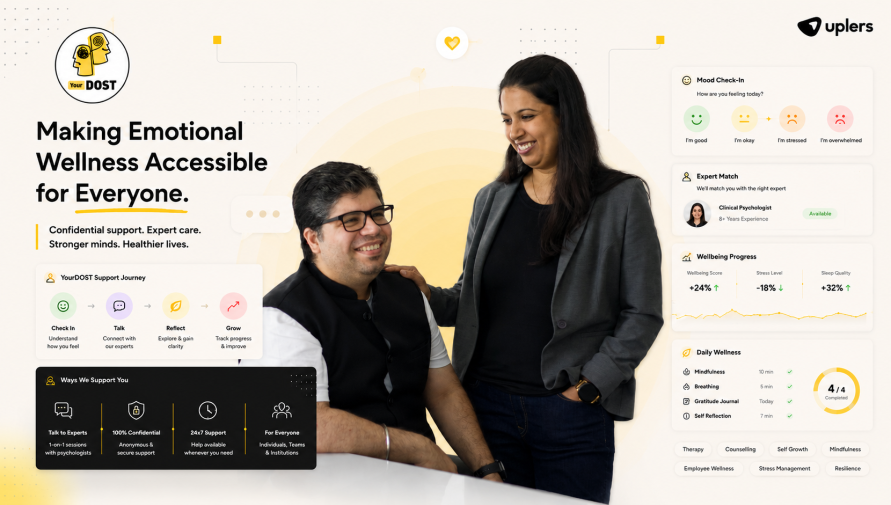
That’s the premise of what YourDOST calls Mind Gym: neuroscience-backed, gamified exercises for concentration, focus, memory, and emotional skills like giving feedback and building empathy. The comparison she draws is to physical fitness.

Users can be entirely anonymous. You can call yourself Superman or Batman. You choose your concern; relationships, career confusion, confidence and connect with a professional from their network, or you don’t. You use the self-help tools, the habit trackers, the exercises. “Mental health doesn’t always mean therapy. Mental health is an everyday thing for everyone to be a better version of themselves.”
What AI can’t do
The question about ChatGPT comes up in almost every conversation now. Richa’s answer is specific.
“It’s very affirmative. You say, I want to do this, and it says, yes, do it. That’s not always helpful.” A good friend, a good therapist sometimes pushes back. Creates friction. Helps you think through something rather than validating the first thing you say.
There’s a loneliness dimension that matters more. A lot of people reaching out to YourDOST aren’t doing so because they need clinical intervention. They’re doing it because they’re lonely. “Talking to a machine doesn’t make you feel NOT lonely.” There are documented cases where AI chatbots have guided people toward wrong decisions. Who holds the guardrails? Who owns the accountability?
And there’s a cultural and linguistic dimension that’s specific to India. A therapeutic exchange isn’t just semantically accurate, it requires sensitivity to tone, regional expression, the way someone from one part of the country says something differently from someone in another. “Tamilish, and all of those. That sensitivity is extremely important.”
AI can assist a therapist. It can triage. It can help connect a user to the right professional. But Richa doesn’t think it replaces the counsellor, not in a country where what most people need is less a diagnosis and more the experience of being genuinely heard by another person.
Destiny is in our hands
In 2014, Richa and Puneet quit. She had been at a social media analytics company in Bangalore: first employee, grew it, got acquired by MuSigma. He had been an early employee at Zynga, gone to IIM Bangalore, worked at McKinsey. Both had been working on YourDOST on the side throughout.
Early funding arrived: SAIF Partners and others, first round, then another. But by 2016-17, Richa and Puneet made a deliberate choice. They were not going to keep raising money without first making the business sustainable.

YourDOST turned profitable. It’s been profitable for seven years.
In a category where most peers have raised significantly more and are still burning through it, that isn’t a constraint, it’s a philosophy. When asked what new capital would need to bring beyond money, Richa says she hasn’t found a satisfying answer yet. “It has to be more than money. What does it bring to the table?” Until she has a clear answer, the answer has been no.
The Prime Minister spoke about their work in Mann Ki Baat. They were invited to present policy recommendations to the Prime Minister. They were invited by the President to talk about what they do. “As a nation,” Richa says, “we are taking cognizance of this.” That the conversation is happening at that level matters, because only when the conversation happens does the change follow.
She’s honest about the distance left. Suicide rates at IITs remain high. “I feel like we’ve barely scratched the surface. There is so much more to happen.”
Who Builds this
YourDOST’s therapist network alone is around a thousand people. Beyond them is the non-clinical team: product, tech, marketing, operations, serving 500+ institutional clients.
What Richa looks for starts in the same place for both: “Somebody who believes mental health is important.” The result is a team she describes as visibly more caring, more careful, more attuned to the people on the other side of what they’re building. In a fast-moving industry, she’s building for something different. “The way Swiggy has scaled may not be the way we are scaling.” The people who stay understand that, and are okay with it.
Sixty to seventy percent of the team built their careers inside YourDOST, not experienced professionals who arrived fully-formed, but people who joined because the mission connected and grew into it from there. Attitude, Richa says, is what she hires on.

Everything YourDOST provides to its clients is also free for every employee and their families. The team, she says, is a heavy user of the platform itself. The pressure cooker analogy applies internally. The belief that taking care of yourself is not a sign of weakness, that mental health is an everyday thing and not only a crisis one, that applies first to the people building it.