Snippet
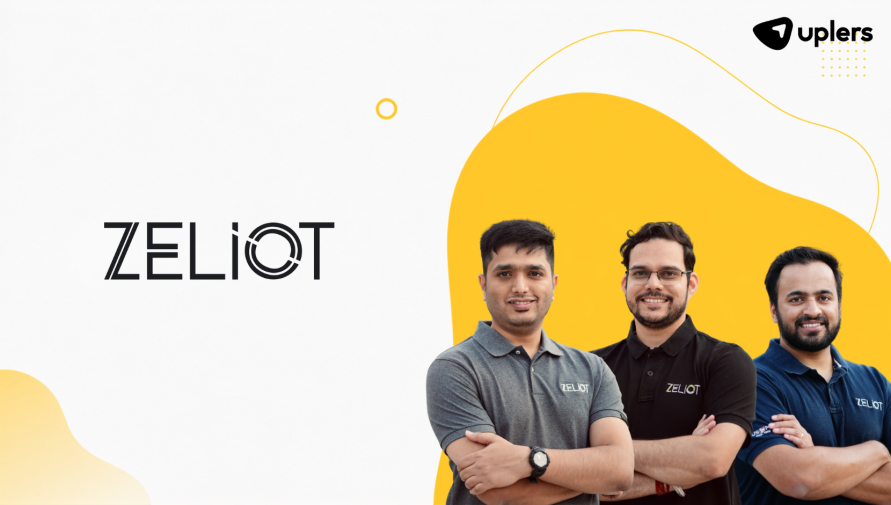
Zeliot is a Bengaluru-based data infrastructure company, co-founded in 2018 by Anup Naik, Sudeep Nayak and Sugam Sharma, that builds Condense, a real-time data streaming platform. Originally a connected-vehicle fleet management startup, the company pivoted after realizing its automotive customers needed a general-purpose real-time data platform rather than fleet-specific software. Zeliot has raised only $525,000 in outside capital, a 14% stake sold to Bosch in 2022, after Bosch was first a paying customer for several years. The company remains profitable, sells exclusively to Indian customers including Tata Motors, Volvo, Royal Enfield, TVS, and Ashok Leyland, and has never raised funding from a traditional venture capital firm.
Zeliot has raised exactly $525,000 in its entire existence. That single check came from Bosch, bought a 14% stake, and remains the only outside capital the company has ever taken.
On that money, Anup Naik and his co-founders, Sudeep Nayak and Sugam Sharma, built a customer list that includes Volvo, Tata Motors, Royal Enfield, TVS, Ashok Leyland, Adani, and Vodafone, around a real-time data streaming platform called Condense. Anup thinks the gap between that record and the attention it gets, compared with what a funding round would draw, is itself a story.
“If someone raises ten million dollars to get to ten million dollars in revenue, that’s not wrong,” he says. “They used what was available to them. We just found a way to build the business without raising it.” What bothers him is the asymmetry in how each gets covered. “People find raising ten million dollars more fascinating than building a business with ten million dollars of actual revenue,” he says. “That’s just the perspective we’re stuck in right now.”
The Bias He Didn’t Pretend Wasn’t Real
Anup studied at BVB Engineering College in Hubli, a solid regional school, not an IIT. Asked directly whether that cost him anything, he doesn’t deflect the question or overcorrect into grievance. “The bias does exist,” he says, “and it’s not entirely wrong. Pick India’s top 50 startups, and most of them will have an IIT founder somewhere, directly or indirectly. That’s a real pattern, not just a prejudice.” What he pushes back on is the leap from that pattern to a judgment about any individual founder who didn’t go to one.
He thinks the bias shows up differently depending on who’s writing the check. Venture capitalists, he argues, are spending someone else’s money and have to justify every bet to their own investors, so a founder’s pedigree becomes a convenient box to check off. Large enterprise investors don’t carry that same pressure. When Bosch eventually invested in Zeliot, Anup says the questions were blunter and more useful: is the business actually making money, are the customers real, is it burning cash, and for what. “It’s more fundamental than the hype,” he says. “You can’t go in there and just talk about how great your product could be. You get caught out in minutes.”
A Customer First, an Investor Years Later
The Bosch relationship didn’t start as an investment at all. Bosch was a paying customer of Zeliot’s product for roughly two to three years before any money changed hands for equity. Watching the team work, Bosch eventually came back with a different pitch: if we want to keep this relationship and add real value to it, we’d rather have a stake in your company than just an invoice. Anup never pitched Bosch as an investor. The commercial relationship came first, and the cap table followed from it, not the other way around. Bosch still buys from Zeliot today, years after the investment, as one of its larger customers.
From a Fleet Problem to a Data Problem
Zeliot started in 2018 building connected-vehicle software, the kind of fleet management platform that helps a company track and maintain its vehicles. The business that actually sustained them early on, though, was IT services work on the side, margin they deliberately used to fund their own product rather than chase outside capital from day one. “Anyone can tell you we wasted our first four years,” Anup says. “We took the conservative route on purpose.”
The real shift came from listening to their own customers. The biggest fleet owners weren’t logistics companies, they were the vehicle manufacturers themselves, TVS and Royal Enfield for bikes, Tata Motors for trucks, since they carry the responsibility for maintaining what they’ve sold. Talking to them directly, Anup, Sudeep and Sugam realized these companies didn’t actually want fleet management software. They wanted a proper platform for handling their real-time data well, something fleet-specific tools were never built to do. That reframing became Condense: not a tool for one industry, but infrastructure for any business that needs to act on real-time data, whether it comes from vehicles, factory machinery, or something else entirely.
Why They’ve Never Sold Outside India
Zeliot is registered in India, headquartered in India, and to date has sold exclusively to Indian customers. Anup is unusually blunt about why more Indian data-infrastructure founders choose to incorporate in San Francisco or Singapore instead. “It’s a little unfortunate,” he says, “even though they’re not wrong that the ecosystem is better there.” His own bet runs the other way: prove a product’s value in a tougher, more price-sensitive market like India first, and succeeding in a more forgiving market like the US or Europe afterward gets easier, not harder.
He has a specific explanation for why SaaS adoption lags in India in the first place. In the US, the cost of building and maintaining something in-house is usually so much higher than buying a managed product that companies default to buying anything that isn’t core to their business. In India, that math flips. It’s often genuinely cheaper, and culturally more accepted, to put ten fresh graduates on a problem for six months than to pay for an ongoing subscription. He thinks that gap is narrowing, helped along by AI, but it’s real today, and it’s the actual reason selling recurring software in India is harder than selling the same thing in the West.
Wearing Whatever Hat the Company Needs
Zeliot has grown to around 100 people without most of its founders ever specializing narrowly. One co-founder stayed focused on the technical architecture throughout and effectively built the platform himself. Another has stuck to finance. Anup has moved through mobile app development, sales, and now marketing, depending on what the company needed at a given point. “We wear different hats at different times,” he says. “Now we have the luxury of hiring real specialists too, but a founder always takes ownership of building that function up first.”
Even the product’s name came out of the same unpretentious instinct. Condense takes data from scattered sources and turns it into one stream a business can act on, which is exactly what the word means. It came from an offhand remark by one of the co-founders, and today more people recognize the company by that name than by Zeliot itself. Anup doesn’t dress that up. “Zeliot is still a fairly peculiar, complicated name,” he says. “Condense is just easier to remember.”