Snippet
In 2018, Sidhhant wrapped up a Fantasy Football platform exit and went somewhere with lower margins and a more interesting problem: building infrastructure for the grassroots sport that had no broadcast budget, no athlete database, and no record that its matches had ever happened.
Six years later, 500,000 matches streamed, 20,000+ kabaddi athlete profiles, a Series A, and an athlete from Ahmednagar on the national kabaddi team. The problem is starting to look like it was worth going to.
What Sidhhant kept running into wasn’t a market insight. It was a frustration.
He was running a YouTube channel called Free Hit- cricket and football coverage, when he first hit the data wall. Match statistics, athlete records, performance profiles: they existed inside federations and associations, and they were available to nobody outside them. There was no technical reason for this. The sports data layer had been built for broadcast companies that already had the relationships. Anyone building outside that closed loop was working around a gap nobody had bothered to fill.
By the time the frustration sharpened into something actionable, Sidhhant had already done something else. Thisgameweek, a fantasy football platform, a Nazara partnership, had an exit. He didn’t take what that momentum pointed toward. He went looking for where the data wall was highest.
What he found wasn’t a market waiting to be unlocked. Broadcasting a single grassroots match with a TV truck cost between ₹5 and 10 lakh. For a state kabaddi association, a district football tournament, a volleyball federation running on thin margins, that cost didn’t make coverage expensive. It made it impossible. The sport was happening. Nothing was capturing the fact that it had happened.
The layer nobody was building
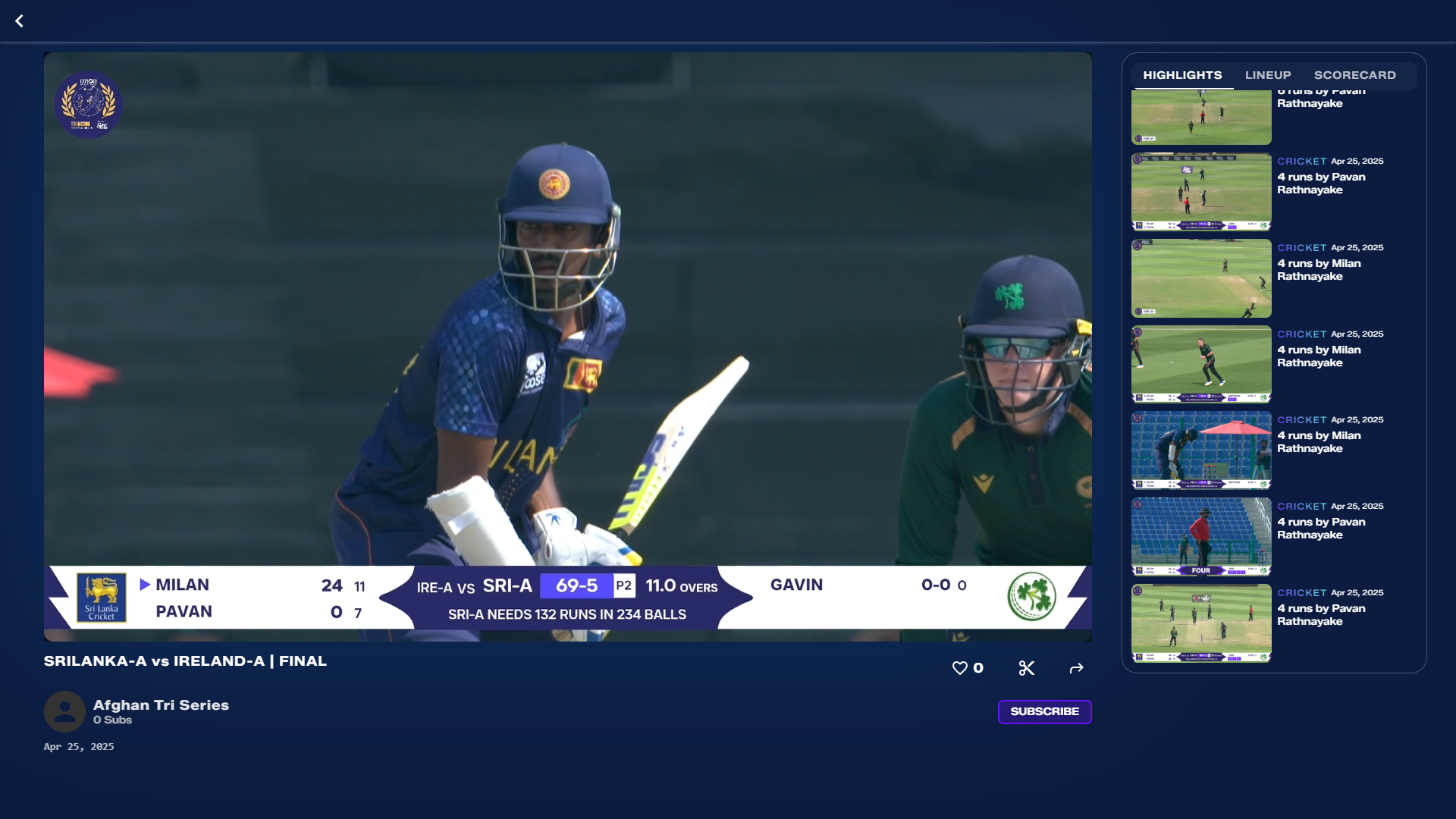
The first SportVot product was a broadcasting toolkit: an app-based system that could livestream a match without a production crew, statistics running alongside the stream. The pitch wasn’t about reach. It was simpler: a match that didn’t exist on the internet could now exist on the internet, for a fraction of what that used to cost.

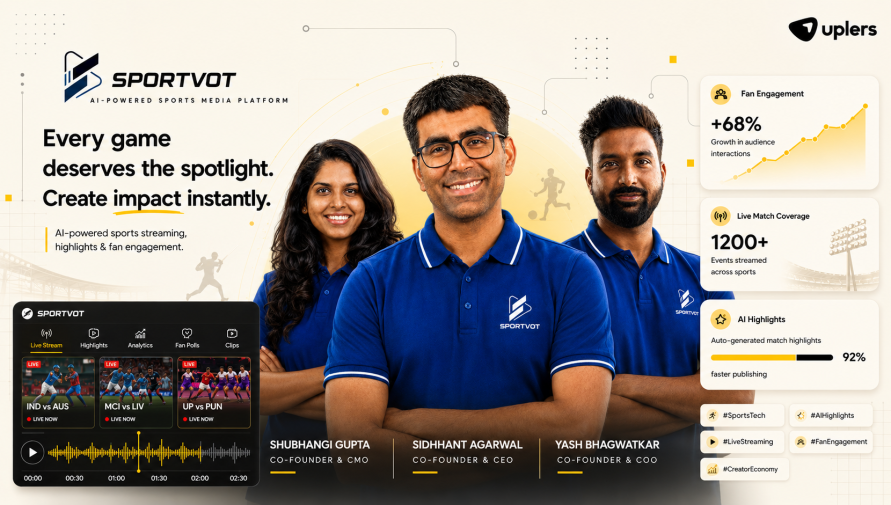
Shubhangi Gupta and Yash Bhagwatkar came in around that framing, Shubhangi on marketing, Yash on operations. The three of them weren’t building a sports media company the way the phrase usually implies. They were building the infrastructure layer that sports media had always assumed was already there: the thing between a match being played and a match being findable.
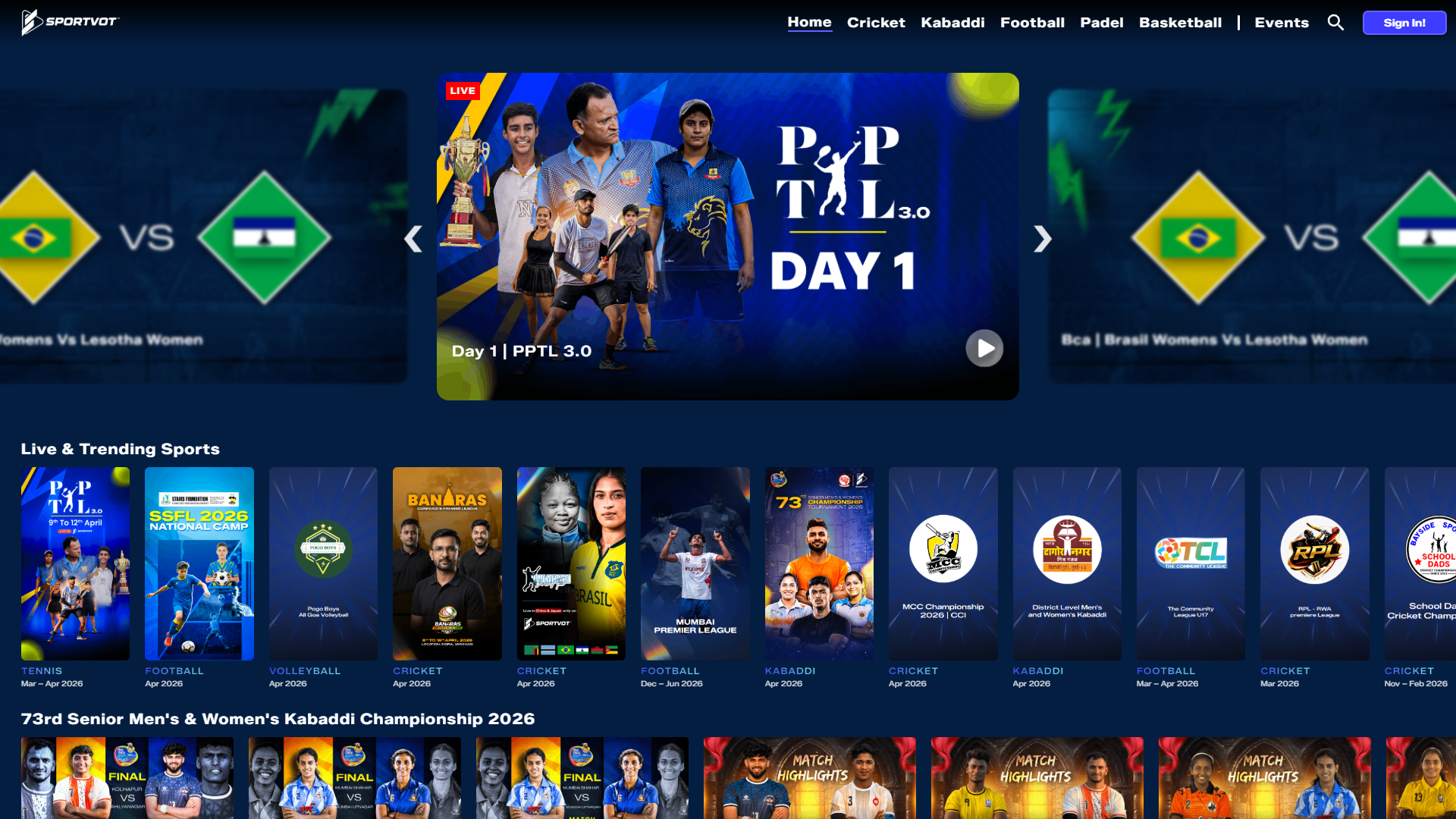
Sidhhant’s second argument took longer to prove. Broadcasting isn’t the only thing the layer can do. Once you have match footage, you have statistics. Once you have statistics, you have athlete profiles. Once you have athlete profiles, you have something a coach or a federation can actually use, a way to find the athlete who’s been performing without anyone watching. In grassroots Indian sport, that’s most athletes.
The Super Division, June 2023
DS3 was a football club. Sidhhant used SportVot’s own technology to scout its players. The same match data and athlete profiles the platform had been building for federations, used to select an actual squad, for an actual season.
In June 2023, DS3 won the Super Division.
Sidhhant had run a full season with his own tool, in a real competition, and won. The second argument, that the layer beneath broadcasting was also the layer beneath scouting had been tested somewhere that couldn’t be argued with.

Twenty thousand profiles, And a pro athlete from Ahmednagar
Sidhhant talks about kabaddi the way people talk about a sport they didn’t expect to find themselves in. It’s the biggest sport on the SportVot platform. Twenty thousand athlete profiles. The Maharashtra State Kabaddi Association uses the database. So does the national governing body.
An athlete from Ahmednagar made it to the Indian national kabaddi team. The database was part of how that happened. He had been performing at a level that warranted national attention but had no broadcast record behind him. A match that couldn’t be found wasn’t a match anyone had made the argument for.
When Sidhhant talks about what was invisible before SportVot, he comes back to the specifics. The Indian Railways jersey wasn’t on television. State association rosters weren’t on any searchable database. PSU-level talent had no trail anyone outside the sport could follow. The ₹5-to-10-lakh broadcast cost wasn’t just a pricing problem, it was the mechanism by which an entire tier of Indian sport had stayed unseen.
By FY24, SportVot had streamed over 500,000 matches to a cumulative audience of 100 million, across 30+ countries.
Revenue came in at ₹4.5 crore.
Partners include the Brahmaputra Volleyball League, Football Delhi, the Maharashtra State Kabaddi Association, and ITTF.Kabaddi wasn’t the sport that made SportVot known.
It was the sport that showed what the platform was for.
What leaving gaming was for
The product still has work to do. App Store reviews flag crashes, lag, and auto-shutdowns during live streams. For Sidhhant, this isn’t an abstraction but a stream that fails during a match that was already hard to make visible is the promise breaking exactly where it matters. The ₹32.7 crore Series A, led by IAN Alpha Fund and preceded by Omidyar Network India, is part of how that gets fixed.
Sixty people in, he’s candid about what he didn’t understand early enough. It’s not the market or the product, it’s communication. Specifically: building a team where conviction and ambiguity can sit together long enough to do something with them. The sports SportVot works don’t come with a clean quarterly logic attached. Finding people who can stay oriented without the obvious signal, who don’t need certainty before they can move, turns out to be harder to hire for than he expected.
He left a high-margin gaming exit to build infrastructure for the sport nobody was filming. That’s either the wrong bet or the only bet. An athlete from Ahmednagar on the national kabaddi team, 500,000 matches on record, and a Series A later, it’s starting to look like the only one.