Snippet:
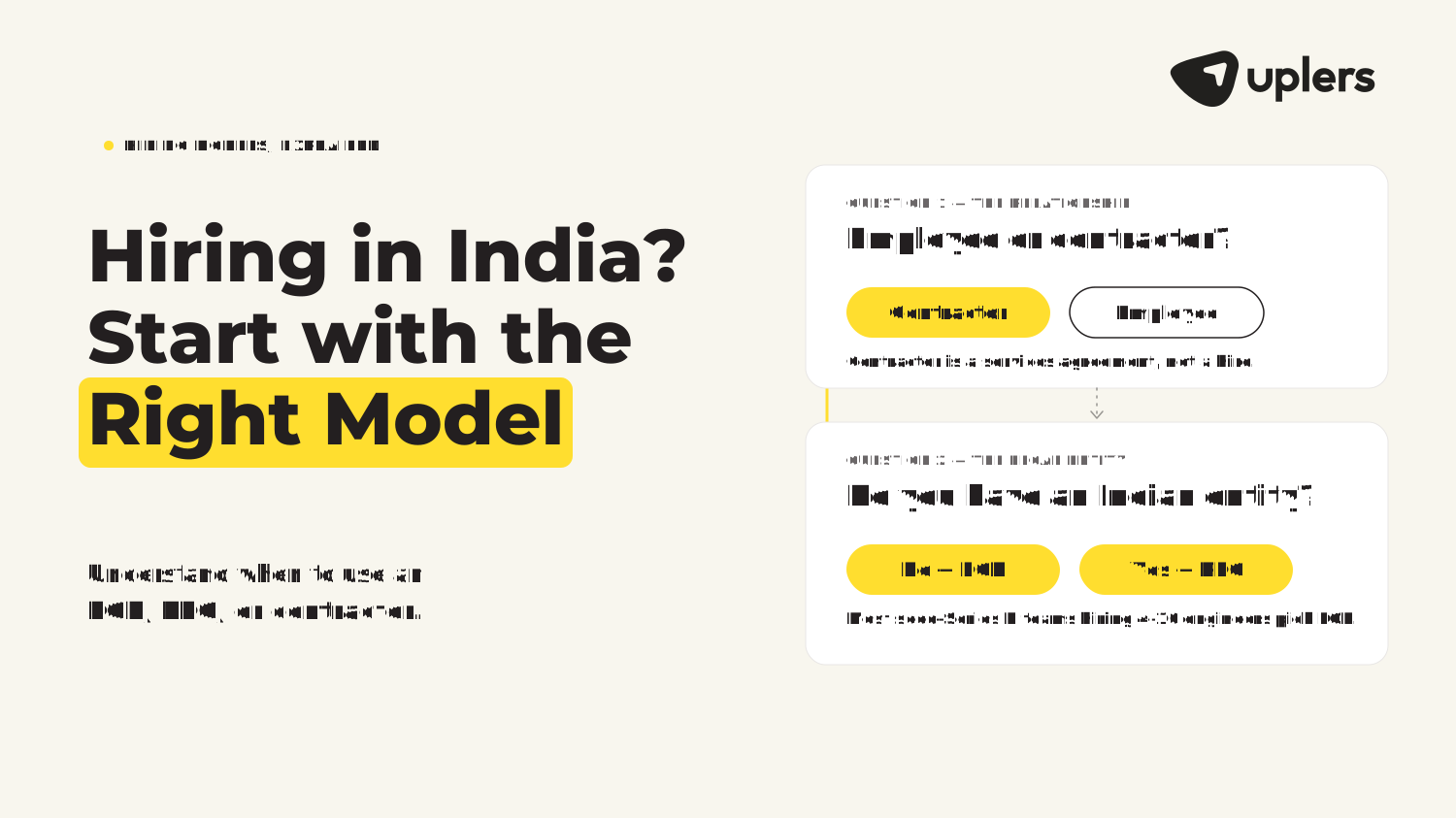
- EOR, PEO, and contractors aren’t three equal hiring models. They answer two separate questions.
- First decide: employee or contractor? That depends on the working relationship.
- Choose an EOR vs. a PEO depending on whether you have an Indian legal entity.
- Contractor isn’t a lighter EOR; it’s not an employment relationship at all.
- Most seed-to-Series-B founders hiring their first 4-10 engineers in India use an EOR.
- Uplers helps startups hire engineers from India, with EOR support available as a value-added service when needed.
Founders often confuse this as one question, but it’s actually two.
EOR and PEO both answer “who legally employs this person, and do I need an entity for that?” The contractor answers something else entirely: “Is this even an employment relationship?”
Employer of Record (EOR), Professional Employer Organization (PEO), and independent contractor arrangements are misrepresented as three competing hiring models. They aren’t.
Treating all three as equal options is where founders get stuck.
The first decision should be whether you’re hiring an employee or engaging an independent contractor. Once that’s clear, the right employment structure becomes much easier to choose.
This guide sorts hiring decisions the way they should be decided. This is for US founders hiring engineers in India who don’t have a local entity yet, or aren’t sure if they need one.
The Real Question: Employee or Contractor First
Everything starts here.
Before comparing EORs or PEOs, decide whether the role should legally be an employee or an independent contractor. That decision depends on the working relationship.
For example,
- Who controls how and when the work is performed
- Whether the engineer works exclusively for your company
- How closely they’re integrated into your team and operations
- Whether the relationship is ongoing or project-based
If you set their working hours, they use your tools, they report to you daily, and they work exclusively for you, that’s an employee, whatever the paperwork says.
If they control how the work gets done, can take other clients, and are engaged for a defined scope, that’s a contractor.
Getting this wrong creates misclassification risk, which can expose companies to employment claims, tax liabilities, penalties, and compliance issues across jurisdictions. US misclassification can cost up to USD 26,253 per worker annually.
Why this comes first: EOR and PEO are both employment structures. If the relationship isn’t genuinely an employment relationship, neither applies and you’re looking at a contractor agreement instead.
If You’re Hiring an Employee: EOR or PEO?
Once you’ve established that you want to hire a full-time engineer in India, the next question is straightforward:
Do you already have an Indian legal entity?
That’s what separates an EOR from a PEO.
What Is an Employer of Record (EOR)?
An Employer of Record (EOR) is a third party that becomes the legal employer of your engineers in India while you manage the engineers’ day-to-day work.
The EOR typically handles:
- Employment contracts
- Payroll
- Statutory benefits
- Tax withholding
- Ongoing employment compliance
When it fits: An EOR is best suited for startups that want to hire full-time engineers without establishing an Indian subsidiary. This is the default model for most seed-to-Series-B founders making their first India 4-6 hires.
EOR is currently the fastest-growing structure for cross-border tech hiring. The global market in 2026 is valued at roughly $5.97 billion in 2026, with Asia-Pacific as its fastest-expanding region.
What Is a Professional Employer Organization (PEO)?
A Professional Employer Organization (PEO) works through co-employment. Unlike an EOR, it only makes sense if you already have your own Indian entity.
A PEO doesn’t become the legal employer but takes agreed HR, payroll, and admin functions off your plate while you remain the legal employer.
When it fits: You’ve already registered an entity in India and want administrative support without creating a full local HR function.
For most early-stage US startups making their first hires in India, a PEO isn’t the starting point.
EOR vs. PEO: Quick Decision Check
Here’s a simple solution to figure out how to hire an engineer in India. If you:
Don’t have an Indian entity: An EOR is usually the right choice for hiring full-time employees.
Already have an Indian entity: A PEO can simplify payroll and HR administration while you remain the legal employer.
The distinction isn’t about company size or budget. It’s about who legally employs the engineer.
If the Work Is Genuinely Independent: Contractor
Not every hire needs to become an employee.
Independent contractors provide services under a commercial agreement, invoice you directly, and neither side contributes to statutory employment benefits.
Where it fits: Defined projects, specialist consulting, short-term work, or engagements where the person controls their own schedule and likely serves other clients too.
Typical examples include building a prototype, conducting a security audit, migrating infrastructure, or delivering specialist consulting.
Where it doesn’t fit: Full-time, exclusive, indefinitely ongoing work directed by you.
Where founders get into trouble is treating contractors like employees: fixed working hours, exclusivity, indefinite engagements, internal reporting structures, and performance management all weaken the case for independent contractor status.
This is why a contractor isn’t a peer to an EOR or PEO. An EOR and a PEO are employment solutions, deciding who is the legal employer. In a contractor arrangement, no employer relationship exists at all.
EOR vs. PEO vs. Contractor: Side-by-Side
| EOR | PEO | Contractor | |
| Category | Employment | Employment | Non-employment |
| Legal employer | The EOR | You (co-employment) | No employer relationship |
| Indian entity needed | No | Yes | No |
| Payroll/compliance ownership | Sits with the EOR | Shared, but entity liability is yours | Sits with the contractor; classification risk sits with you |
| Best for | Hire first 5-10 full-time employees without an Indian entity | Companies with an entity that want admin support | Scoped, project-based, or short-term work |
How Uplers Fits In
Choosing between an EOR, PEO, or contractor solves the employment structure. It doesn’t solve the hiring challenge.
Uplers helps startups find and hire startup-ready engineers from India using AI-led sourcing, human evaluation, and role-specific hiring intelligence. Founders receive their first shortlist of relevant, evaluated candidates within 48 hours from a talent network of 3.5 million+ professionals.
When founders choose a contract hiring model, Uplers also offers Employer of Record (EOR) support as a value-added service. That means you don’t need to source talent through one vendor and then look for a separate EOR provider. Uplers handles employment contracts, payroll, compliance, and onboarding while you manage the engineer’s day-to-day work.
In short:
- Need help finding the right engineer? Uplers is your hiring partner.
- Need employment infrastructure without an Indian entity? EOR is available as part of the engagement.
- Already have an Indian entity? You can simply use Uplers for sourcing and hiring while managing employment through your existing setup.
Common Mistakes When Choosing Between the Three
Picking EOR or PEO based on cost alone: An EOR may cost more than hiring a contractor, but they’re designed for different employment relationships. Entity status decides which one is even available to you; cost is a secondary filter.
Treating a contractor like a full-time employee: If someone works exclusively for your startup under your daily direction, calling them a contractor won’t necessarily make them one. This is the exact misclassification pattern that gets flagged.
Assuming a PEO works without an entity: If you’re not already registered in India, a PEO isn’t on the table yet. You may need to opt for an EOR.
Conclusion
Don’t start with “EOR or PEO or contractor.” Start with “employee or contractor.”
If it’s an employee, your entity status determines whether an EOR or PEO fits your business. If the work is genuinely independent and project-based, a contractor is the right choice
Get this order right, and the rest of the decision takes care of itself.