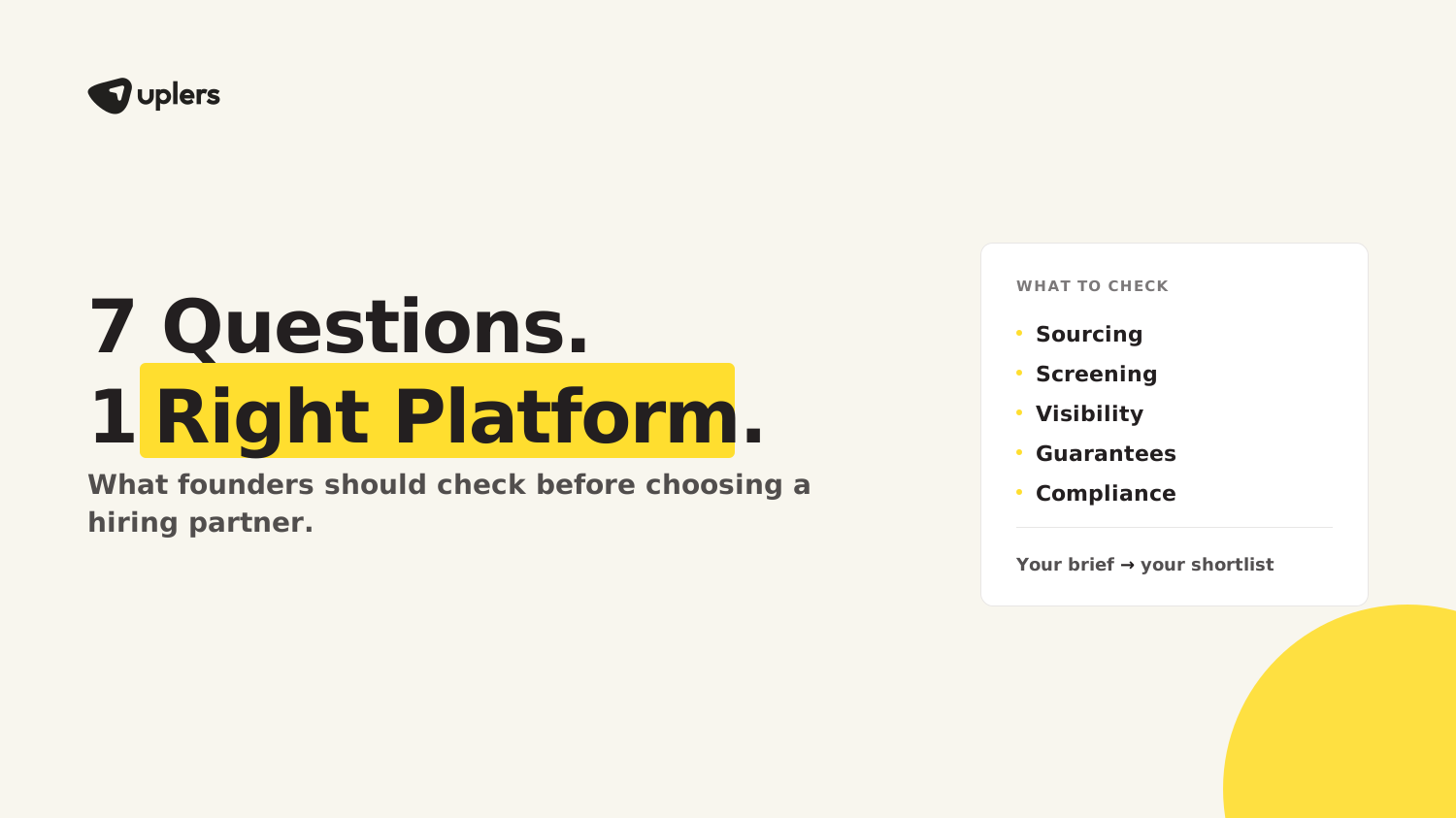
Snippet
This Blog discusses:
- Volume, speed, and reviews don’t tell you how a hiring platform actually works.
- The real evaluation point is what happens between your hiring brief and the shortlist you receive.
- These 7 questions surface the platform’s actual process, including sourcing, screening, visibility, guarantees, and compliance, before you commit.
Founders mostly compare hiring platforms on three things: candidate volume, hiring speed, and online reviews.
Those signals are important, but they don’t tell you how the platform works.
The more important question is: What happens between the moment you share your hiring requirement and the moment you receive a shortlist?
A good hiring platform should have a clear process for understanding the role, finding relevant candidates, screening them, and giving you enough context to make a hiring decision.
This matters because hiring teams are putting more emphasis on quality, not just speed.
So, before you commit to a hiring platform, ask these seven questions.
Why Evaluating a Hiring Platform Matters More Than It Seems
Choosing a hiring platform is not just a vendor decision. It can affect how much founder time goes into recruiting, how quickly a role gets filled, and how much work remains with your team.
The hidden cost of picking the wrong platform
A bad match doesn’t just cost one bad hire. It costs the two weeks you spent reviewing irrelevant resumes, the interview slots wasted on candidates who were never close, and the search you now have to restart at a busier, more expensive stage of your company.
Most platforms look similar on the landing page
Most platforms promise some combination of quality candidates, faster hiring, and access to a large talent network.
That’s when you find out:
- How much information the platform needs
- Where candidates actually come from
- What it screens for
- How it selects the shortlist
- What information you receive
- What happens when a hire doesn’t work out
In other words, evaluate the workflow, not the pitch.
Before we move further, here are the top hiring platforms to hire engineers from India.
7 Questions to Ask Before You Hire Through a Platform
These questions help you move beyond marketing claims and understand the actual process behind a hiring platform.
1. What hiring model do you run, and does it match my stage?
Not every hiring platform operates the same way.
It could mean curated sourcing (you interview and close), full-service hiring (a recruiter runs the whole process), contract talent, contract-to-hire, or staff augmentation. Each has a different pricing structure and a different split of who owns what.
For example, a startup hiring one critical full-time AI engineer may want a curated shortlist while keeping interviews and the final decision in-house. A startup building an entire engineering team may need much more hands-on recruiting support.
Ask:
- Who sources the candidates?
- Who screens them?
- Who conducts interviews?
- Who communicates with candidates?
- Who closes the hire?
- What happens after the candidate joins?
Look for: A well-defined engagement model, responsibilities, and handoffs.
2. What do you need from me before you start searching for candidates?
A platform can’t find the right candidate if it doesn’t understand what “right” means.
If the intake is five fields, like job title, stack, and years of experience, the platform is about to keyword-match.
A stronger intake explores the role behind the job description.
Hiring partners that build real search criteria ask about:
- What the person will own
- Product and company context
- Existing team structure
- Must-have vs. nice-to-have skills
- What “success in 90 days” looks like
- Seniority and decision-making scope
- Hiring timeline
- What would make someone successful in the role
Example: Two platforms get the same brief: “Senior Backend Engineer.” One asks nothing else and sends 25 resumes with “backend” in them. The other asks who the engineer reports to, whether this is a 0-to-1 build or scaling existing infra, and sends 3 people who’ve done that specific job before.
Look for: A structured discovery process that turns your hiring requirements into clear search criteria.
3. What and how do you evaluate for startup fit, beyond the tech stack?
A resume with the right keywords doesn’t tell you if someone can operate with ambiguity, own a roadmap, or move at startup speed.
Ask what the platform evaluates beyond keywords and years of experience. Depending on the role, this could include:
- Ownership of projects or outcomes
- Ability to work with ambiguity
- Execution experience
- Experience in a similar company stage or environment
- Product mindset
- Communication and collaboration
- Interest in the opportunity
- Evidence that their previous experience matches the role’s demands
Be precise with language here. “Screening for startup fit” is a specific, explainable process.
Also ask the platform to explain its terminology. “Screened,” “filtered,” and “startup-ready” should have specific criteria behind them.
Look for: Specific criteria and method, not a blanket quality claim.
4. Where do candidates come from, and how does the platform find them?
Ask directly whether candidates come from an existing talent network, active sourcing across other platforms (like LinkedIn or niche communities), inbound applications, referrals, or a mix of these.
Neither approach is inherently better. The important question is how the platform decides where to look for a particular role.
A common tech role might be filled quickly from an existing, well-matched talent network. A niche, senior, or hard-to-fill position might need the platform to actively source beyond its own network.
Ask:
- Does the platform search its existing talent network?
- Can it actively source candidates when the existing network isn’t enough?
- Does it use external professional networks or other sourcing channels?
- How does the sourcing approach change for specialized or difficult-to-fill roles?
- How are candidates from different sources evaluated consistently?
Look for: A clear explanation of the sourcing strategy and how it adapts to the role.
5. What visibility do I get during the search- reports and scorecards, or just a shortlist?
A shortlist is useful. Knowing why those candidates were shortlisted is even more useful.
Depending on the platform, you may receive:
- Resume and relevant experience
- Skills evidence
- Screening outcomes
- Candidate intent
- Assessment or scorecard information
- Interview notes or recordings
- Potential gaps or concerns
The goal is to give you enough evidence to make your own decision.
For example, instead of receiving:
Candidate A – Senior ML Engineer – 7 years’ experience
you might want to know:
Why this candidate: The ML engineer has built infrastructure in a small product team, owned deployment, and has experience working with limited engineering resources.
That context makes the shortlist more actionable.
Look for: Enough evidence to understand the recommendation and make your own call.
6. What’s your replacement guarantee, and what triggers it?
A replacement guarantee can sound reassuring until you look at the terms and policies.
Ask for specifics: when does the guarantee window start, and how long does it run? Does it cover a candidate leaving voluntarily, being let go for performance, or backing out after accepting an offer? Are there exclusions? Is the replacement free, or does it come with an additional fee?
“We offer a replacement guarantee” means nothing without these details in writing.
Look for: Documented terms covering the guarantee period, qualifying situations, exclusions, and replacement process.
7. Who owns contracts, payroll, and compliance for full-time and contract hires?
Don’t assume the hiring platform handles employment administration simply because it helped you find the candidate.
For full-time hires, clarify who handles the employment contract, payroll, taxes, benefits, and applicable compliance obligations.
For contract hires, ask who manages the contractor agreement, invoicing, payments, tax-related responsibilities, and other applicable requirements.
Either way, ask what responsibilities remain with the startup. This becomes especially important when hiring across countries or jurisdictions, where employment and contractor rules can differ.
Look for: A clear division of responsibility for both hiring types, with no ambiguity around contracts, payroll, compliance, or payments.
Here’s how to choose the hiring partner that shares only relevant profiles rather than dumping 30 irrelevant resumes.
Red Flags When a Platform Can’t Answer These Clearly
Be cautious if a platform gives vague answers to basic operational questions. Common red flags include:
- Vague sourcing claims: “We have thousands of candidates” without explaining how they are sourced.
- Generic screening language: “Top talent” without defined criteria.
- Unclear ownership: You can’t tell who handles sourcing, interviews, contracts, or payroll.
- Vague guarantees: A replacement policy exists, but the terms aren’t documented.
- Resume dumping: You receive 20 profiles without enough context to understand why they were selected.
- One-size-fits-all processes: The same approach is used regardless of role, seniority, or hiring situation.
- Unclear commercial terms: Fees, engagement periods, replacement conditions, or cancellation terms aren’t explained upfront.
A platform doesn’t need to have the same process as every other provider. It does need to be able to explain its process clearly.
Before You Hire Through Any Platform
What separates platforms is whether they can answer these questions clearly, specifically, and in writing, or whether they default to reassurance instead of process.
Run any platform through this checklist before you commit. The right platform should be able to explain its process clearly without making you take its promises on faith.
Platforms like Uplers, for instance, are built to make this easy to check upfront with clearly defined hiring models, transparent screening criteria, and documented guarantees. The hiring partner translates requirements into candidate searches, screens resumes, and presents only relevant profiles for founder review.