If you want to know what makes good candidates pick startup chaos over the stability of a big company, you are in the right place. I have scaled my own startup for 5+ years. In that time, I have also helped 500+ founders scale theirs with startup-ready candidates. So I have seen what makes a good candidate stick around. I have also seen what makes them walk away.
Strong candidates rarely reject a startup because they dislike startups. They reject it because they cannot verify it. The biggest problem for an unknown or stealth startup is missing information.
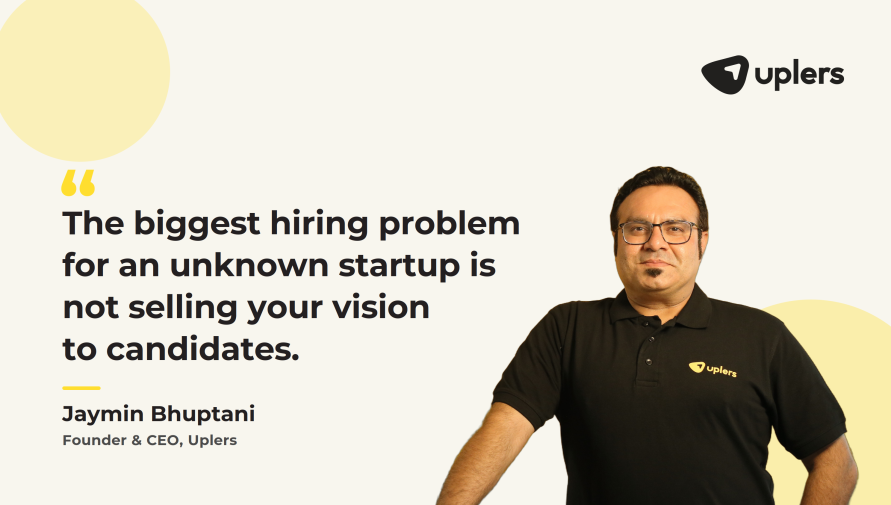
– Jaymin Bhuptani, CEO & Founder, Uplers
This article covers both sides: why exceptional candidates join an unknown startup, and why they avoid one. Each point comes from what I have seen in hiring conversations, and from published research where it exists.
Why candidates join an unknown startup
The candidates you want already like what startups offer. A study of more than 10,000 US R&D employees found that people at startups care less about job security and salary. They care more about independence and responsibility (Sauermann, Strategic Entrepreneurship Journal, 2018).
So you do not have to convince them that startups are good. You have to show them that your startup is worth the bet. These 5 factors help you make that case.
1. The founder and their background
The first thing they want to know is who is building this. Have you done this before? Have you worked somewhere that gave you the exposure to build something of your own?
They are drawn to founders who have:
- Domain expertise: deep knowledge of the problem they are solving.
- Emotional intelligence: a good sense of how they talk to people and about people.
- A clear vision: a specific, well-put idea of where the company is going.
Your backers matter too. The amount you raised is fine, but the credibility of the VC matters more. So give them that confidence.
Practical tip: put your background and your backers where candidates see them first. Your job description, your job post and your first call should all answer one question. Who is behind this?
2. Trust in the vision and the problem
Candidates need to believe the problem is real, the solution can scale and the plan will actually work. A strong candidate is quietly asking one question. If I give this 3 years, will it matter?
Selling the vision helps, but it has to be specific. “We are changing how businesses work” tells them nothing. Now compare it with this: “We cut invoice reconciliation from 5 days to 1 for mid-size retailers, and 40 of them pay us today.” That gives them something to believe.
3. Growth they can see
At a startup, growth comes from working close to the founders and taking on more scope. Candidates consider an unknown startup when they know exactly:
- Founder access: how closely they will work with the founders.
- Business impact: what difference their role will make to the business.
- Growth path: how they could grow as the company grows.
4. Autonomy and ownership
Good engineers and builders want to own entire systems, functions or products. No red tape, fast decisions and a real say in where the company goes are big selling points.
Strong candidates join to own meaningful work. Money and equity matter, but they are only part of the reason. So make the scope concrete in the offer conversation.
5. Meaningful equity and upside
An unknown startup carries high risk, and the financial upside has to reflect that. Top candidates expect meaningful equity and an open conversation about how their ownership could grow in value over time.
Base pay usually does not win the argument, because startups do not reliably pay more. The upside has to live in the equity.
Why good candidates avoid an unknown startup
Almost every reason I see candidates walk away comes back to missing answers. When a candidate cannot find an answer, they assume the worst one.
1. Weak employer branding
If you cannot explain your vision, your mission, what the company does and why it exists, candidates lose trust fast.
2. A vague role and impact
You might not have a 30-60-90-day plan ready for them, and that is okay. They still want to know what impact their role will have. If that part is vague, they cannot tell whether the job is meaningful or just messy.
3. Vague compensation
Fuzzy answers on salary, equity or how the equity is valued make candidates nervous. To them, it means you either have not thought it through or you are avoiding the conversation. Neither builds trust.
4. No visible growth path
Candidates want to know where the role goes next. If the company grows, does the role grow with it? Will they lead a team, own a function or stay an individual contributor? No plan feels like no future.
5. Slow communication and a slow hiring process
A late reply, a missed follow-up or a 6-round process with long gaps tells the candidate how your company works. Startups sell speed. A slow hiring process goes against that pitch before the candidate even joins.
Speed also matters because good candidates do not stay on the market for long. Often, the founder who replies within 24 hours is the one who gets the candidate.
6. Silence on funding and runway
This is the question most candidates want to ask and many feel awkward asking. How much runway do you have? Who are your investors? What happens if the next round does not close?
How founders can make their startup attractive to candidates
Lead with credibility signals
Put founder backgrounds and investor names on your job posts and job descriptions. Be direct about them when you talk to a candidate.
Here is what to share at each stage:
| Stage | What to share |
| Job post and job description | Founder backgrounds, investor names and the problem you solve. |
| First call | A specific version of your vision, the impact of the role and how closely they will work with you. |
| Offer conversation | Expected outcomes, equity details, and funding and runway. |
Be honest about the hard parts
Selling only the upside can backfire. Research on realistic job previews shows a trade-off. When you show the job honestly, downsides included, your company looks slightly less attractive. It also looks more honest, and it sets realistic expectations (Earnest, Allen and Landis, 2011).
Tell candidates what is messy, what might change and what support does not exist yet. The ones who stay interested after hearing the hard parts are the ones who will stay after they join.
Make the offer specific
- Expected outcome: write down exactly what impact the candidate has to create.
- Equity: explain it in plain terms, including the number of options, the vesting schedule and what it could be worth under different outcomes.
- Founder time: share how often they will work directly with you.
Run a fast, respectful process
- Response time: reply within 24 to 48 hours at every stage.
- Rounds: keep only the rounds that actually test for the role.
- Feedback: give clear feedback, even when the answer is no.
The bottom line
Good candidates want to join startups that feel real, honest and clear. If they have a vision to believe in, a role they can picture and equity they understand, that is enough.
You also want to gauge whether a candidate is startup-ready or not, and here is how to do that.