














About
PricingContact
Hackerrank-logo
airbnb-logo
Darwinbox-logo
Gitlab-logo
Tripadvisor-logo
Airbase-logo
Architect-labs-logo
Threatmodeler-logo
Rattle-logo
Hackerrank-logo
airbnb-logo
Darwinbox-logo
Gitlab-logo
Tripadvisor-logo
Airbase-logo
Architect-labs-logo
Threatmodeler-logo
Rattle-logo

Recently Added Ethereum Developers in our Network

Ravikiran S

Ravikiran SProfile Badge IC

Senior Lead & Ethereum Engineer14 Years of Exp
  • Go Lang
  • Java
  • C++
  • Routing
  • Git
  • SVN
  • OAuth
  • k8s
  • Database
  • Microservice
  • View all (11)

with industry experience in Software design, development and testing in domains of network, information security, telecom, blockchain, fintech. Linux/Windows OS platform server applications; high performance software engines and applications, multi- tier, scalable network software on Client-Server / Distributed architectures on cross platform OS, Cloud native development on AWS, GCP (Microservices).

Shubham Umate

Shubham UmateProfile Badge IC

Software & Ethereum Developer4 Years of Exp
  • Micro services
  • Performance Tuning
  • RESTful services
  • Go Lang
  • MVC
  • View all (6)

Looking to utilize technology and skills. Enthusiastic to learn. Hands-on experience in cutting edge technologies like Blockchain, Kubernetes, Docker.

JITO K J

JITO K JProfile Badge IC

Back End & Ethereum Developer9 Years of Exp

MERN stack developer with 5+ years of experience building and maintaining scalable web applications. Proficient in developing and deploying front-end and back-end applications using the MERN stack. (MongoDB, Express.Js, React.Js, Node.js). Strong problem-solving abilities and experience working in agile team.

Riya Singh

Riya SinghProfile Badge IC

Cryptography Researcher & Ethereum Developer4 Years of Exp

I like working with cryptography and zero knowledge proofs. I’ve been in the blockchain ecosystem for more than four years now. Feel free to connect! :)

MUHAMMED SHAHIL

MUHAMMED SHAHILProfile Badge IC

FULLSTACK DEVELOPER3.3 Years of Exp

Passionate and results-driven professional with a strong background in software development, cloud engineering, DevOps practices, and blockchain technology. Committed to leveraging cutting-edge technologies and best practices to drive innovation and optimize business processes. With a comprehensive understanding of the software development life cycle, cloud architecture, and blockchain systems, I am adept at designing and implementing scalable, secure, and highly available solutions.As a Cloud Engineer, I have successfully managed and maintained cloud infrastructure, ensuring optimal performance, scalability, and reliability. I have experience in deploying and managing applications on various cloud platforms such as Amazon Web Services (AWS), Microsoft Azure, and Google Cloud Platform (GCP). Leveraging Infrastructure-as-Code (IaC) tools like Terraform and configuration management tools such as Ansible, I have automated infrastructure provisioning and configuration, reducing deployment time and improving efficiency.With a strong foundation in software engineering, I have developed scalable and maintainable applications using various programming languages such as Python, Java, and JavaScript. I am proficient in utilizing agile methodologies to deliver high-quality software solutions within deadlines, collaborating closely with stakeholders to understand business requirements and translating them into technical specifications.

Anish Kumar

Anish KumarProfile Badge IC

Blockchain & Ethereum Developer3.2 Years of Exp
  • C++
  • Blockchain
  • Cryptography
  • Solidity
  • DSA
  • Cryptocurrency
  • Ganache
  • View all (11)

Your work is going to fill a large part of your life, and the only way to be truly satisfied is to do what you believe is great work. And the only way to do great work is to love what you do.

Ellipse 1Ellipse 2Ellipse 3Ellipse 4Ellipse 5Ellipse 6

India's largest network of 3.5M+ professionals

Check out some of the candidates who recently joined.

Search

Hire Ethereum Developers in 4 Easy Steps

01
DefineDefine ic

Tell us what you need

You define the role, we match immediately.

02
DiscoverDiscover ic

Meet the top talent

Get 3 to 5 highly relevant candidates in 48 hours.

03
EvaluateEvaluate ic

Interview with ease

Choose the candidate that aligns with your needs and we'll arrange an interview.

04
OnboardOnboard ic

Hire with confidence

Once you decide, we'll take care of the onboarding process for you.

Top Reasons to Choose Uplers

Hire in 48 Hours

Hire in 48 Hours

Receive the top 3-5 AI-interviewed profiles from our network within 2 days.

Top 1% Talents

Top 1% Talents

Only the best profiles vetted using AI and human intelligence make it to your inbox.

Start-up ready Matching

Start-up ready Matching

Engineers who wear multiple hats, move fast, and don't need hand-holding.

Works in 5+ Time Zones

Works in 5+ Time Zones

Engineers overlap with EST/PST: 4–6 hours daily and flexible to preferred time zones.

Employer on Record (EOR)

Employer on Record (EOR)

We handle all legal and payroll complexity of hiring from India, so you don't have to.

Simple Contracts

Simple Contracts

Straightforward agreement with top-most flexibility and freedom.

30 Days Cancellation

30 Days Cancellation

Cancel without any obligations in cases of dissatisfaction, financial instability, or business slowdown.

2X Retention Rate

2X Retention Rate

92% of placed engineers still with clients after 12 months

Various Skills that Ethereum Developers Possess

Access the talent network of 3.5M+ professionals with 100+ skill sets

profile collage
Begin your hiring journey with us!
Hire a top talent

What Founders & Engineering Leaders Say About Us

Testimonial thumbnail
Play video

Uplers earned our trust by listening to our problems and finding the perfect talent for our organization.

Barış Ağaçdan
Director
Testimonial thumbnail
Play video

Uplers helped to source and bring out the top talent in India, any kind of high-level role requirement in terms of skills is always sourced based on the job description we share. The profiles of highly vetted experts were received within a couple of days. It has been credible in terms of scaling our team out of India.

Aneesh Dhawan
Founder
Testimonial thumbnail
Play video

Uplers efficient, quick process and targeted approach helped us find the right talents quickly. The professionals they provided were not only skilled but also a great fit for our team.

Melanie Kesterton
Head of Client Service
Testimonial thumbnail
Play video

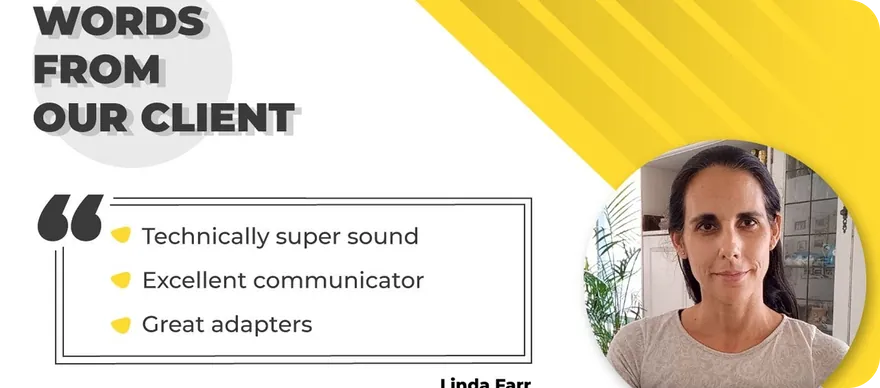
Uplers' talents consistently deliver high-quality work along with unmatched reliability, work ethic, and dedication to the job.

Linda Farr
Chief of Staff

Case Studies of Tech Companies

Check Our Latest Blogs

Hire Ethereum Developers Who Understand Gas Optimization and Security

If you've ever used a crypto wallet, traded NFTs, or interacted with DeFi apps, chances are you've used Ethereum. It's one of the most widely adopted blockchains for building decentralized applications, with its smart contract capabilities.

But building on Ethereum isn't just about writing code; it's about writing efficient and secure code. That's why hiring skilled Ethereum developers is crucial. Poorly written contracts can lead to high transaction fees and serious security risks.

Let us explore everything about Gas Optimization and tips on how to hire an Ethereum software developer.

New list icon

Why Ethereum Development Requires Specialized Skills

Building on Ethereum requires developers who understand how the platform really works. Ethereum runs on the Ethereum Virtual Machine (EVM) and uses smart contracts written in languages like Solidity or Vyper.

But building on Ethereum isn't just about writing code; it's about writing efficient and secure code. That's why hiring skilled Ethereum developers is crucial. Once a smart contract is live, it can't be changed, so even small mistakes can lead to big problems.

Gas optimization keeps operations affordable, while strong security practices protect user funds and your project's reputation.

New list icon

Understanding Gas Optimization

You have to pay a fee to run operations on blockchain, which can significantly increase the overall cost. Gas is like paying the validators for the resources you have used to conduct transactions.

High gas fees can discourage users, reduce adoption, and inflate operating costs. If you're building a contract that hundreds or thousands of users will interact with, even a small inefficiency can result in massive cumulative expenses.

Common gas optimization techniques developers should use

Here are some techniques you can follow to optimize Gas:

  • Use memory instead of storage when possible, as storage read/write is costly.
  • Use constant and immutable variables as they don't use storage and reduce deployment gas costs significantly.
  • Prefer private over public variables as public variables add auto-generated getter functions, increasing bytecode size.
  • Use interfaces and inheritance wisely. Interfaces reduce contract size; inheritance avoids expensive external calls.
  • Optimize variable sizes to optimize gas. Use smaller types for bytes; use uint256 for integers to align with EVM.
  • Order and group small types of instance variables to fit in one storage slot.
  • Use fixed-size variables over dynamic ones for better storage efficiency and lower gas use.

Real-world examples of gas inefficiencies and their business impact

Here are some examples of how gas inefficiencies can impact the business:

  • CryptoKitties Congestion Crisis (2017)
    Issue: Poorly optimized contracts led to bloated transaction sizes.
    Impact: Gas fees skyrocketed across Ethereum, and the transactions were slow.
  • SpankChain (2018) – Reentrancy Vulnerability
    Issue: The contract had inefficient storage access and was vulnerable to a reentrancy attack.
    Impact: 165 Ether was stolen due to poor contract design and unoptimized gas use.
New list icon

The Importance of Security in Ethereum Development

With so much money flowing through Ethereum-based systems, smart contracts are prime targets for attacks. Here are some common security risks and their consequences:

  • Reentrancy Attacks
    The external contract can "reenter" and repeat certain functions, like making multiple withdrawals, before the balance is properly updated, leading to funds being drained from the contract.
    Consequence: Massive loss of funds due to repeated malicious withdrawals
  • Integer Overflow and Underflow
    Smart contracts use fixed-size data types for numbers. If a value goes above or below the limit of what the system allows, the number wraps around to a massive value.
    Consequence: Hackers can manipulate balances or bypass logic checks.
  • Timestamp Dependence
    Contracts often rely on timestamps to trigger actions, like ending auctions or starting vesting schedules.
    Consequence: If time-sensitive logic is overly dependent on block.timestamp, it can be manipulated to execute early or delay critical actions.
  • Access Control Vulnerabilities
    When contracts don't properly restrict who can access certain functions, access control vulnerabilities occur.
    Consequence: unauthorized users can step in and change ownership, steal funds, or halt operations.
  • Front-running Attacks
    Attackers can see pending transactions and use them to get an unfair advantage.
    Consequence: Victims end up paying more, getting worse prices, or losing opportunities altogether.

Best practices for secure Ethereum development

Let's find out the best practices for secure Ethereum Development:

  • Use delegatecall with caution: It executes external code in the context of the calling contract, which can result in unexpected code execution.
  • Apply a reentrancy guard: Prevents functions from being called multiple times simultaneously.
  • Prefer msg.sender over tx.origin: Safer for authentication; avoids attacks via malicious contracts.
  • Set proper function visibility: Explicitly define visibility to prevent access to unauthorized users.
  • Avoid block timestamp manipulation: Timestamps can be manipulated; avoid using them for smart contracts.
  • Prevent overflow/underflow: Use at least Solidity 0.8 to ensure arithmetic safety.

Tools and frameworks for testing and securing smart contracts

Here are the recommended tools for testing and securing smart contracts:

  • Slither: A Static analysis framework for Solidity.
  • MythX: Security analysis tool
  • Securify: Static analysis for precise security assessments
New list icon

What to Look for in an Ethereum Developer

When hiring Ethereum developers, here are some skills and traits to look for:

Core Technical Skills:

  • Proficiency in Solidity or Vyper
  • Deep understanding of EVM internals
  • Experience with tools like Hardhat, Foundry, and Remix
  • Experience with Slither, MythX, or Formal Verification tools
  • Familiarity with Ethereum Improvement Proposals (EIPs)

Gas & Security Focus:

  • Has the developer demonstrated knowledge of gas-efficient patterns?
  • Can they explain why certain decisions impact gas consumption?
  • Are they familiar with common smart contract vulnerabilities and prevention techniques?
New list icon

Interviewing and Vetting Ethereum Developers

You need a structured approach when interviewing Ethereum developers:

Here are some of the questions you should ask:

  • In what ways does Ethereum's gas cost affect smart contract functionality, and what strategies can help reduce it?
  • What are some effective techniques for optimizing gas consumption in Solidity smart contracts?
  • What are the most common security vulnerabilities found in smart contracts, and what are the best practices to prevent them?
  • Which tools and frameworks do you prefer for Ethereum development, and what makes them your go-to choices?
  • Can you share a challenging Ethereum project you've worked on and explain how you tackled the difficulties involved?

Additionally, you should:

  • Conduct code reviews: Analyze past projects for gas efficiency and security patterns
  • Test projects: Assign a small contract to optimize gas usage or fix vulnerabilities.
  • Bounties: Offer rewards for identifying bugs in your codebase, mimicking real-world audits.
New list icon

Conclusion

Hiring the right Ethereum developers requires you to plan the project requirements ahead, so you always get the right talent. With high gas fees and security risks, even small mistakes can cost a lot.

That's why it's important to choose developers who know how to optimize gas and build secure contracts. They help you avoid problems and set your project up for long-term success. So don't rush, take the time to find the right talent that knows how to build Ethereum apps the right way.

AI-driven hiring platforms like Uplers make it seamless for you to find the right Ethereum developer for hire from a network of skilled candidates, whether you are looking to hire remote Ethereum developers or on-site developers.

Frequently Asked Questions

Our network includes Ethereum developers with 3+ years of experience in smart contract development (Solidity), DApp architecture, token creation (ERC-20, ERC-721), DeFi protocols, and Layer 2 scaling solutions like Optimism and Arbitrum.

We use a 4-layered vetting process combining AI and human intelligence. This includes communication assessments, aptitude testing, Solidity-specific coding challenges, and AI-recorded video interviews , all backed by a final technical interview with our internal panel.

Yes. Many clients prefer to add a final hands-on round. Once you shortlist candidates, you're free to assign a time-bound test project , we ensure timely completion and share the raw output with you for review.

Yes. Developers in our network are well-versed in optimizing gas usage and adhering to OWASP and OpenZeppelin standards to prevent vulnerabilities like reentrancy, front-running, or overflow bugs.

You'll start receiving AI + human vetted profiles within 48 hours of sharing your requirements. Final onboarding typically happens within 5–7 business days, depending on your interview process.

We offer a lifetime free replacement policy. Whether it's due to performance, communication, or personal reasons, we'll quickly initiate a replacement without charging anything extra.

Yes. We prioritize time zone compatibility. Most Ethereum developers in our network are comfortable with partial or full overlap in EST or PST time zones to ensure smooth collaboration.

Absolutely. You can choose between long-term contract hiring through Uplers (we manage payroll and compliance) or direct hiring with a one-time success fee. We'll guide you on the best model based on your budget and engagement goals.

We run rigorous background checks , including in-person address verification and work history audits. Developers also sign exclusivity agreements and are assigned a talent success coach to ensure full-time engagement and accountability.

You'll have a account manager for ongoing support and a talent success coach for the developer. We ensure smooth onboarding, regular check-ins, and proactive feedback collection to resolve any roadblocks.

Yes. Many Ethereum developers also bring hands-on experience in integrating decentralized oracles (like Chainlink), decentralized storage (IPFS), GraphQL querying (The Graph), and Layer 1/L2 bridges.

We only work with high-integrity professionals who've passed behavioral screenings. If a no-show occurs (which is rare), we immediately activate backup options. Our large vetted network ensures you're not left waiting.

Ethereum developer costs start from $2,500/month, depending on experience, complexity of the role, and working hours. Our pricing is fully transparent, no hidden markups or platform ambiguity.

View Our Pricing for 2025 - 26