Snippet:
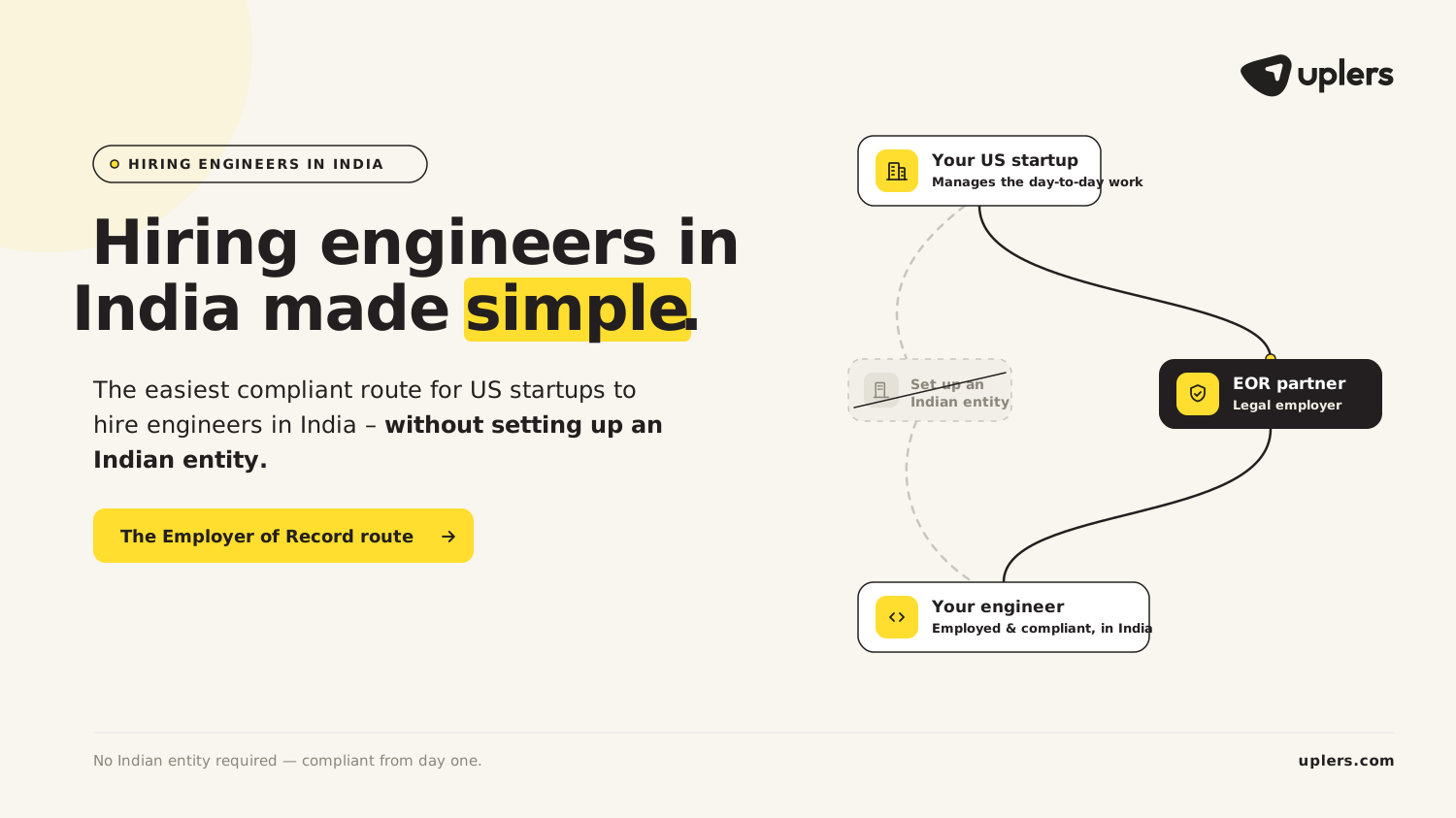
- The simplest legal way to hire engineers in India without an entity is through an Employer of Record (EOR).
- No Indian company registration needed. An EOR becomes the legal employer while you manage the engineer’s day-to-day work.
- First, decide employee vs. contractor; EORs only apply to genuine employment relationships.
- An EOR handles contracts, payroll, tax withholding, and statutory compliance; you handle the work itself.
- Works for one engineer or a growing team; you can transition to your own entity later once hiring scales.
- Uplers combines sourcing and EOR support in one workflow, so you’re not managing two separate vendors.
You’re a US startup. You need one or two engineers in India, preferably in Bangalore. You don’t have an Indian entity, don’t want to spend months setting one up, and need to hire quickly.
Here’s good news: You don’t need to incorporate a company in India before making your first hire.
For most early-stage startups, the simplest legal path is to hire through an Employer of Record (EOR). This guide explains when that makes sense, what an EOR handles, and why many founders use it before establishing a local entity.
Start With One Question: Are You Hiring Employees or Contractors?
This decides everything downstream, so settle it first.
Are you hiring a long-term employee or engaging an independent contractor?
A little clarification: If you’re setting their hours, they use your tools, and they work exclusively for you, that’s an employee. If you’re bringing in someone for a defined project with the freedom to work independently, that’s a contractor.
This decision comes first because EORs only apply to employment relationships. It helps further break down the difference and what EOR, PEO, and contractor mean.
The Simplest Legal Route: Hiring Through an EOR
For most US startups hiring their first engineers in India, an Employer of Record offers the shortest path from offer acceptance to onboarding.
Instead of establishing your own Indian company, the EOR becomes the engineer’s legal employer while your startup manages the engineer’s day-to-day work.
What the EOR Handles
An Employer of Record takes care of the employment infrastructure, including:
- Employment contracts
- Monthly payroll
- Tax withholding
- Statutory benefits
- Employment compliance
- Employee onboarding and offboarding
You focus on building your product and managing the engineer.
Concretely, that means:
- No Indian entity required on your side
- Faster onboarding
- Employment contracts, payroll, tax withholding, and statutory compliance all handled for you
Why This Is Simpler Than a PEO or Your Own Entity
A PEO only works if you already have an Indian entity. Setting up your own entity takes 6-12 weeks minimum before your first hire can even start. Also, you need to manage ongoing statutory filings yourself.
An EOR skips both: no entity, no local HR function, no multi-week setup delay.
That’s why many seed and Series A startups use an EOR while validating their India hiring strategy. Once hiring scales and establishing a local presence makes business sense, employees can transition to the startup’s own entity.
When an EOR May Not Be the Right Fit
An EOR isn’t the answer for every hiring scenario.
Consider other options if:
- You’re hiring someone for a short-term, project-based engagement where an independent contractor relationship is appropriate.
- You already operate an Indian entity and can employ people directly, with or without PEO support.
The right hiring model should always reflect the nature of the working relationship.
What This Looks Like in Practice
In practice, the process is straightforward.
Once you’ve identified the right engineer to hire, the EOR issues the employment agreement, completes onboarding, manages payroll setup, and ensures statutory compliance.
You manage the engineer’s priorities, product roadmap, and day-to-day collaboration exactly as you would with any other team member.
Common Questions Founders Ask Before Their First Hire
Will engineers in India work overlapping US hours?
Many product engineers in India already work with US startups and maintain a few hours of overlap with Eastern or Pacific Time for stand-ups, sprint planning, and customer discussions. Set expectations in the offer letter.
Can I hire just one or two engineers?
An EOR works just as well for a single engineer as it does for a growing team, making it a practical option for startups validating their first hires.
Can I move employees to my own Indian entity later?
Many startups begin with an EOR for speed and compliance, then transition employees once they’ve established an Indian subsidiary or expanded their local team.
How Uplers Makes This Simpler
Finding the right engineer and hiring them legally are two separate challenges. Uplers brings them together in a single workflow.
Startups receive a shortlist of relevant, evaluated candidates within 48 hours from a network of 3.5 million+ professionals. For founders without an Indian entity, EOR support is available as a value-added service on top of the hire.
Conclusion
The simplest legal way to hire engineers in India without an entity is an EOR. It skips the complexity of setting up a local entity.
It lets you focus on building your team today while keeping the flexibility to establish your own presence in India later.