Snippet
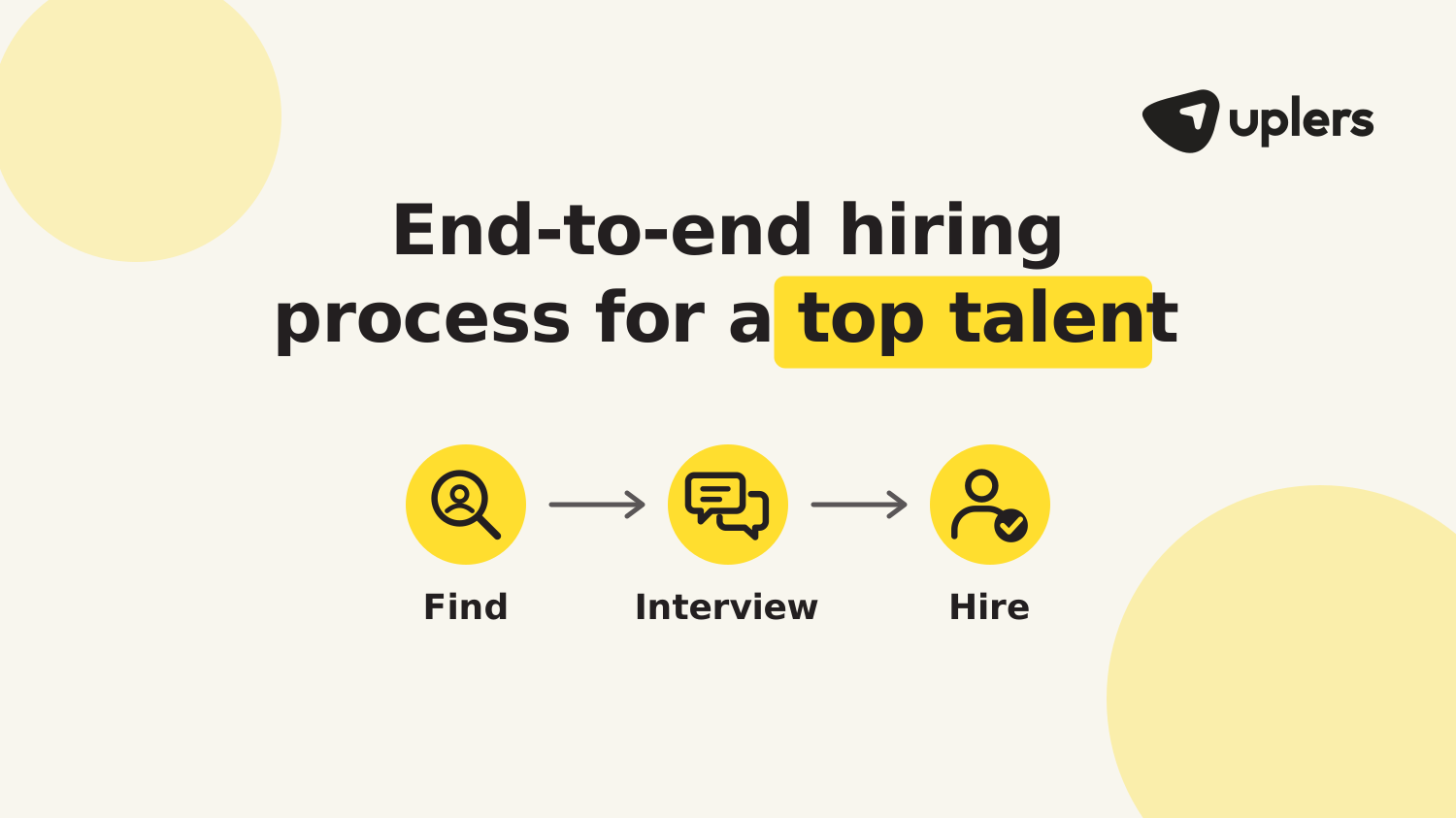
- Sourcing: Hand it off to a hiring partner that matches your stage, and keep the final call with you.
- Interviews: Run 4 rounds and go deep on one real project the candidate owned.
- Timeline: Aim for 2 to 3 weeks from first contact to offer.
You can hand off your sourcing. You cannot hand off your judgment. Here is what that looks like at every step.
First things first: Define the role
Before you open a single resume, write down 3 outcomes this person has to deliver, like “launch MVP v1” or “cut load time by 30%”. A line like “3+ years of React” does not tell you what someone has actually shipped.
Then pin down the stack, time zone overlap, contract or full-time, and experience range. If you cannot explain the problem this hire solves in one sentence, hold off on posting the role.
Second: Sourcing
What to own and what to hand off
Running every step yourself works for your first 2 to 3 hires. After that, it eats your week and good candidates move on. So split the work.
| You keep | You hand off |
|---|---|
| Defining what a good hire looks like | Sourcing and outreach |
| Selling the mission | Resume screening against your criteria |
| The final 1 to 2 interviews | The first technical screen |
| The final call and the close | Scheduling and follow-ups |
Where to look at each stage
How much you hand off depends on your funding stage.
| Stage | What works |
|---|---|
| Pre-seed | Recruit your first 1 to 2 engineers yourself. They shape your product and culture. It is slow, but it is the right kind of slow. |
| Seed to Series A | Bring in a hiring partner, since you probably do not have a recruiter yet. They source, screen and shortlist. You make the final call. |
| Series B | Hire an in-house recruiter. Once you hire every month, it costs less per hire. Use outside help for hard roles. |
| Series C and beyond | Run hiring in-house and outsource only the exceptions. |
At every stage, start with your warm network: ex-colleagues, alumni and people who are not even looking. Use job boards last.
How to pick a hiring partner
Pick one that works with startups at your stage and specializes in your role. Generalist agencies often send people who wait for instructions. Ask them one question. Do your candidates have 0-to-1 experience and product backgrounds? If not, expect volume.
Which hiring model to choose
| Your situation | What fits |
|---|---|
| A common role, and you only need more reach | Job boards and self-sourcing. |
| You can interview and close, but finding and filtering people takes up your week | Pay-per-profile. You get a curated shortlist and keep every decision. |
| A hard-to-define, leadership or specialist role | Pay-per-hire, where the partner takes on more of the process. |
Third: Interview framework
We recommend a 4-round interview framework.
| Round | What it covers |
|---|---|
| 1. Founder screen (30 minutes) | Ownership, comfort with ambiguity and how they work without step-by-step direction. Sort out salary and logistics here too. |
| 2. Technical deep dive | Run by your VP of Engineering or technical co-founder, someone who can judge the answers. |
| 3. Take-home or paid co-working | A real problem that takes 4 hours or less, planned around their current job. Or a paid co-working session over a couple of days. |
| 4. Offer conversation | You and the hire’s future manager walk them through the offer directly. Skip email for this one. |
What to ask
- One real project: Ask what they built first, what broke in production, what they left out and what they would change now. People who built it get into the messy tradeoffs. People who were only around it go vague.
- A vague problem: Try “users need to do X, you have 2 weeks and one engineer, what do you build?” Strong candidates ask sharp questions and cut scope. Weak ones wait for direction or overbuild.
- Judgment: Ask about a time they shipped something they knew was imperfect, and why it was the right call.
Fourth: Timeline and offer
Strong candidates often hold 2 to 3 offers, so set your timeline upfront and stick to it.
- Applications: Review them within 2 days.
- First interview: Get it done within 1 week.
- Decision: Make it within 2 weeks.
Once you decide, give a verbal offer the same day. If you are hiring in India, plan for notice periods of 30 to 90 days.
Your evaluation stays as careful as ever. The speed comes from cutting the wait between steps.
And sell the mission harder than you think you need to. Founders often overestimate how excited candidates are about their company.