With over 43% of the websites powered by WordPress globally, the demand for skilled developers continues to flourish. In order to use this platform to its optimal capacity you need the right expertise, mere knowledge wouldn’t suffice. This is where it becomes essential to attract the right WordPress talent.
A vital factor to consider in attracting, hiring, and retaining top WordPress talent is the salary of WordPress developers. You need to make sure to set the right salary expectations that is aligned with the industry benchmarks and your hiring budget. While this can be challenging, it’s a vital hiring aspect that can’t be overlooked especially in the competitive recruitment market.
Salary variations can be huge based on location, level of skills and expertise needed, and several such factors. Realistically, it’s not feasible or possible to conduct extensive market research for each of these factors. As a result, there are several salary analysis tools available in the market to make matters simple for you.
To estimate the salary for WordPress developers you must utilize reputed and reliable salary benchmarking tools. In order to use this tool you must also be familiar with what factors you need to consider when computing the salary. In this blog, we aim to cover detailed insights around the existing salary trends, influencing factors, and tips to budget effectively for your upcoming hire.
Factors That Influence WordPress Developer Salaries
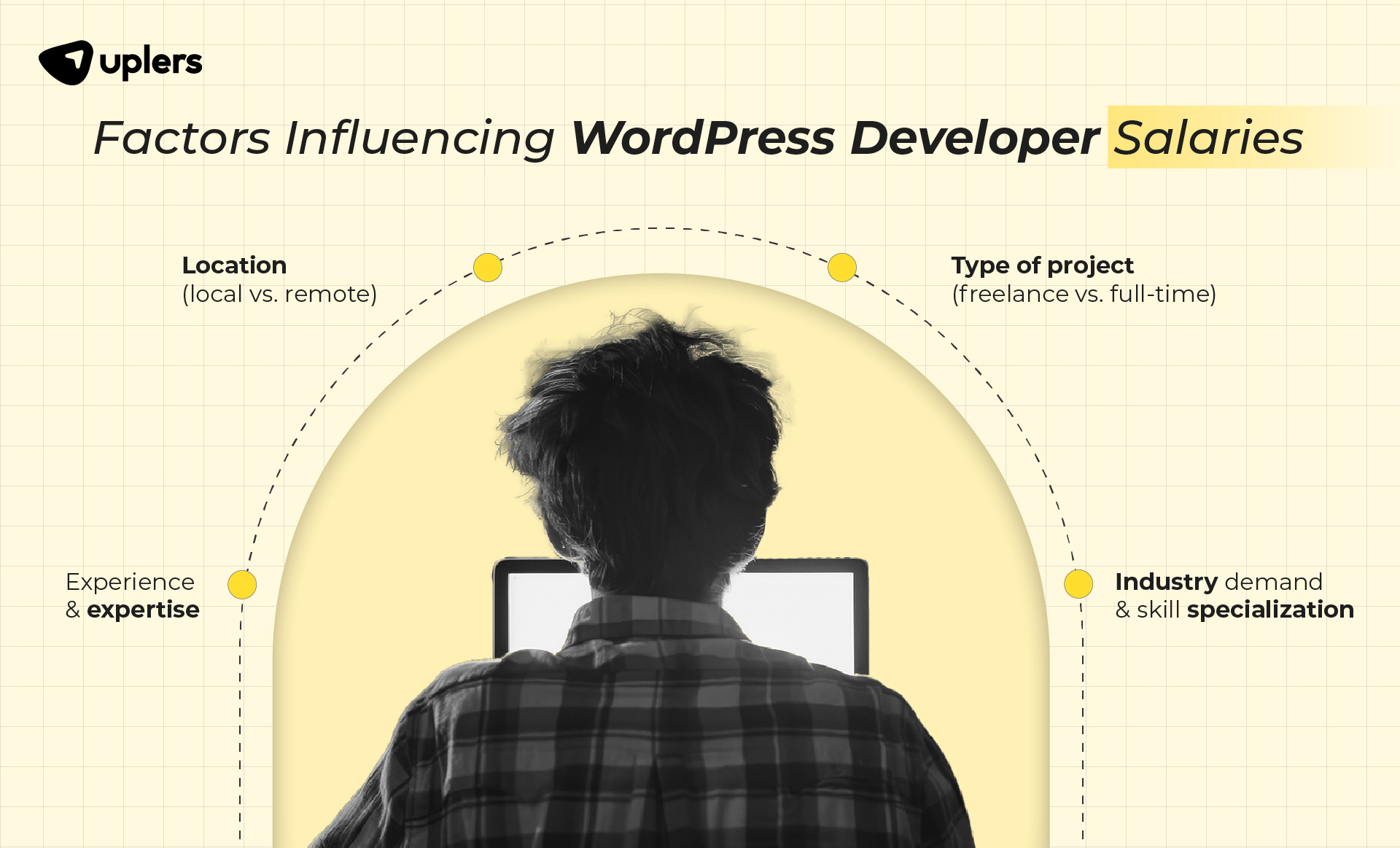
Experience and expertise
The skill level and experience level of the developers is the most significant factor. Junior developers with basic or entry-level skills earn less compared to senior developers specializing in custom plugins or advanced themes.
Location
To hire a local developer often comes at high costs especially in regions like North America or Western Europe. This is mainly due to the differences in living costs and the operational expense of running an office space. On the contrary, choosing to hire talent from countries like India can be cost-advantageous with unsacrificed quality.
Type of project
Freelancers typically command based on per project or by per hour, making them an ideal pick for short-term needs. Full-time talent is better suited for ongoing work although you need to bear additional costs such as benefits and onboarding.
Industry demand and skill specialization
When you hire WordPress developers specialized in high-demand areas like WooCommerce or custom WordPress themes, they command premium pay. The industry demand when you hire IT talent skilled in SEO optimization or website performance also influences the compensation.
WordPress Developer Salary by Experience Level
Entry-level developers
Entry-level developers who have 0-3 years of experience in WordPress can typically expect an average annual salary of $35,000 to $50,000. In your SaaS company they handle basic tasks like theme installation and plugin and minor customization.
Mid-level developers
Mid-level WordPress developers fall in the category of 3-5 years of experience with an average annual salary range of $50,000 to $75,000. They bring more expertise in creating custom themes, API configuration, and ensuring site performance.
Senior/experienced developers
Senior developers are the ones with 5+ years of experience who can command an average annual salary of $80,000 to $120,000. They are specialized in complex tasks such as custom plugin development, scalable website development, and handling complex integrations.
Specialized WordPress developers
When you hire backend developers with WordPress expertise under this category, they should be proficient in specific niches like eCommerce (WooCommerce) or custom enterprise themes. These experts can earn even more with an average annual salary range of $90,000 to $150,000 depending on their competence.
Salary Variations Based on Location
US vs. international salaries
As a hiring manager you might often come across a situation wherein you see the US WordPress talent commanding a higher salary. In contrast, developers from countries like India are highly qualified but they offer their expertise at a competitive price.
Remote vs. in-house WordPress developer salaries
Definitely remote developers will fall in your budget as they eliminate the spend on overhead and operational costs of an office space. This can add more value if you choose to hire from regions with lower living costs. Alternatively, in-house developers offer a consistent availability but they also come with higher costs due to office rent, benefits, and additional overheads.
How to Budget for a WordPress Developer Salary
To plan the salary for WordPress developers you need to be considerate about the following fine points:
Consider your business needs
Evaluate your project requirements thoroughly to have a north star metric and a planned approach to reach there. Only when you know where you aim to reach can you find the right talent and to find the right hire you need to make a compelling offer.
Get answers around the complexity of your project, scope, whether you are building a simple website or a custom eCommerce platform, etc.
Balance budget with skill level
You also need to make sure that you strike a balance between affordability and expertise. Hiring a more experienced developer upfront can seem like an expense, but it will turn out to be a worthwhile investment in the long run with minimized errors and revisions.
Cost-effectiveness of hiring remote developers
Remote developers often offer the best value for money. Utilizing a salary benchmarking tool will help you compare and contrast global salaries for WordPress developers so that you can find the best within your budget.
When you are penning down the nitty gritty for your WordPress developer salary guide, there are a few additional costs that you must consider.
Additional Costs to Consider Beyond Salary
Benefits and bonuses
When you are hiring WordPress developers full-time, they often require benefits like health insurance, retirement plans, or paid time off. These would add almost 20-30% to their base salary. Just like value-added services consider these as value-added incentives for the talent.
Hiring expenses
Recruitment costs, onboarding processes, and training are additional costs that you as a hiring manager must account for.
Freelance vs. full-time costs
Freelancers can charge per hour but the positive side is that they don’t require benefits or long-term commitments. Full-time employees on the flip side are ideal for consistent, ongoing work but come with higher long–term costs.
Where to Find Salary Data for WordPress Developers
Salary research platforms (Glassdoor, Payscale, etc.)
Websites like Glassdoor, Payscale, and Indeed offer detailed salary information, providing averages by location, experience, and role.
Role-specific salary benchmarking tools
General salary sites are a good starting point, but tools built specifically for engineering and digital roles offer sharper, more current comparisons. The Uplers’ salary tool, for instance, compares your location against India across experience levels, which is especially useful if you’re weighing a local hire against a WordPress developer based in India.
Industry reports and trends
Annual industry reports that are available online can also assist you in tracking developer salaries and hiring trends. These resources will help you benchmark and stay competitive in your compensation offering.
How to Negotiate Salaries with WordPress Developers
Transparency and research are what make salary negotiations work. Come to the table with a number backed by real market data, not a guess, and state your budget upfront rather than waiting for the candidate to name a figure first.
A few tactics that help:
- Anchor with a range, not a single number, so there’s room to negotiate without either side feeling boxed in.
- Highlight non-monetary value, such as flexible working hours, growth opportunities, or ownership of meaningful projects, especially when the base salary can’t stretch further.
- Be upfront about constraints. Candidates respond better to a clear budget ceiling than to a negotiation that drags on with no visibility.
- Move quickly once you’ve agreed on a number. A long back-and-forth after the fact is a common way to lose a strong candidate to another offer.
How Uplers Helps You Hire Within Budget
Budget overruns in hiring rarely come from the salary line itself. They come from everything around it: weeks of an open seat, a mis-hire that has to be replaced, or a recruiter fee for someone who doesn’t work out. Uplers is built to cut down on exactly those hidden costs.
- Screening that combines AI filtering with human expert evaluation means fewer interviews spent on candidates who were never going to be a fit, so hiring managers aren’t paying for their own time twice.
- A lifetime free talent replacement policy means a mis-hire doesn’t turn into a second recruitment cost.
- Flexible engagement, full-time or contract, lets founders match the hiring model to what the budget needs, instead of defaulting to a full-time salary and benefits package for work that could be scoped as a contract.
- A 30-day cancellation window and interview-ready profiles within 48 hours mean less time, and less money, spent on a prolonged, open-ended search.
The result isn’t a discount on talent but fewer of the costs that quietly eat into a hiring budget without ever showing up as a line item.
Closing Thoughts
Understanding the salary of WordPress developers is essential to attract and retain top talent. While staying within budget should be your priority it shouldn’t be the only reason to hire. Whether you are building a new website or scaling an existing one, hiring the right developer at the right salary is an investment that will pay off in the long run.