

















About
PricingContact
Hackerrank-logo
airbnb-logo
Darwinbox-logo
Gitlab-logo
Tripadvisor-logo
Airbase-logo
Architect-labs-logo
Threatmodeler-logo
Rattle-logo
Hackerrank-logo
airbnb-logo
Darwinbox-logo
Gitlab-logo
Tripadvisor-logo
Airbase-logo
Architect-labs-logo
Threatmodeler-logo
Rattle-logo

Recently Added Distributed Systems Engineers in our Network

Sharanya Banerjee

Sharanya BanerjeeProfile Badge IC

Senior Distributed Systems Engineer3.2 Years of Exp
  • Java
  • Spring Boot
  • Hibernate
  • react
  • Java Fullstack
  • Postgre SQL
  • View all (8)

I'm a resourceful and technically Competent Java developer with 3+ years of experience aspiring to be a Java Software Developer, Java Software Engineer, Java Programmer, Java Backend Developer, Java Web Developer, Java Application Developer, Java Engineer, Core Java Developer, J2EE Developer, Spring Developer, Spring Boot Developer, Hibernate Developer, Java Microservices Developer, Java REST API Developer, Java Full Stack Developer, Java Cloud Developer, Java Kafka Developer, Java DevOps Engineer, Java Security Developer, Java Integration Developer, Java Reactive Developer, Enterprise Java Developer, Struts Developer, Java EE Developer, JavaFX Developer, Java Android Developer, Apache Camel Developer, Software Developer, Software Engineer, Backend Engineer, Platform Engineer, Web Application Developer, Application Developer, Enterprise, Application Engineer, Distributed Systems Engineer, Java Technical Lead, Java Solutions Architect, Java Systems Architect, Java Development Manager, Java Team Lead, Senior Java Developer, Principal Java Engineer, Staff Software Engineer, Java Consultant, Java Technical Consultant, Java Support Engineer, Java Implementation Specialist, Java Business Analyst.

Ahsan Barkati

Ahsan BarkatiProfile Badge IC

Distributed Systems Engineer5 Years of Exp

I’m a distributed systems engineer with over 5+ experience building scalable and high-performance backend solutions. At Dgraph Labs, I work on optimizing key-value stores, improving concurrency, and ensuring system resilience. I enjoy tackling complex engineering challenges and turning them into clean, efficient solutions.

Mukilan Sadasivam

Mukilan SadasivamProfile Badge IC

Backend, Distributed Systems Engineer7.3 Years of Exp

A proud Engineer. Creative thinker. Inframind Season 1 Nationals Winner. India's Top 20 finalist of Niyantra 2017. Love playing alongside a huge team while still being ready support the entire time by taking up the entire load and move forward if the situation demands the same. Early riser.

Debanjan Chanda

Debanjan ChandaProfile Badge IC

Distributed Systems Engineer(Senior Member of the Technical Staff)10.3 Years of Exp

Focus on building world-class solutions for CRM analytics and developing internal systems essential for strategic business decisions

Naman Jain

Naman JainProfile Badge IC

Distributed Systems Engineer6.3 Years of Exp
  • Algorithms
  • Assembly
  • C
  • C#
  • C++
  • Compiler Design
  • Data Structures
  • View all (9)

Distributed Systems Engineer with 5+ years of experience building high-performance graph and key-value stores, and pushing boundaries in system design and debugging.

Taha Tozakli

Taha TozakliProfile Badge IC

Senior Distributed Systems & Mobile Application Engineer4 Years of Exp
  • React Native
  • JavaScript
  • REST API
  • Lambda
  • Postman
  • JavaScript ES6
  • View all (10)

Passionate and highly experienced developer with a broad skill set encompassing mobile development, back-end development, and also DevOps. With a keen interest in continuous learning, I thrive on tackling challenging problems and take pride in delivering high-quality, clear, and efficient code. My extensive knowledge across various domains in development, coupled with a commitment to staying updated with industry trends, positions me as a versatile and valuable asset to any innovative project.

Ellipse 1Ellipse 2Ellipse 3Ellipse 4Ellipse 5Ellipse 6

India's largest network of 3.5M+ professionals

Check out some of the candidates who recently joined.

Search

Hire Distributed Systems Engineers in 4 Easy Steps

01
DefineDefine ic

Tell us what you need

You define the role, we match immediately.

02
DiscoverDiscover ic

Meet the top talent

Get 3 to 5 highly relevant candidates in 48 hours.

03
EvaluateEvaluate ic

Interview with ease

Choose the candidate that aligns with your needs and we'll arrange an interview.

04
OnboardOnboard ic

Hire with confidence

Once you decide, we'll take care of the onboarding process for you.

Top Reasons to Choose Uplers

Hire in 48 Hours

Hire in 48 Hours

Receive the top 3-5 AI-interviewed profiles from our network within 2 days.

Top 1% Talents

Top 1% Talents

Only the best profiles vetted using AI and human intelligence make it to your inbox.

Start-up ready Matching

Start-up ready Matching

Engineers who wear multiple hats, move fast, and don't need hand-holding.

Works in 5+ Time Zones

Works in 5+ Time Zones

Engineers overlap with EST/PST: 4–6 hours daily and flexible to preferred time zones.

Employer on Record (EOR)

Employer on Record (EOR)

We handle all legal and payroll complexity of hiring from India, so you don't have to.

Simple Contracts

Simple Contracts

Straightforward agreement with top-most flexibility and freedom.

30 Days Cancellation

30 Days Cancellation

Cancel without any obligations in cases of dissatisfaction, financial instability, or business slowdown.

2X Retention Rate

2X Retention Rate

92% of placed engineers still with clients after 12 months

Various Skills that Distributed Systems Engineers Possess

Access the talent network of 3.5M+ professionals with 100+ skill sets

profile collage
Begin your hiring journey with us!
Hire a top talent

What Founders & Engineering Leaders Say About Us

Testimonial thumbnail
Play video

Uplers earned our trust by listening to our problems and finding the perfect talent for our organization.

Barış Ağaçdan
Director
Testimonial thumbnail
Play video

Uplers helped to source and bring out the top talent in India, any kind of high-level role requirement in terms of skills is always sourced based on the job description we share. The profiles of highly vetted experts were received within a couple of days. It has been credible in terms of scaling our team out of India.

Aneesh Dhawan
Founder
Testimonial thumbnail
Play video

Uplers efficient, quick process and targeted approach helped us find the right talents quickly. The professionals they provided were not only skilled but also a great fit for our team.

Melanie Kesterton
Head of Client Service
Testimonial thumbnail
Play video

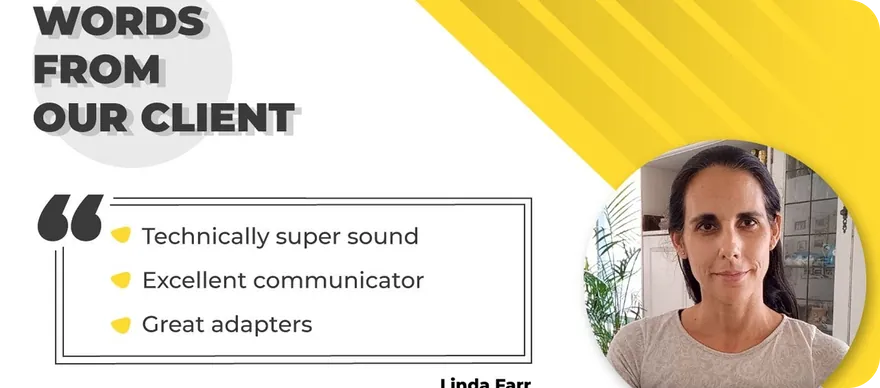
Uplers' talents consistently deliver high-quality work along with unmatched reliability, work ethic, and dedication to the job.

Linda Farr
Chief of Staff

Case Studies of Tech Companies

Check Our Latest Blogs

How Distributed Systems Engineers Ensure Scalability and Reliability

According to a report, almost 70% of data leaders report stack complexity challenges due to managing many specialized tools. This isn't just a technical problem, but a business risk for hiring managers. Product companies require platforms that can scale globally without sacrificing reliability.

The professionals who make this possible are distributed systems engineers. They design architectures that can handle growth, manage complexity, and guarantee resilience. Below mentioned are the critical capabilities that one must focus when evaluating candidates:

New list icon

Designing Architectures That Scale Seamlessly

The primary responsibility of a distributed system engineer is to build architecture that doesn't break under pressure. Scalability is not an afterthought, it's the foundation.

  • Horizontal scaling expertise

    Engineers design systems that can add notes effortlessly, ensuring that increased demand never leads to downtime.

  • Load balancing

    These engineers deploy techniques that distribute traffic evenly, avoiding bottlenecks during high-volume events.

  • Fault-tolerant designing

    By eliminating single points of failure, engineers guarantee continuous availability.

For product companies, this capability indicates faster growth without infrastructure rewrites. Tech companies particularly rely on scalable designs to serve millions of users globally without performance dips.

Distributed system engineers skilled in scalable architecture protect your business from costly overhauls later. This is where the distinction between "systems that work" and "systems that grow" becomes clear.

New list icon

Ensuring Reliability Through Robust Monitoring and Recovery

Reliability is not solely measured by uptime, but by how quickly systems recover when failures occur. Experienced engineers bring forth a reliability-first mindset.

  • Real-time monitoring

    Tools like Prometheus and Grafana enable proactive issue detection.

  • Automated recovery

    Engineers design self healing systems that restart processes without manual intervention.

  • Disaster recovery planning

    From database replication to backup strategies, these engineers prepare for worst case scenarios.

As a result, product launches and user engagement remain uninterrupted even under stress. Tech companies with global operations can benefit, especially as downtime in one region doesn't compromise service in the other.

When you hire distributed systems developers with reliability expertise, you minimize business risks while maintaining the user trust.

New list icon

Mastering Data Consistency and Distributed Storage

Scalability often creates challenges in maintaining consistent data across nodes. Skilled engineers know how to balance speed with accuracy.

  • Consistency models

    From strong consistency to eventual consistency, engineers select the right model for business needs.

  • Distributed databases

    Tools like Cassandra, CockroachDB, or DynamoDB, support global applications.

  • Transaction management

    Engineers ensure data integrity even in high-traffic environments.

This will ensure that no matter where users are, they see the same reliable information. Product companies gain the ability to manage massive datasets without compromising on performance or accuracy.

Prioritize candidates that can demonstrate experience with cloud engineering solutions and advanced distributed storage systems.

New list icon

Balancing Innovation with Operational Efficiency

Distributed system engineers design robust infrastructure. Additionally, they optimize costs and resources while ensuring innovation.

  • Resource optimization

    They leverage containerization (Docker and Kubernetes) to reduce overhead.

  • Cloud-native strategies

    Expertise with AWS, Azure, or GCP ensures global scalability at predictable costs.

  • Agile alignment

    Engineers can quickly adapt to business changes while maintaining system stability.

This ability offers a competitive edge. Businesses attain innovation without ballooning infrastructure costs and can roll out features rapidly while keeping systems stable.

New list icon

Security as a core design principle

Scalability and reliability lose impact without strong security foundations. When you hire distributed system engineers they embed security into every layer of design.

  • Data encryption

    They apply encryption in transit and at rest, ensuring that sensitive information never gets exposed.

  • Access controls

    Role-based permissions restrict access, which reduces the risk of misuse or internal threats or malware attacks.

  • Vulnerability assessments

    Engineers proactively test the systems for weaknesses, closing gaps before attackers exploit them.

For product companies, these practices can protect customer trust. To handle global user bases, embedded security reduces the risk of compliance and safeguards reputation. Hiring distributed systems developers with proven security expertise, is an investment in performance as well as resilience against modern threats.

New list icon

Collaboration across cross-functional teams

Distributed systems touch every part of a company's digital ecosystem. Engineers succeed as they collaborate closely with other stakeholders.

  • Alignment with developers

    They ensure that coder changes integrate seamlessly into distributed architectures.

  • Partnership with product managers

    Engineers help translate business requirements into scalable technical solutions.

  • Support for operations teams

    They provide tools for observation and clear documentation to simplify ongoing maintenance.

This collaboration serves as the key differentiator. It ensures that distributed systems aren't built in silos, but serve broad objectives. Candidates with communication fluency and cross-alignment bring long-term value beyond technical finesse.

New list icon

Strategic value for hiring managers

The competition to hire distributed systems engineers is not only about filling a technical role. It's about securing a strategic asset for your team.

  • Future-proof infrastructure

    Engineers prepare systems to handle traffic and data growth 5-10 years down the line.

  • Cost predictability

    With resource optimization and cloud usage, they prevent unpredictable infrastructure spending.

  • Innovation enablement

    Stable and scalable systems free teams to focus on developing new features instead of firefighting outages.

Acting decisively in making this hiring decision results in a consistent customer experience globally and offers an immediate advantage in efficiency as well as market positioning.

New list icon

Final Takeaway

The decision to hire distributed systems engineers is about ensuring that your company's digital backbone can scale and stay reliable. From scalable architecture design to monitoring, data consistency, and cost optimization, these engineers bring capabilities that safeguard growth.

For tech and product companies, the stakes are high. Global competition, rising user demands, and costly downtime require infrastructure that never breaks. The smartest move would be to hire distributed systems developers capable of delivering both scalability and reliability.

Organizations that act now, partner with platforms such as Uplers to secure top engineers. In the world of distributed systems, reliability isn't optional. It's the standard defining industry leaders and positions them to innovate faster, grow stronger, and serve customers without any interruption.

Frequently Asked Questions

Uplers provides AI-vetted talent, ensuring a seamless hiring experience. Our efficient process ensures profile shortlisting within 48 hours, allowing you to swiftly onboard qualified professionals within just 2 weeks. Additionally, we prioritize client satisfaction with our flexible terms, including a 30-day cancellation policy and a lifetime free replacement.

You can get the top 1% of AI-vetted profiles in less than 48 hours through Uplers. Once you finalize one of the most suitable Distributed Systems Engineers, Uplers takes care of the entire hiring and onboarding formalities. This typically takes 2-4 weeks depending on your requirements and decision-making time.

The modes of communication through which you can get in touch with a hired Distributed Systems Engineer include:

  • Email
  • Phone
  • Messaging apps such as WhatsApp, Slack, or Microsoft Teams

Uplers offers a 30-day cancellation policy at no extra cost and lifetime free replacement.

The average cost of hiring a Distributed Systems Engineer from Uplers starts at $2500. The number varies depending on the experience level of the developer as well as your requirements.

View Our Pricing For 2025 - 26

At Uplers, our screening process ensures a thorough evaluation of candidates' language proficiency, facilitated by our AI-vetting technology. Beyond linguistic skills, we prioritize cultural fitness to ensure seamless integration within your team, fostering a harmonious work environment and seamless collaboration.

A distributed systems engineer should focus on a few key principles to ensure systems scale reliably as the business grows:

  • Scalability by design
  • Fault Tolerance
  • Consistency and Reliability
  • Performance Optimization
  • Observability

By applying these principles, engineers can ensure the system remains fast, stable, and easy to scale with business needs.

A distributed systems engineer ensures reliability by using techniques like redundancy, replication, and failover. These methods keep the system running even if some parts fail. The system can detect issues and fix them automatically without human help. By designing with failures in mind, businesses can improve uptime, build customer trust, and reduce financial risks.

Employers should be aware that the CAP theorem emphasizes inevitable trade-offs in distributed systems. Only two of the three properties: consistency, availability, and partition tolerance, can be fully optimized by a system. Engineers must strike a compromise between availability (the system always responds) and consistency (all users see the same data), as partition tolerance is crucial in practice. Business requirements will determine which option is best; social media companies may value availability, while financial apps may prioritize consistency.

Knowledge of consensus algorithms like Raft, Paxos, and PBFT is important because they help nodes in a distributed system reach agreement on shared data, even during failures. These algorithms maintain consistency, enable fault tolerance, and ensure the platform remains stable, synchronized, and highly available.

Leader election and coordination are key to keeping mission-critical distributed systems fast, reliable, and consistent. They help nodes work together smoothly, prevent conflicts, and enable quick recovery from failures. Here's how they impact performance:

  • Ensures Consistency
  • Prevents Conflicts
  • Enables Fault Tolerance
  • Improves Coordination
  • Reduces Latency
  • Boosts Reliability

Network partitions, node crashes, inconsistent state, data replication delays, and hardware or service outages are typical distributed system failure situations. These problems may result in lost data, downtime, or decreased performance. By using redundancy, automated failover, fault-tolerant consensus algorithms, health checks, and monitoring systems, a skilled engineer proactively mitigates them. Additionally, they ensure partial functionality during failures by designing for gradual degradation.

Companies should take into account protocols such as MQTT for lightweight IoT messaging, gRPC for low-latency service-to-service connection, and Kafka for high-throughput event streaming. Each performs best in a different setting: MQTT helps devices with constrained bandwidth, gRPC maximises microservice efficiency, and Kafka manages huge data pipelines. By assessing the use case, scalability requirements, latency requirements, fault tolerance, and resource restrictions, an experienced engineer determines the best fit.

Idempotency and exactly-once semantics are essential in financial and data-sensitive industries because they prevent duplication, data corruption, and inconsistent states during transactions. Idempotency ensures that repeated requests caused by retries or network issues produce the same result without double charging or duplicate data. Exactly-once semantics guarantees each transaction is processed only once, maintaining accuracy, trust, and compliance.

Caching and coordination services like Redis, ZooKeeper, and etcd improve efficiency and lower infrastructure costs by reducing redundant processing and speeding up data access. Redis uses in-memory caching to minimize database load and improve response times. ZooKeeper and etcd handle coordination, service discovery, and configuration management, ensuring consistency across distributed nodes. Together, they reduce latency, prevent duplication of effort, and optimize overall resource usage.

A distributed systems engineer should use proactive monitoring, logging, and tracing to detect issues before they impact availability. Tools like Prometheus, Grafana, and ELK Stack provide real-time visibility, while distributed tracing tools such as Jaeger and OpenTelemetry help debug complex service interactions. To maintain high uptime, engineers should also set up automated recovery scripts, health checks, and alerting systems to quickly identify and resolve failures.