











About
PricingContact
Hackerrank-logo
airbnb-logo
Darwinbox-logo
Gitlab-logo
Tripadvisor-logo
Airbase-logo
Architect-labs-logo
Threatmodeler-logo
Rattle-logo
Hackerrank-logo
airbnb-logo
Darwinbox-logo
Gitlab-logo
Tripadvisor-logo
Airbase-logo
Architect-labs-logo
Threatmodeler-logo
Rattle-logo

Recently Added Cloud Security Developers in our Network

ANSHUMAN SINGH RATHORE

ANSHUMAN SINGH RATHOREProfile Badge IC

Developer4 Years of Exp
  • Java
  • AWS
  • Python
  • SQL
  • C++
  • Azure Data Factory
  • Microsoft Azure
  • S3
  • View all (10)

I am a software engineer at Tata Consultancy Services (TCS), specializing in innovative web solutions across various domains. With over 4 years of experience, I excel in the .NET framework and Azure DevOps Services, contributing to projects that enhance user experience and efficiency. I hold a bachelor's degree in computer applications and science from DR VIRENDRA SWAROOP INSTITUTE OF PROFESSIONAL STUDIES, KANPUR. My core skills include web design, development, testing, security, analytics, and communication. Passionate about web development, I am eager to learn new skills in AI, machine learning, and data science, aiming to become a web communication specialist.

Surendra Purohit

Surendra PurohitProfile Badge IC

Security Architect / Consultant8 Years of Exp
  • Project Management
  • Java
  • Python
  • Shell Scripting
  • Debugging
  • View all (7)

Excelled in IT Infrastructure services and security for years. Actively pursuing dynamic position in the cyber security field, specializing in cloud security, network security, and identity and access management.

Gopinathan Krishnasamy

Gopinathan KrishnasamyProfile Badge IC

Sr. Cloud & DevOps Engineer8 Years of Exp
  • AWS
  • Agile
  • EKS
  • CI/CD
  • DevOps
  • automation
  • Virtualization
  • Terraform
  • View all (11)

With over 7 years of experience in System Design, Site Reliability Engineering (SRE), specializing in CI/CD, Cloud Computing, and Chaos Engineering. Aiming to apply my Agile methodologies to improve operational efficiencies and system reliability.

Hafiz Syed

Hafiz SyedProfile Badge IC

Cloud Engineers11 Years of Exp
  • AWS
  • Kubernetes
  • Terraform
  • Docker
  • Python
  • 組込みLinux
  • Git
  • nginx
  • View all (11)

A multi cloud certified Cloud expert with 9 years of experience into Google Cloud, AWS, Kubernetes, DevOps and Terraform. Experienced across different verticals and industries involving migrating of applications, databases from on-premise or any other cloud (AWS & GCP). Building CICD pipelines and helping clients to adopt DevOps cultures. Refactoring, replatforming, and archetyping the infrastructure to adopt and leverage cloud capabilities. Leading the team of cloud engineers to deliver on business/client expectations.

Jaimin Soni

Jaimin SoniProfile Badge IC

Senior Solution Architect11.1 Years of Exp
  • Microsoft technologies
  • ASP/Net
  • Entity Framework
  • Web APIs
  • View all (6)

As a Senior Consultant, I am responsible for designing and implementing secure, scalable, and highly available cloud-based solutions using Microsoft Azure. My expertise in Azure infrastructure and services enables me to assess business needs, recommend the optimal cloud architecture, and work closely with stakeholders to develop technical solutions aligned with their goals. As an Azure Solution Architect, I have a deep understanding of Azure's capabilities, can recommend the right mix of services, and ensure solutions are built with security best practices. My ability to communicate complex technical concepts to diverse audiences helps ensure stakeholder alignment and successful delivery of cloud-based solutions that meet business needs.

Amit Kumar

Amit KumarProfile Badge IC

Site Reliability Engineer7.8 Years of Exp
  • AWS
  • Docker
  • Terraform
  • Kubernetes
  • HTTPS
  • Disaster Recovery
  • View all (8)

Amit Kumar is an experienced Cloud/Linux Engineer with a robust background in various aspects of system administration, cloud infrastructure management, and DevOps practices. With proficiency in a wide range of technologies including RedHat Linux, Debian, CentOS, Ubuntu, AWS, Azure, GCP, Docker, Ansible, and Jenkins, he has demonstrated expertise in provisioning servers, ensuring cloud security, and resolving customer issues promptly. Amit has a Bachelor's degree in Commerce with Computer Science and has worked at Grras Solutions and Ninehertz India, where he contributed to designing, developing, and maintaining cloud-based solutions, providing technical direction to implementation teams, and ensuring optimal performance and uptime of applications. With excellent problem-solving skills, strong technical acumen, and effective communication abilities, Amit is a valuable asset in any team environment, adept at meeting tight deadlines and working under pressure.

Ellipse 1Ellipse 2Ellipse 3Ellipse 4Ellipse 5Ellipse 6

India's largest network of 3.5M+ professionals

Check out some of the candidates who recently joined.

Search

Hire Cloud Security Developers in 4 Easy Steps

01
DefineDefine ic

Tell us what you need

You define the role, we match immediately.

02
DiscoverDiscover ic

Meet the top talent

Get 3 to 5 highly relevant candidates in 48 hours.

03
EvaluateEvaluate ic

Interview with ease

Choose the candidate that aligns with your needs and we'll arrange an interview.

04
OnboardOnboard ic

Hire with confidence

Once you decide, we'll take care of the onboarding process for you.

Top Reasons to Choose Uplers

Hire in 48 Hours

Hire in 48 Hours

Receive the top 3-5 AI-interviewed profiles from our network within 2 days.

Top 1% Talents

Top 1% Talents

Only the best profiles vetted using AI and human intelligence make it to your inbox.

Start-up ready Matching

Start-up ready Matching

Engineers who wear multiple hats, move fast, and don't need hand-holding.

Works in 5+ Time Zones

Works in 5+ Time Zones

Engineers overlap with EST/PST: 4–6 hours daily and flexible to preferred time zones.

Employer on Record (EOR)

Employer on Record (EOR)

We handle all legal and payroll complexity of hiring from India, so you don't have to.

Simple Contracts

Simple Contracts

Straightforward agreement with top-most flexibility and freedom.

30 Days Cancellation

30 Days Cancellation

Cancel without any obligations in cases of dissatisfaction, financial instability, or business slowdown.

2X Retention Rate

2X Retention Rate

92% of placed engineers still with clients after 12 months

Various Skills that Cloud Security Developers Possess

Access the talent network of 3.5M+ professionals with 100+ skill sets

profile collage
Begin your hiring journey with us!
Hire a top talent

What Founders & Engineering Leaders Say About Us

Testimonial thumbnail
Play video

Uplers earned our trust by listening to our problems and finding the perfect talent for our organization.

Barış Ağaçdan
Director
Testimonial thumbnail
Play video

Uplers helped to source and bring out the top talent in India, any kind of high-level role requirement in terms of skills is always sourced based on the job description we share. The profiles of highly vetted experts were received within a couple of days. It has been credible in terms of scaling our team out of India.

Aneesh Dhawan
Founder
Testimonial thumbnail
Play video

Uplers efficient, quick process and targeted approach helped us find the right talents quickly. The professionals they provided were not only skilled but also a great fit for our team.

Melanie Kesterton
Head of Client Service
Testimonial thumbnail
Play video

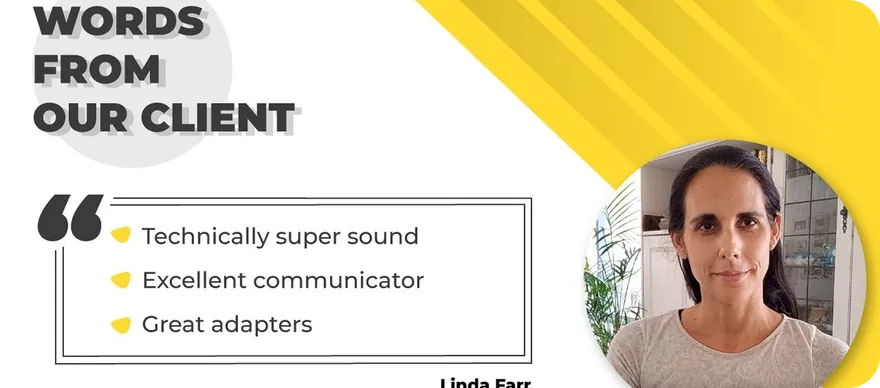
Uplers' talents consistently deliver high-quality work along with unmatched reliability, work ethic, and dedication to the job.

Linda Farr
Chief of Staff

Case Studies of Tech Companies

Check Our Latest Blogs

Why Hiring Cloud Security Engineers Is Non-Negotiable for Startups

Data security is critical for every business, and especially for startups. Cloud infrastructure that supports various digital services is a major target for cyber-attacks and data breaches. Therefore, hiring skilled cloud security developers has become essential to safeguard your business, customers, and reputation.

Here's why cloud security should be a top priority for startups and what the right hire does.

New list icon

Who Are Cloud Security Engineers?

A cloud security engineer designs, implements, and maintains the security controls that protect your cloud infrastructure, applications, and data. They handle access management, encryption, monitoring, and compliance across platforms like AWS, Azure, and Google Cloud, so security is built into how your team ships from day one.

Day to day, they typically:

  • Set up identity and access management (IAM), so people and services only get the access they need
  • Manage encryption keys and secrets like API keys and database credentials
  • Monitor cloud accounts for misconfigurations and suspicious activity
  • Secure CI/CD pipelines and containers
  • Prepare evidence for compliance audits and customer security reviews

For AI-native startups, the scope also covers model API keys, customer data pipelines, and LLM features that handle user input.

New list icon

Why Startups Need Cloud Security Engineers

A single exposed credential or misconfigured bucket can set a startup back months. Here are four areas where the right cloud security hire protects your product, your customers, and your growth.

Ensuring robust data protection

Data is one of the most valuable assets a startup has, and protecting it is non-negotiable. When you hire cloud security engineers, they safeguard your cloud environment, application, and system from cyber threats. These professionals ensure that the architecture and deployment models of cloud services align with the security standards.

Cloud security developers help implement techniques such as encryption, firewalls, and multi-factor authentication to protect sensitive data. Whether your business deals in financial data, personal health information, intellectual property, or customer data used by AI models, a skilled cloud security engineer helps establish policies to protect this information from unauthorized access or theft.

By hiring cloud security developers you can ensure:

Data encryption

Securing data during transmission and when at rest.

Access control mechanisms

Limit and monitor access to sensitive data.

Secure APIs and Network Connections

Safeguard communication channels between cloud services and clients.

Security monitoring

Monitor cloud activity, access attempts, and configuration changes to identify potential security issues.

Mitigating the risk of cyber attacks

On a daily basis businesses face threats from hackers, cybercriminals, and insiders with malicious intent. Cloud-based systems in particular are vulnerable to security breaches due to their interconnected nature and vast storage of sensitive data.

IBM's 2026 Cost of a Data Breach Report puts the global average cost of a breach at a record $4.99 million, a 12% increase over the previous year. In the US, the average is $11.5 million per breach.

Hiring experienced cybersecurity professionals and cloud security engineers can drastically reduce the risk of cyber-attacks, especially attacks that exploit weak configurations and access controls.

These developers design multi-layered security protocols that are difficult to breach. They ensure that firewalls, intrusion detection systems, and access monitoring are integrated into your cloud architecture. These measures act as the first line of defense, significantly lowering the risk of data breaches.

Establish threat detection systems

Detects abnormal activities within the cloud systems.

Design disaster recovery plans

Ensure minimal disruption in case of a breach.

Conduct regular security audits

Review system vulnerabilities and patch weaknesses proactively.

Maintaining Regulatory Compliance

Compliance with industry standards and government regulations is critical for startups. It often shows up first in sales, when enterprise buyers ask for a SOC 2 report, an audit that verifies how a company protects customer data.

Cloud security developers help ensure that your cloud infrastructure complies with these regulations by implementing proven security controls mapped to each framework. Hiring these experts ensures that your cloud systems are built with the following in mind:

Data encryption standards

Safeguarding data to comply with GDPR and other data protection laws.

Access control regulations

Ensuring compliance with industry regulations on who can access sensitive data.

Audit trails

Maintain records of the system for compliance and auditing purposes, including SOC 2 audits.

Performance optimization and security

While security is essential, it should never come at the cost of performance. Cloud security developers are well acquainted with integrating robust security features without compromising system speed or user experience. They design security protocols that ensure the cloud environments remain efficient and scalable while being protected against threats.

When you hire cloud security engineers, you can expect the following for your business:

Implement security without performance lag

Use lightweight security tools that ensure data protection with minimal impact on system performance.

Optimize security and cost efficiency

Develop security systems that save costs in the long run by reducing the need for frequent patches and vulnerability fixing.

Ensure high availability

Implement systems that continue to function securely even during times of high demand or cyber threats.

Hiring cloud security developers is a strategic decision as your startup's reliance on the cloud grows. These developers prevent security breaches and optimize system performance, so your business can scale securely. For startups, prioritizing cloud security early also keeps enterprise deals moving and avoids costly cleanup later.

How to Hire Cloud Security Engineers: Skills, Interview Questions, and Hiring Tips

Cloud security resumes start to blur together fast. Most candidates list AWS, Kubernetes, Terraform, and a few certifications, so every shortlist looks strong on paper.

The harder question is whether a candidate has the depth and judgment your environment needs.

That answer depends on your startup. Your cloud setup, product complexity, engineering maturity, and the ownership you expect from this hire all shape what a good fit looks like.

Below, you'll find the skills to evaluate, the interview questions worth asking, and a seven-step hiring process your team can run.

New list icon

What Skills Should You Look for in a Cloud Security Engineer?

Cloud security talent is hard to find. In the ISC2 2025 Cybersecurity Workforce Study, 36% of respondents named cloud security as a pressing skills need, second only to AI at 41%.

With a tight talent network, focus your screening on the seven skill areas below and prioritize the ones that match your stage.

Cloud Identity and Access Management

Early teams hand out broad admin access to move fast, and that access rarely gets cleaned up later. A strong candidate knows how to tighten it without stalling deployments.

  • Writing least-privilege IAM policies on AWS, Azure, or Google Cloud
  • Setting org-level guardrails, such as AWS Service Control Policies or Azure Policy
  • Designing identity across multiple cloud accounts or projects
  • Securing non-human identities like service accounts, CI/CD tokens, and AI agents
  • Replacing long-lived access keys with short-lived credentials and workload identity federation
  • Running regular access reviews and controlling privileged access
Security Architecture and Threat Modeling

Design decisions from your first year shape your attack surface for years. Look for someone who can review a system and spot weak points before they reach production.

  • Applying the shared responsibility model, defense-in-depth, and security-by-design to real systems
  • Setting security boundaries between services and environments
  • Running threat modeling sessions for new features with lightweight frameworks like STRIDE

Ask candidates to walk through a recent architecture decision and explain how security shaped it.

Infrastructure as Code and Security Automation

Infrastructure as code (IaC) means defining cloud resources in configuration files, so every change gets reviewed and tested like application code. For a small team, it's the most practical way to keep cloud changes secure as you grow.

  • Writing and reviewing Terraform or OpenTofu modules
  • Enforcing rules with policy-as-code tools like Open Policy Agent (OPA) or Checkov
  • Adding security gates to CI/CD pipelines that block risky changes before deployment
  • Detecting configuration drift when someone changes resources outside of code
Secure Software Delivery and Supply Chain

Startups ship a lot of third-party code through open-source packages and container images. Every dependency adds risk, so this skill area matters from your first release.

  • Secure coding practices, dependency management, and vulnerability remediation
  • Static application security testing (SAST), which scans source code for vulnerabilities, and dynamic application security testing (DAST), which tests a running application
  • Container and Kubernetes security, including image scanning, role-based access control (RBAC), and network policies
  • Supply chain controls like software bills of materials (SBOMs), image signing and verification with tools such as Sigstore, and pinned dependency versions
Detection and Incident Response

Every cloud environment faces incidents at some point. Your team needs logs, alerts, and a response plan in place before the first one happens.

  • Enabling and centralizing cloud audit logs, such as AWS CloudTrail or Google Cloud Audit Logs
  • Tuning alerts so the team spends its time on the ones that matter
  • Investigating incidents and collecting evidence along the way
  • Writing incident response playbooks for common scenarios like leaked credentials or exposed storage
  • Fixing root causes once an incident closes
AI and LLM Security

AI features add new attack paths, and many security engineers haven't worked on them yet. If your product runs on LLMs, this skill area belongs on your must-have list.

Prompt injection is an attack where crafted input tricks a model into ignoring its instructions or revealing data. Retrieval-augmented generation (RAG) is a setup where the model pulls relevant documents into its context before it answers.

  • Defending against prompt injection, including instructions hidden inside uploaded files or retrieved content
  • Enforcing tenant isolation and permission-aware retrieval in RAG systems, so each user sees only the data they're allowed to access
  • Setting limits on which tools and data AI agents can reach
  • Managing LLM API keys and monitoring usage for unusual spikes
  • Controlling what customer data reaches third-party model providers
Security Judgment and Prioritization

Your engineering team can fix only so much each sprint. The right hire knows which issues deserve that time.

  • Separating critical findings from low-risk ones
  • Telling exploitable vulnerabilities apart from theoretical ones
  • Choosing between an immediate fix and a longer-term remediation plan
New list icon

What Interview Questions Should You Ask a Cloud Security Engineer?

Scenario-based questions show how a candidate thinks through risk, tradeoffs, and team constraints. Use the eight questions below across your interview rounds.

Apply the "Why?" test to every technical answer with two follow-ups:

  • "Why did you choose that approach?"
  • "What would make you change your decision?"

Strong candidates answer both with specifics from past work.

Judgment Questions

1. You find 50 security findings. How do you decide what engineering fixes first?

What to look for:The candidate ranks findings by exposure and business impact. A publicly reachable database with customer data goes to the top.

They also group findings by root cause, since one misconfigured template can trigger a dozen alerts.

2. When would you accept a security risk and leave it unfixed for now?

What to look for:Clear conditions, such as low exposure or a compensating control already in place. Strong answers include a named owner and a date to revisit the decision.

Be cautious if the candidate says they'd never accept a risk. Every startup carries some.

Engineering Collaboration Questions

3. An engineering team says your security requirement will delay a release. What do you do?

What to look for:A practical middle path. Here's an example of a strong answer:

"We'd ship behind a feature flag with rate limiting, and I'd own the fix in the next sprint."

They escalate only when the risk is high, and they explain the reason in plain terms.

4. Tell me about a security recommendation you changed after talking with engineers. Why did you change it?

What to look for:A specific story where engineering feedback shaped the final approach. The best answers also show where they held firm and why.

Problem-Solving Questions

5. How would you validate that a security control works the way it should?

What to look for:Hands-on testing through policy simulation, a controlled attack, or a test request designed to fail. A control proves its value only after someone tests it.

6. A vulnerability keeps reappearing after remediation. How do you investigate it?

What to look for:Root-cause thinking. Strong candidates trace the issue to its source, such as an outdated base image, a shared IaC module, or a pipeline step, and fix it there so it stays fixed.

7. How do you decide whether an alert is a real threat or noise?

What to look for: Context checks on the identity involved, the source, and normal activity patterns. Strong candidates also tune the rule afterward so the same false alarm stops coming back.

AI Security Question

8. What security risks worry you in a RAG feature built over customer documents?

What to look for:Access control comes up first. Can one customer's query retrieve another customer's documents?

From there, strong candidates cover prompt injection through uploaded files, poisoned documents in the knowledge base, and the data sent to the model provider. Be cautious if encryption is the only control they mention.

New list icon

Hiring Tips: How to Structure Your Cloud Security Engineer Hiring Process

A clear process helps a small team compare candidates fairly and move fast. These seven steps take you from scoping the role to checking references.

Step 1: Define the Security Problems This Hire Will Own

Start with the problems, then write the job description. List three to five security problems this person will own in their first year, such as:

  • Preparing for a first SOC 2 audit
  • Cleaning up IAM across your cloud accounts
  • Securing a new AI feature before launch
  • Automating security checks in your infrastructure pipeline

These problems tell you which profile to hire. Cloud security, application security (AppSec), detection and response, and security architecture each call for a different background.

Mistake to avoid: Asking one person to own cloud security, AppSec, SOC operations, compliance, and penetration testing at once. Keep that scope only if the role truly needs it.

Step 2: Separate Must-Have Skills From Nice-to-Haves

Map your Step 1 problems to two or three skill areas from the skills section above. Those become your must-haves, and everything else goes on the nice-to-have list.

Problem to SolveMust-Have Skill Areas
First SOC 2 auditCloud IAM, Detection and Incident Response
IAM cleanup across accountsCloud IAM, Infrastructure as Code
Launching an AI featureAI and LLM Security, Security Architecture

Mistake to avoid: A 25-item requirements list. Long lists screen out strong candidates who already cover everything your role needs.

Step 3: Screen Resumes for Ownership and Outcomes

Cloud security resumes repeat the same keywords, so look for proof of ownership and results.

Weak SignalStronger Signal
Long list of tools and platformsExplains why those tools were chosen
Certifications front and centerDescribes production decisions
Credits outcomes to "the team"Uses ownership verbs: designed, automated, remediated, led
Lists responsibilitiesShows outcomes: fewer findings, faster remediation, automated checks

Then check the environment fit. Compare the candidate's past team size, infrastructure scale, autonomy, product type, and engineering maturity with yours.

Someone coming from a large enterprise security team may need time to adjust to a startup where they own everything end to end.

Step 4: Run a Technical Screen

Use this round to test judgment and problem-solving. Pull from questions 1, 2, 5, 6, and 7 above, and apply the "Why?" test to each answer.

Step 5: Give a Practical Assessment

Some candidates know security concepts well and still struggle to make decisions inside a product team. A short, hands-on exercise shows how they work.

  • Architecture review: Share a simplified diagram with built-in weaknesses, such as a public storage bucket, an over-permissioned service account, and an unencrypted database. Ask the candidate to identify the risks, explain why each one matters, and recommend fixes.
  • Automation exercise: Describe a repetitive task, such as checking every new cloud resource for required tags and encryption. Ask how they'd automate it so engineers never have to repeat it by hand.

Judge the reasoning behind each answer. A solution that differs from yours can still be a strong one.

Step 6: Hold a Final Interview

The final round shows how the candidate works with your team. Use questions 3, 4, and 8, and pay attention to how clearly they explain risk to engineers and founders. Ask for specific examples from past work to see how they've handled these situations before.

Step 7: Check References With Specific Questions

References confirm what interviews can only suggest. Ask about:

  • Technical ownership: Which systems did they own end to end?
  • Incident handling: How did they respond during a real incident?
  • Decision-making: How did they handle high-stakes security calls?
  • Reliability: Did they follow through on their commitments?
  • Collaboration: How did engineers feel about working with them?
  • Growth areas: Where did they need the most support?

Close with one sharp question: "What would you hesitate to give this person ownership of?"

New list icon

Final Thoughts

The strongest cloud security hire brings sound judgment, technical depth, and clear ownership to the problems your team needs to solve. Start with those problems, build the evaluation around them, and use practical scenarios to see how candidates think.

Hire for the capabilities your environment requires today, then assess how well the candidate can grow with the security demands that come next.

Frequently Asked Questions

Uplers ensures a seamless hiring experience by combining AI and human intelligence to source top-quality Cloud Security developers. You receive carefully shortlisted profiles within 48 hours and can onboard the right talent in as little as 2 weeks, helping you hire faster without compromising on quality.

You can receive the top 1% shortlisted profiles within 48 hours through Uplers. Once you finalize the most suitable Cloud Security developer, Uplers handles the entire hiring and onboarding process. Depending on your requirements and decision-making timeline, onboarding typically takes 2-4 weeks.

The modes of communication through which you can get in touch with a hired Cloud Security Developer include:

  • Email
  • Phone
  • Messaging apps such as WhatsApp, Slack, or Microsoft Teams

If the developer doesn’t meet your expectations, we offer a 90-day replacement guarantee for full-time hires and a lifetime replacement for contract roles, at no additional cost. Additionally, you can opt for a 30-day cancellation policy with no extra charges, giving you complete flexibility to make changes as needed.

The average cost of hiring a Cloud Security Developer from Uplers starts at $2500. The number varies depending on the experience level of the developer as well as your requirements.

View Our Pricing For 2025 - 26

At Uplers, candidates are thoroughly evaluated for communication skills and overall suitability for collaboration. Beyond language proficiency, cultural alignment is also assessed to help ensure seamless integration with your team, fostering effective communication, collaboration, and long-term success.

Our network includes cloud security engineers across multiple specializations to support different security requirements. These include Cloud Security Posture Management (CSPM) engineers who identify and remediate cloud misconfigurations, IAM and identity security specialists who design secure access controls and authentication frameworks, threat detection and incident response engineers who monitor and respond to cloud security events, compliance and governance specialists who help organizations meet standards such as SOC 2, HIPAA, PCI DSS, and ISO 27001, and DevSecOps engineers who integrate security into CI/CD pipelines and cloud-native development workflows. Whether you need to strengthen cloud security, improve compliance, or secure cloud infrastructure, we can help you find cloud security engineers with expertise aligned to your specific requirements.

Communication is essential for cloud security engineers, as they work closely with engineering, security, compliance, and leadership teams. Strong cloud security engineers should be able to clearly explain security risks, incident findings, compliance requirements, and remediation strategies in language that both technical and non-technical stakeholders can understand. They should also collaborate effectively during security incidents, compliance audits, architecture reviews, and developer enablement to help teams adopt secure cloud practices. Clear communication helps organizations respond to threats faster, strengthen security posture, and maintain regulatory compliance.

The right role depends on where you need security expertise. Cloud security engineers focus on securing cloud infrastructure across AWS, Azure, and GCP by designing secure IAM policies, managing cloud security posture, implementing compliance controls, and protecting cloud environments from security threats. DevSecOps engineers integrate security into the software development lifecycle by embedding security testing, vulnerability scanning, secrets management, and policy enforcement into CI/CD pipelines and cloud-native application deployments. Cybersecurity engineers typically focus on broader enterprise security, including network security, endpoint protection, identity management, security operations, and incident response across on-premises and cloud environments. We can help you find the right specialist based on whether your priority is cloud infrastructure security, application delivery security, or enterprise-wide cybersecurity.

Many cloud security engineers in our network have experience with leading Cloud Security Posture Management (CSPM) platforms across AWS, Azure, and Google Cloud. They work with tools such as Wiz, Prisma Cloud, AWS Security Hub, Microsoft Defender for Cloud, and other cloud security solutions to identify misconfigurations, monitor security posture, detect risks, enforce compliance policies, and strengthen cloud security. Depending on your environment, they can help implement CSPM best practices, prioritize security findings, improve cloud governance, and support compliance initiatives across multi-cloud infrastructures.

Look beyond certifications and familiarity with AWS, Azure, or Google Cloud by evaluating practical security engineering skills. Strong cloud security engineers should be able to design least-privilege IAM policies, secure cloud networks and workloads, identify and remediate security misconfigurations, implement cloud security posture management (CSPM), automate compliance controls, and respond effectively to cloud security incidents. They should also demonstrate experience with identity management, threat detection, governance, encryption, and security monitoring across production cloud environments. The ability to balance security, operational efficiency, and compliance while protecting cloud infrastructure is what distinguishes experienced cloud security engineers.

Yes. Many cloud security engineers in our network have experience implementing cloud-native threat detection and security monitoring across AWS, Azure, and Google Cloud. They work with tools such as AWS GuardDuty, Microsoft Sentinel, AWS Security Hub, Splunk, and other SIEM and security monitoring platforms to detect suspicious activity, monitor cloud environments, investigate security events, and automate incident response. They can also configure centralized logging, security alerts, and cloud monitoring solutions to help organizations improve visibility, strengthen their security posture, and respond to cloud threats more effectively.

Yes. Engineers in our network have experience designing secure Identity and Access Management (IAM) architectures across AWS, Azure, and Google Cloud. They can implement least-privilege access, role-based access control (RBAC), multi-account identity strategies, privileged access management (PAM), identity federation, and secure authentication policies to protect cloud environments. They also help organizations strengthen cloud governance by reducing excessive permissions, managing privileged access, and implementing scalable identity and access controls that align with security and compliance requirements.

Yes. Many cloud security engineers in our network have experience implementing and automating compliance controls for frameworks such as SOC 2, HIPAA, PCI DSS, FedRAMP, ISO 27001, and GDPR across AWS, Azure, and Google Cloud. They can configure cloud governance policies, automate compliance monitoring, implement security controls, generate audit-ready evidence, and integrate compliance tools into cloud environments. They also work with cloud-native services and compliance platforms to continuously monitor cloud resources, identify policy violations, and help organizations maintain ongoing compliance while reducing manual audit effort.

Yes. Many cloud security engineers in our network have experience designing and implementing Zero Trust security architectures across AWS, Azure, and Google Cloud. They can enforce least-privilege access, strengthen identity and access management (IAM), implement secure authentication, apply network segmentation, secure workload communication, and integrate Zero Trust principles into cloud-native environments. They also help organizations modernize security by reducing implicit trust, protecting cloud resources, and improving visibility across users, applications, and infrastructure. Whether you're adopting Zero Trust from the ground up or enhancing an existing cloud security strategy, we can help you find engineers with the right expertise.