













About
PricingContact
Hackerrank-logo
airbnb-logo
Darwinbox-logo
Gitlab-logo
Tripadvisor-logo
Airbase-logo
Architect-labs-logo
Threatmodeler-logo
Rattle-logo
Hackerrank-logo
airbnb-logo
Darwinbox-logo
Gitlab-logo
Tripadvisor-logo
Airbase-logo
Architect-labs-logo
Threatmodeler-logo
Rattle-logo

Recently Added NoSQL Developers in our Network

Sanal

SanalProfile Badge IC

Platform Engineer, Cloud, Security & Observability10 Years of Exp

A seasoned IT professional with years of extensive experience in Server, Networking, and Security domains, specializing in ensuring the reliability, availability, and performance of mission-critical systems.

Asif

AsifProfile Badge IC

DevOps Engineer17 Years of Exp
  • Kubernetes
  • Bash
  • Site Reliability
  • Docker
  • Terraform AWS EC2
  • View all (5)

Senior SRE with 11+ years of experience in SRE and DevOps areas. As SRE Engineer at Twitter Inc, set up, led, and managed a team of 5 SREs as technical lead and worked on mission-critical production databases on-prem and cloud, providing 99.9% uptime. Leading Data Privacy(FTC/GDPR) programs on databases across Twitter through developing software products and services for 100% data privacy and compliance.

Muthukumaran Krishnamoorthy

Muthukumaran KrishnamoorthyProfile Badge IC

Technical Lead13 Years of Exp

Seasoned Site Reliability Engineer with 12+ years' expertise in leading and delivering successful cloud projects. Proven track record in end-to-end management, innovation, and client collaboration. Skilled in optimizing cloud services for efficiency and exceeding project objectives. A results-oriented professional committed to quality and client satisfaction in dynamic environments.

MADHUSUDHANGL

MADHUSUDHANGLProfile Badge IC

Back End Developer11 Years of Exp
  • Mongo DB
  • Spring WebFlux
  • Java
  • Spring Boot
  • MySQL
  • AWS
  • Python
  • SQL
  • View all (11)

At e2open, my role as Staff Software Developer revolves around crafting secure, scalable software that enhances cloud-based supply chain management. With a focus on object-oriented programming, I leverage my proficiency in Go and Java to drive innovation and efficiency within our solutions. Our team's success is built on collaboration and a shared commitment to excellence, enabling us to meet complex client needs with agility and precision.My dedication extends to nurturing the next generation of talent through mentorship at Preplaced, where I share the insights gained from my significant industry experience. This dual focus not only reflects a passion for continuous learning and development but also underscores my belief in the power of mentorship to shape the future of technology. With every line of code and each session mentored, I strive to contribute to a more robust, user-centric digital landscape.

Stalin Rox

Stalin RoxProfile Badge IC

Site Reliability Engineer9 Years of Exp
  • Windows
  • AWS
  • Vendor Management
  • Jenkins
  • ESXi
  • Backend
  • Docker
  • CI/CD
  • View all (13)

An Information Systems professional experience in Infrastructure support, Monitoring, Troubleshooting and Managing Windows\Linux\ AWS\Azure\GCP\Cloud platforms. Linux administration\DevOps tools. Overall 10+ years of experience in providing IT infrastructure management for distributed deployments, and leading virtual machine provisioning, configuration and update projects.

Arghaya Mondal

Arghaya MondalProfile Badge IC

DevOps Engineer7 Years of Exp
  • Active Directory
  • Ansible
  • Apache
  • CloudWatch
  • DHCP
  • DNS
  • Docker
  • ECS
  • View all (12)

Skilled DevOps Engineer with AWS DevOps and Sysops Certification. As a DevOps Engineer, I have architected, deployed, and managed Linux-based Servers, Kubernetes Clusters with high uptime and load tolerance. Wrote scripts to automate Infra deployment, backups, CI-CD pipelines, serverless applications, monitoring and reporting.AWS: IAM,RDS,ALB,Autoscaling,EKS,ECS,ECR, Route 53, S3 bucket, AWS Pipeline, Lambda, Cloudwatch. Tools and Technology: Kubernetes, Docker, Docker-Compose, Gitlab, Ansible, Jenkins, Burpsuite, Terraform, Sonarqube Monitoring tools: New Relic, Nagios, ELK, Security Hub, GuardDuty Domain Knowledge: DHCP, DNS, Active Directory, NFS Database: Redis, MySQL, MongoDB, Postgres, ElasticSearch App & web Servers: Nginx, Apache, Tomcat Audits: HIPAA , SSAE – SOC Operating Systems: Linux - Ubuntu, Arch Linux, Alpine

Ellipse 1Ellipse 2Ellipse 3Ellipse 4Ellipse 5Ellipse 6

India's largest network of 3.5M+ professionals

Check out some of the candidates who recently joined.

Search

Hire NoSQL Developers in 4 Easy Steps

01
DefineDefine ic

Tell us what you need

You define the role, we match immediately.

02
DiscoverDiscover ic

Meet the top talent

Get 3 to 5 highly relevant candidates in 48 hours.

03
EvaluateEvaluate ic

Interview with ease

Choose the candidate that aligns with your needs and we'll arrange an interview.

04
OnboardOnboard ic

Hire with confidence

Once you decide, we'll take care of the onboarding process for you.

Top Reasons to Choose Uplers

Hire in 48 Hours

Hire in 48 Hours

Receive the top 3-5 AI-interviewed profiles from our network within 2 days.

Top 1% Talents

Top 1% Talents

Only the best profiles vetted using AI and human intelligence make it to your inbox.

Start-up ready Matching

Start-up ready Matching

Engineers who wear multiple hats, move fast, and don't need hand-holding.

Works in 5+ Time Zones

Works in 5+ Time Zones

Engineers overlap with EST/PST: 4–6 hours daily and flexible to preferred time zones.

Employer on Record (EOR)

Employer on Record (EOR)

We handle all legal and payroll complexity of hiring from India, so you don't have to.

Simple Contracts

Simple Contracts

Straightforward agreement with top-most flexibility and freedom.

30 Days Cancellation

30 Days Cancellation

Cancel without any obligations in cases of dissatisfaction, financial instability, or business slowdown.

2X Retention Rate

2X Retention Rate

92% of placed engineers still with clients after 12 months

Various Skills that NoSQL Developers Possess

Access the talent network of 3.5M+ professionals with 100+ skill sets

profile collage
Begin your hiring journey with us!
Hire a top talent

What Founders & Engineering Leaders Say About Us

Testimonial thumbnail
Play video

Uplers earned our trust by listening to our problems and finding the perfect talent for our organization.

Barış Ağaçdan
Director
Testimonial thumbnail
Play video

Uplers helped to source and bring out the top talent in India, any kind of high-level role requirement in terms of skills is always sourced based on the job description we share. The profiles of highly vetted experts were received within a couple of days. It has been credible in terms of scaling our team out of India.

Aneesh Dhawan
Founder
Testimonial thumbnail
Play video

Uplers efficient, quick process and targeted approach helped us find the right talents quickly. The professionals they provided were not only skilled but also a great fit for our team.

Melanie Kesterton
Head of Client Service
Testimonial thumbnail
Play video

Uplers' talents consistently deliver high-quality work along with unmatched reliability, work ethic, and dedication to the job.

Linda Farr
Chief of Staff

Case Studies of Tech Companies

Check Our Latest Blogs

Why Your Business Needs Experienced NoSQL Developers for Success

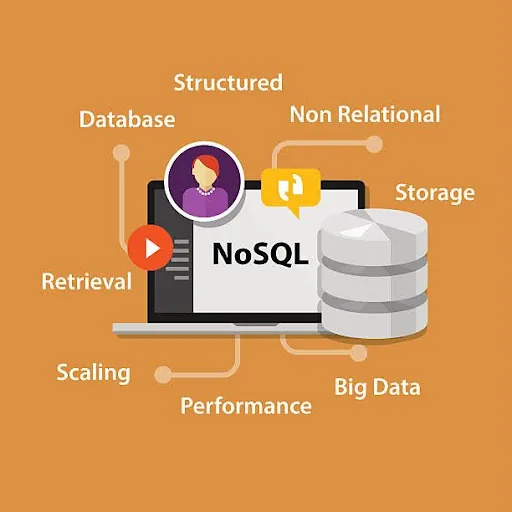
Data is the foundation of modern businesses, and as companies grow, so does the requirement to handle extensive amounts of complex data efficiently. This is where organizations count on NoSQL databases that offer exceptional scalability, flexibility, and performance.

But here's the catch: handling NoSQL databases requires skills. It takes more than just basic knowledge; it takes experience. That's exactly why businesses today are looking to hire NoSQL developers who know their stuff inside out.

From managing real-time data for e-commerce to handling financial transactions and supporting microservices in tech companies, proficient NoSQL developers for real-time analytics are the driving force behind seamless data operations.

New list icon

What Makes NoSQL Databases Essential for Modern Businesses?

Nosql img

Why are businesses ditching traditional databases and moving to NoSQL? Simple, modern problems need modern solutions. NoSQL databases come packed with features that make them a game-changer.

Scalability

Need to handle millions of users? NoSQL databases scale horizontally with ease, making them perfect for high-growth businesses. In fact, the global NoSQL market is anticipated to rise at a CAGR of 31.4% by 2026, proving how companies are adopting scalable business solutions.

Flexibility in Data Modeling

Be it structured, semi-structured, or unstructured, NoSQL lets businesses work seamlessly with diverse data types.

High Performance for Big Data

When speed matters, NoSQL delivers. With faster read/write operations, businesses can process enormous datasets in real-time. Companies using NoSQL have reported up to 50% faster data processing speeds than traditional databases.

Use Cases: Where Does NoSQL Shine the Most

  • E-commerce platforms managing dynamic product catalogs often rely on MongoDB developers for e-commerce to keep operations running smoothly.
  • Streaming services process billions of user interactions
  • Financial applications requiring real-time transaction updates benefit from Cassandra developers for financial services who ensure performance and security.
New list icon

The Role of Experienced NoSQL Developers

It's one thing to use a NoSQL database and another actually to leverage its potential. That's where experienced developers make a world of difference. A seasoned NoSQL engineer can transform a disordered data ecosystem into an efficient system, especially when you hire NoSQL developers for startups aiming for rapid scale.

But why does experience matter? Managing NoSQL databases comes with its own set of challenges:

Designing Effective Data Models

NoSQL isn't "one-size-fits-all." Whether it's document-based MongoDB or wide-column Cassandra, designing the right data model requires deep expertise.

Optimizing for Performance and Scalability

The wrong indexing strategy? This might lead to performance issues. Experienced developers know the nitty-gritty of optimization, ensuring your applications run lightning-fast, even during peak traffic.

Ensuring Robust Security and Data Integrity

Handling sensitive data? Security is non-negotiable. A skilled NoSQL engineer ensures encryption, authentication, and access controls are rock solid.

New list icon

Benefits of Hiring Experienced NoSQL Developers
Nosql blog second

Here's why you should invest in experienced NoSQL developers:

Streamlined Database Architecture

Skilled developers create efficient, scalable architectures tailored to business needs, eliminating tangled databases.

Enhanced Application Performance

Faster queries, reduced latency, and optimized workflows, all thanks to a well-structured NoSQL implementation.

Reduced Downtime and Faster Troubleshooting

Downtime equals lost revenue. Experienced developers quickly identify and resolve issues before they escalate.

Future-Proofing Your Technology Stack

With evolving business needs, having a database that can adapt is crucial, something DynamoDB developers for cloud applications excel at. Experienced developers ensure your stack is ready for whatever the future holds.

So, whether you're planning to hire NoSQL developers for a new project or to scale an existing one, experience is key to maximizing ROI.

New list icon

Industries That Benefit the Most from NoSQL Expertise

NoSQL is not just for tech companies. Several other industries rely on NoSQL to handle complex data demands, and many turn to NoSQL database experts for big data to solve these challenges, including:

E-commerce

  • Real-time inventory management
  • Customer personalization based on browsing history
  • Seamless order processing and tracking

Finance

  • Fraud detection with real-time data analysis
  • Fast and secure transaction processing
  • Handling large-scale financial datasets

Healthcare

  • Patient data management across various systems
  • AI-driven health insights and analytics
  • Compliance with stringent data security regulations

Technology

  • Managing large-scale microservices architecture
  • Supporting high-demand, API-driven platforms
  • Handling multi-tenant cloud applications

With data becoming the driving force across sectors, businesses can't ignore the power of NoSQL expertise.

New list icon

How to Find the Right NoSQL Developers

Finding the right talent can feel overwhelming, but knowing what to look for makes the process easier. Here's what sets top-notch NoSQL developers apart:

Consider Key Skills

  • Deep understanding of databases like MongoDB, Cassandra, DynamoDB, etc
  • Strong grasp of distributed systems and cloud-based architecture
  • Expertise in optimizing queries and indexing strategies
  • Ability to solve complex data challenges efficiently

Evaluate Candidates

  • Check their portfolio, look for diverse NoSQL projects they've handled.
  • Conduct hands-on technical tests focused on real-world scenarios.
  • Ask about their experience with scaling databases and troubleshooting performance issues.

In today's competitive market, companies should only hire NoSQL engineers with experience solving real-world database issues.

New list icon

Conclusion

NoSQL databases are essential for businesses wanting to grow and develop new ideas rather than just being a trend. Using the right NoSQL strategy can help improve how applications work, manage data better, and engage customers more effectively.

However, simply having the right database is not sufficient. Companies should look for NoSQL developers with the knowledge, skills, and forward-thinking approach needed. Investing in experienced NoSQL developers can improve efficiency, scalability, and lasting achievements.

If your business deals with big data and rapid growth, consider Uplers, the largest tech talent platform to hire seasoned NoSQL developers.

Frequently Asked Questions

Uplers ensures a seamless hiring experience by combining AI and human intelligence to vet top-quality NoSQL developers. You receive carefully shortlisted profiles within 48 hours and can onboard the right talent in as little as 2 weeks, helping you hire faster without compromising on quality.

You can receive the top 1% shortlisted profiles within 48 hours through Uplers. Once you finalize the most suitable NoSQL developer, Uplers handles the entire hiring and onboarding process. Depending on your requirements and decision-making timeline, onboarding typically takes 2-4 weeks.

The modes of communication through which you can get in touch with a hired NoSQL Developer include:

  • Email
  • Phone
  • Messaging apps such as WhatsApp, Slack, or Microsoft Teams

If the developer doesn’t meet your expectations, we offer a 90-day replacement guarantee for full-time hires and a lifetime replacement for contract roles, at no additional cost. Additionally, you can opt for a 30-day cancellation policy with no extra charges, giving you complete flexibility to make changes as needed.

The average cost of hiring a NoSQL Developer from Uplers starts at $2500. The number varies depending on the experience level of the developer as well as your requirements.

View Our Pricing For 2025 - 26

At Uplers, candidates are thoroughly evaluated for communication skills and overall suitability for collaboration. Beyond language proficiency, cultural alignment is also assessed to help ensure seamless integration with your team, fostering effective communication, collaboration, and long-term success.

Uplers connects you with document database developers who work with MongoDB, Couchbase, and Firestore, key-value database developers specializing in Redis and DynamoDB, wide-column database developers experienced with Cassandra, HBase, and ClickHouse, and graph database developers working with Neo4j and Amazon Neptune. While relational databases are often the better choice for structured data and transactional workloads, NoSQL is suited for applications requiring flexible schemas, high write throughput, low-latency access, horizontal scalability, or complex relationship-based queries. Choose NoSQL based on your data model, expected scale, access patterns, and consistency requirements.

Assess NoSQL developers through practical scenarios covering data model design, hotspot diagnosis, and CAP theorem trade-offs. Ask them to explain MongoDB embedding vs referencing, identify Cassandra hotspots and recommend fixes such as partition redesign or write sharding, and compare databases based on consistency, availability, scalability, and workload requirements. Strong candidates should clearly explain their technical decisions, trade-offs, and recommendations to both technical and non-technical stakeholders.

NoSQL developer in our network demand is driven by specific use cases across MongoDB, Redis, DynamoDB, Cassandra, and vector databases. MongoDB supports flexible application data models, Redis enables low-latency caching and real-time workloads, DynamoDB supports highly scalable serverless applications, and Cassandra handles high-volume, write-heavy workloads. Vector databases such as Pinecone, Weaviate, and Qdrant are also increasingly used for AI and RAG applications. The CAP theorem helps teams choose based on consistency and availability requirements. Choose CP-oriented databases such as MongoDB when strong consistency is critical, and AP-oriented databases such as Cassandra or DynamoDB when high availability, scalability, and eventual consistency are acceptable.

Yes. Many Developers in our network work with document databases such as MongoDB, key-value stores such as Redis and DynamoDB, and wide-column databases such as Cassandra and ClickHouse. They design scalable data models, optimize queries, build aggregation pipelines, and handle high-throughput data workloads. With the rise of AI and RAG applications, vector databases such as Pinecone, Weaviate, Qdrant, and pgvector are increasingly used for semantic search and retrieval. Choose a developer based on your data model, scalability requirements, access patterns, and AI use case.

Choose based on your data model and primary access pattern. Document databases such as MongoDB suit flexible, hierarchical data and frequent schema changes. Key-value stores such as Redis and DynamoDB are ideal for fast key-based lookups, caching, and highly scalable workloads. Wide-column databases such as Cassandra fit high-volume, write-heavy workloads and time-series data, while ClickHouse is suited to large-scale analytics. Graph databases such as Neo4j work best for applications requiring deep relationship traversal, such as fraud detection and recommendations. Vector databases such as Pinecone, Weaviate, Qdrant, and pgvector are designed for semantic search and AI use cases such as RAG. Choose based on your access patterns, scale, latency, and consistency requirements.