










About
PricingContact
Hackerrank-logo
airbnb-logo
Darwinbox-logo
Gitlab-logo
Tripadvisor-logo
Airbase-logo
Architect-labs-logo
Threatmodeler-logo
Rattle-logo
Hackerrank-logo
airbnb-logo
Darwinbox-logo
Gitlab-logo
Tripadvisor-logo
Airbase-logo
Architect-labs-logo
Threatmodeler-logo
Rattle-logo

Recently Added Game Developers in our Network

Shani Sagar

Shani SagarProfile Badge IC

Game/Unity Developer6.1 Years of Exp
  • Unity Developer
  • Software Development
  • mobile app
  • C#
  • Git
  • unirx
  • View all (9)

Experience and skilled Unity3D Game Developer with a background in the industry. Prove the ability to work as part of a team. Adept technical troubleshooting and anticipating future potential problems.

Darshan Ranpariya

Darshan RanpariyaProfile Badge IC

Team Lead - Game Developer9 Years of Exp
  • Unity
  • Ar application
  • C#
  • unirx
  • unitask
  • 3d models
  • DOTween
  • View all (9)

I am a professional Game Developer(Unity). I can make an Hyper Casual Cross-Platform Multiplayer games as well as Casino Games using unity. I develop complete game programming services including game architecture development, game-play implementation, game -level designs, monetization tools, AR/VR tools, animations, etc. I have successfully completed over several number of projects (2D+3D +VR).

Yash Praveen

Yash PraveenProfile Badge IC

Game Developer6.8 Years of Exp
  • C#
  • Unity 3D
  • DOTween
  • Unity development
  • Unity UI (uGUI)
  • unirx
  • View all (8)

An Unity Game Developer who likes to keep learning. Very confident about coding and logical skills. Comfortable with C# language.

Shraddha Patel

Shraddha PatelProfile Badge IC

Independent9.5 Years of Exp

I am a dedicated and organised professional with nine years of experience in Unity (C#), developing mobile games, AR, and VR training experiences. Alongside game development, I have managed projects, overseeing timelines and team coordination to ensure seamless execution. I am certified in Project Management and currently seeking global opportunities in game production.

Ramesh Gowtham Nemalipuri

Ramesh Gowtham NemalipuriProfile Badge IC

Gaming Developer3.3 Years of Exp

Experienced Unity 3D Developer with 1.5+ years of experience in game development for PC, mobile. Skilled in C# programming, UI/UX design, and performance optimization. Proven track record of delivering high-quality products within deadlines through collaboration and agile methodologies.

Parth Dodiya

Parth DodiyaProfile Badge IC

Game Developer11.2 Years of Exp
  • C#
  • Unity
  • Type Script
  • Cocos
  • Augmented Reality
  • Virtual Reality
  • View all (9)

Experienced Senior Game Developer with over 9+ years of expertise in 2D/3D game development, specializing in Unity and proficient in C#. Possesses a strong background in multiplayer casino and board games, with additional experience in augmented reality technologies. Intermediate-level skills in Cocos and PIXIJS, and a proven track record of leading development teams to deliver high-quality gaming experiences.

Ellipse 1Ellipse 2Ellipse 3Ellipse 4Ellipse 5Ellipse 6

India's largest network of 3.5M+ professionals

Check out some of the candidates who recently joined.

Search

Hire Game Developers in 4 Easy Steps

01
DefineDefine ic

Tell us what you need

You define the role, we match immediately.

02
DiscoverDiscover ic

Meet the top talent

Get 3 to 5 highly relevant candidates in 48 hours.

03
EvaluateEvaluate ic

Interview with ease

Choose the candidate that aligns with your needs and we'll arrange an interview.

04
OnboardOnboard ic

Hire with confidence

Once you decide, we'll take care of the onboarding process for you.

Top Reasons to Choose Uplers

Hire in 48 Hours

Hire in 48 Hours

Receive the top 3-5 AI-interviewed profiles from our network within 2 days.

Top 1% Talents

Top 1% Talents

Only the best profiles vetted using AI and human intelligence make it to your inbox.

Start-up ready Matching

Start-up ready Matching

Engineers who wear multiple hats, move fast, and don't need hand-holding.

Works in 5+ Time Zones

Works in 5+ Time Zones

Engineers overlap with EST/PST: 4–6 hours daily and flexible to preferred time zones.

Employer on Record (EOR)

Employer on Record (EOR)

We handle all legal and payroll complexity of hiring from India, so you don't have to.

Simple Contracts

Simple Contracts

Straightforward agreement with top-most flexibility and freedom.

30 Days Cancellation

30 Days Cancellation

Cancel without any obligations in cases of dissatisfaction, financial instability, or business slowdown.

2X Retention Rate

2X Retention Rate

92% of placed engineers still with clients after 12 months

Various Skills that Game Developers Possess

Access the talent network of 3.5M+ professionals with 100+ skill sets

profile collage
Begin your hiring journey with us!
Hire a top talent

What Founders & Engineering Leaders Say About Us

Testimonial thumbnail
Play video

Uplers earned our trust by listening to our problems and finding the perfect talent for our organization.

Barış Ağaçdan
Director
Testimonial thumbnail
Play video

Uplers helped to source and bring out the top talent in India, any kind of high-level role requirement in terms of skills is always sourced based on the job description we share. The profiles of highly vetted experts were received within a couple of days. It has been credible in terms of scaling our team out of India.

Aneesh Dhawan
Founder
Testimonial thumbnail
Play video

Uplers efficient, quick process and targeted approach helped us find the right talents quickly. The professionals they provided were not only skilled but also a great fit for our team.

Melanie Kesterton
Head of Client Service
Testimonial thumbnail
Play video

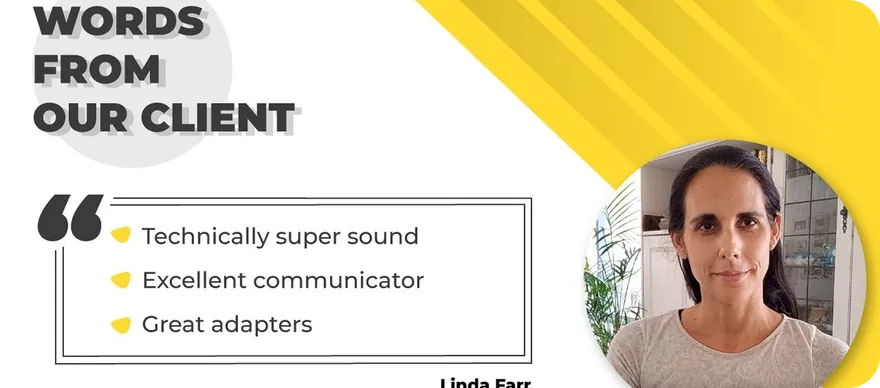
Uplers' talents consistently deliver high-quality work along with unmatched reliability, work ethic, and dedication to the job.

Linda Farr
Chief of Staff

Case Studies of Tech Companies

Check Our Latest Blogs

What Does a Game Developer Do? When Should Your Startup Hire One?

"Hire a game developer" sounds like one role. In practice, it covers several distinct jobs.

The person who makes your core mechanic feel good and the person who keeps thousands of players in sync on a live server bring very different skills.

For a startup, that distinction matters early. Hiring the wrong specialization ties up engineering capacity while the product is still changing.

Cross-platform skills add one more decision. A developer who understands shared systems and platform constraints gives a small team more room to expand later.

New list icon

What Does a Game Developer Do on a Startup Team?

One engine and one codebase can hold very different engineering jobs. The right hire depends on which part of the game your team needs to move forward next.

Gameplay Programming
  • What they own: mechanics, controls, player interactions, and game feel
  • Examples: combat, movement, progression, inventory, and interaction systems

Gameplay programmers also build the core loop, the repeated set of actions that forms the main player experience. In a roguelike, that loop might be: start a run, fight, collect rewards, upgrade, repeat.

What to look for: Iteration speed. Strong gameplay programmers can test a mechanic change in hours and use player feedback to shape the next build.

Engine and Graphics Programming
  • What they own: rendering, shaders, lighting, visual effects, memory use, and graphics performance

Unity, Unreal, and Godot already provide substantial rendering infrastructure. So your need for this role depends on the game's technical scope.

When this role earns its place: When graphics performance or rendering technology is part of your product's core challenge. Examples include a custom visual style or a large open world on mobile hardware.

Multiplayer and Networking
  • What they own: netcode, server authority, matchmaking, synchronization, and latency handling

Netcode is the set of systems that keeps game state in sync between players and servers.

Plan for it early: Multiplayer architecture touches core game systems from the first build. If multiplayer is central to your product, bring in networking expertise before that architecture becomes hard to change.

Tools and Pipeline Engineering
  • What they own: editor tools, build systems, asset workflows, testing infrastructure, and development automation

Good tools let designers and artists make content changes on their own, with no engineer needed for every tweak.

The payoff for small teams: This role creates big leverage once content production becomes the bottleneck.

AI and Procedural Systems

Two kinds of work share this label:

TypeWhat It Covers
Game AINPC behavior, pathfinding, decision systems, combat logic
Generative AIDynamic dialogue, content generation, LLM-driven characters

Adoption is growing, and so is industry pushback. In GDC's 2026 industry survey, 36% of developers said they use generative AI in their own work, and 52% said their companies use it. Meanwhile, 52% of game industry professionals said generative AI is having a negative impact on the industry, up from 30% the year before.

For production use, weigh:

  • inference latency during live play
  • per-player cost as your audience grows
  • reliability and consistency of output
  • moderation and content controls

Screening tip: Ask candidates what they've shipped and how they handled these constraints. A feature that held up with real players tells you the most.

LiveOps and Game Backend
  • What they own: live events, player accounts, analytics, in-game economies, content delivery, and post-launch updates

LiveOps is the ongoing operation and updating of a game after launch.

For live-service games, engineering work keeps growing after release. Content updates, player data, economy tuning, and operational tooling all become regular work.

Hiring trigger: Bring in backend or LiveOps expertise when ongoing player activity becomes central to how your game makes money.

New list icon

Why Do Cross-Platform Skills Matter for Game Startups?

Platform expansion can widen your audience, and every extra platform adds engineering and testing work. Cross-platform skills help your team manage that tradeoff.

Which Systems Can Be Shared, and Which Need Platform-Specific Work?
Shared SystemsPlatform-Specific Work
Gameplay logicInput and controls
Game state and save dataUI behavior and layout
Your own account and backend servicesPerformance and quality settings
Core networking logicPlatform services and device APIs
Most game contentSome rendering and asset configurations

The founder takeaway: Developers who understand this boundary make future ports easier, and each platform still gets an implementation that fits it.

How Can Early Architecture Leave Room for Expansion?
  • A PC launch can later expand to handhelds or consoles once the product earns that investment.
  • Cross-progression lets players carry their progress between platforms. It needs account, identity, and cloud save architecture planned from the start.

Rule of thumb: Let future platform plans shape today's architecture when that expansion is credible and close.

How Does Cross-Platform Hiring Delay Premature Specialization?
  • Small teams need broad engineering coverage before they need separate platform specialists.
  • A developer with experience across your target platforms can handle architecture, performance, builds, and platform adaptation.
  • This applies to platform specialization only. Discipline roles like gameplay, graphics, and networking are a separate decision.

The limit: Deep platform work eventually calls for a specialist or an external porting partner.

What Does Supporting Multiple Platforms Add to the Workload?

Each extra platform adds recurring work with every update:

  • device and input testing
  • separate builds, submissions, and release processes
  • ongoing updates as platforms change their requirements

Consistency is the hardest part for many studios. In Unity's 2026 report, 38% of respondents named a consistent user experience across devices as their primary cross-play obstacle.

Ship on several platforms at launch when the design depends on it, such as cross-play multiplayer.

New list icon

What Does Each Platform Demand From Your Game Developers?

Choose your launch platform based on your product and audience. Then match your hiring requirements to that platform's technical constraints.

Mobile
  • Touch-first controls
  • A wide range of screen sizes
  • Device fragmentation, especially across Android hardware
  • Memory, battery, and thermal limits
  • App store requirements and platform-specific services

Hiring implication: Look for developers who have optimized games across budget and mid-range devices. Frame drops and crashes show up there first.

Needs 2026 verification: Current store policies and payment rules before publication.

PC
  • Wide hardware variation
  • Scalable graphics settings
  • Keyboard, mouse, and controller support
  • Requirements across multiple storefronts
  • Anti-cheat and security work for multiplayer games

Hiring implication: A strong generalist can cover most PC development on a small team, depending on the game's technical scope.

Consoles
  • Developer access approved by each platform holder
  • Dev kits and platform-specific SDKs
  • Certification before release
  • Controller-first interaction
  • Fixed hardware targets with strict memory and performance budgets

Access takes planning. For example, Unity requires developers to apply for developer status and get approval from each platform holder before accessing console build modules. Console development in Unity also requires an active Unity Pro subscription or a Preferred Platform license key from the platform holder.

Hiring implication: Shipped console experience becomes valuable when a console launch is a near-term requirement. Start the approval process well before you need a dev kit.

Handhelds
  • PC handhelds (Steam Deck, ROG Ally) run PC builds, with extra attention to battery use, performance, controls, and small-screen UI.
  • Nintendo Switch 2 follows the console development path, with its own platform requirements.

Hiring implication: A strong PC developer can often cover PC handheld work. Console-specific experience matters more for Switch 2.

Needs 2026 verification: Current platform requirements and compatibility expectations before publishing.

New list icon

When Should Your Startup Hire a Game Developer?

Hire for the technical problem your startup needs to solve now, and keep the next milestone in view.

StageWhat You NeedWho to Hire
PrototypeProve the core loopVersatile gameplay programmer
Vertical slicePolish, performance, pipelineGameplay + technical generalist
Soft launchStability, analytics, multiplayerBackend or networking specialist
LiveContent cadence, economy, operationsLiveOps + backend engineers
  • Vertical slice: a small section of the game built to show the intended final quality across key areas.
  • Soft launch: a limited release used to test player behavior, retention, monetization, and technical stability before a wider launch.

Signals it's time to hire:

  • Founders are writing most of the code, and product, design, or fundraising work is slipping.
  • The prototype has validated the core experience, and the build needs more engineering capacity.
  • Performance issues are blocking the next platform milestone.
  • A publisher or funding milestone requires a playable build by a fixed date.

Hiring decisions to avoid:

  • Hiring a senior specialist before the technical problem needs that depth.
  • Hiring for a platform with no defined place on your current roadmap.
  • Hiring around a trend with no concrete product requirement behind it.

Once you know which role you need, the next step is checking whether a candidate can do the work. Our guide on game developer skills and evaluation covers that.

What Skills Should You Look for When You Hire a Game Developer?

Every candidate's demo reel looks great. The combat is smooth, the lighting is beautiful, and nothing crashes.

Your hiring process needs to show you what that same developer does in week 12, when the frame rate drops and a publisher demo is days away.

New list icon

Which Core Skills Should You Screen For?

Start with the engineering fundamentals behind every reliable game. These skills apply across roles and engines.

Game Programming Fundamentals
SkillWhat It Enables in a GameWhat Good Looks Like
Game mathMovement, rotation, aiming, camera systems, and physicsComfortable with vectors, matrices, quaternions, and basic physics
Data structuresFast lookups for inventories, spatial queries, and game stateChooses structures based on how the game reads and writes the data
AlgorithmsPathfinding, AI decisions, procedural generation, and simulationExplains the tradeoff between approaches, such as A* pathfinding or simpler navigation for a small map
State managementPlayer, enemy, quest, and save stateKeeps state predictable, so bugs are easy to reproduce

Game systems interact constantly. A combat change can break the quest system two menus away.

Strong fundamentals help developers trace those interactions back to the root cause.

Performance and Memory Management

Performance problems show up as dropped frames, stutters, long load times, and crashes. Players notice every one of them.

The frame budget: At 60 fps (frames per second), each frame gets about 16.7 milliseconds for gameplay logic, physics, animation, rendering, and audio. CPU work and GPU work each need to fit inside that window.

SkillWhy It Matters in Game Development
CPU and GPU profilingShows which system is spending the frame budget
Memory profilingFinds leaks, spikes, and excess allocations before they cause crashes
Garbage collection awarenessIn C# engines like Unity, frequent allocations trigger pauses that players feel as hitches mid-fight
Asset optimizationTexture sizes, compression, and streaming control memory use and load times
Production Code Quality

Look for code with:

  • Clear boundaries between systems
  • Readable naming
  • Testable logic
  • Sensible abstractions
  • Solid error handling
  • Structure another engineer can extend after one walkthrough

Why this matters for startups: On a small team, the person who wrote a system is often the only one who understands it. Clean code keeps new features from waiting on that one person.

New list icon

How Deep Should a Game Developer Be in Their Engine?

Engine familiarity is the starting point. The stronger signal is how a developer uses the engine to solve production problems.

2026 context:

  • In GDC's 2026 survey, Unreal Engine (42%), Unity (30%), and proprietary engines (19%) were the most widely used. Unity was most popular among free-to-play projects and smaller teams.
  • Godot is growing fast among newer developers. At GMTK Game Jam 2026, 47% of games were made with Godot, its first time as the most-used engine at the event. Unity came second at 34%.
Unity
  • C# and component architecture: the foundation of every Unity system
  • ScriptableObjects: store game data outside code, so designers can tune values without editing scripts
  • Addressables: load assets on demand, which keeps memory use and download size in check
  • Unity Profiler and Memory Profiler: find CPU, GPU, and allocation problems
  • Editor extensions: custom inspectors and tools that speed up content work
Unreal Engine
  • C++: handles performance-critical systems
  • Blueprints: support fast iteration and designer-friendly logic
  • Gameplay framework: Unreal's built-in structure for game rules, input, and characters
  • Gameplay Ability System, where relevant: manages abilities, cooldowns, and effects, with multiplayer support
  • Unreal Insights: profiles CPU, GPU, and memory performance
Godot
  • GDScript or C#: GDScript for fast iteration, C# for teams with .NET experience
  • Scene and node architecture: builds complex objects from small, reusable pieces
  • Signals: let systems communicate while staying loosely coupled
  • Resources: reusable data objects for items, stats, and configuration
  • Built-in profiler and debugger: track down performance and logic issues
Version Awareness

Engine roadmaps affect your production plans, so ask which version the candidate's last project shipped on and who made the upgrade decision.

  • Unity: Unity 6.3 LTS launched in December 2025. Support for Unity 6.0 LTS ends in October 2026.
  • Unreal: UE 5.8 is the last planned major Unreal Engine 5 release. Epic is targeting Early Access for Unreal Engine 6 at the end of 2027.

Evaluation rule: Ask about the hardest problem they solved inside the engine. The decisions behind that work show their depth.

New list icon

What Production Skills Separate Strong Game Developers?

A startup needs developers who can move a feature from idea to stable build, then keep it healthy as the game changes.

Testing and Build Workflows

Look for experience with:

  • Automated tests where they add value
  • Regression testing
  • CI builds
  • Reproducible builds
  • Crash reporting
  • Release validation

Why it matters: A broken build can stall a playtest, a publisher demo, or a milestone review.

Version Control for Game Projects

Candidates should understand:

  • Branching workflows and code reviews
  • Large binary assets through Git LFS, Perforce, or Unity Version Control
  • File locking for scenes and art assets
  • Resolving merge conflicts on scene files

Why it matters: Two people editing the same scene file can overwrite each other's work. File locking and clear workflows prevent that.

Founder tip: Ask about a difficult merge or broken build they had to resolve. A specific story shows their production experience.

New list icon

How Should You Evaluate a Game Developer?

A resume confirms tools and past projects. These five steps show how a candidate thinks, builds, debugs, and handles constraints.

Step 1: Review the Portfolio
Portfolio SignalWhat It Reveals
Shipped commercial gameExperience with production constraints
Playable buildMechanics, stability, and polish
Game jam projectScope management and iteration speed
Public codeArchitecture and coding style
Technical write-upAbility to explain decisions
Tutorial-style projectLearning ability, with limited evidence of independent ownership

Quick test: Spend 10 minutes with a playable build. Check responsiveness, stability, and obvious bugs, and see whether the experience matches how the candidate describes it.

Step 2: Go Deep on One System

Ask the candidate to walk through one system they shipped:

  • What did you personally own?
  • What did other engineers own?
  • What changed during development?
  • What broke, and how did you diagnose it?
  • What would you redesign?
  • How did you know the solution worked?

What to look for: Specific ownership, clear technical reasoning, and evidence from real production work.

Step 3: Run a Live Debugging Scenario

Give candidates a realistic problem and ask them to talk through it.

Example scenarios:

  • "Players report that combat becomes inconsistent after a new ability is introduced. Walk me through your investigation."
  • "Frame rate drops sharply when 100 NPCs are active. How would you find the bottleneck?"

What to evaluate:

  1. Reproduction
  2. Measurement
  3. Hypothesis formation
  4. Isolation
  5. Fix strategy
  6. Verification
Step 4: Test Architecture Judgment

Ask:

  • "How would you structure an inventory system?"
  • "Where should this game state live?"
  • "When would you introduce an abstraction?"
  • "What would you keep simple in version one?"
  • "How would you make this system easier to extend?"

What good looks like: The candidate starts from the product requirement, explains the tradeoffs, and adds complexity when the system earns it.

Step 5: Use a Short Paid Practical Task

Keep the task focused and review what matters.

Possible tasks:

  • Implement a small gameplay mechanic
  • Fix a performance problem in a sample scene
  • Debug a broken gameplay system
  • Extend an existing feature

What to review:

  • Code structure
  • Debugging process
  • Questions asked
  • Scope decisions
  • Handoff notes

A 4-8 hour task works well when the scope is tightly controlled.

New list icon

Which Startup-Readiness Skills Should You Evaluate?

A small game team needs developers who make sound technical decisions while the product, priorities, and constraints keep changing.

SkillQuestion to AskStrong Signal
Scoping"What did you cut from a rushed feature?"Explains the tradeoff and its impact
Ownership"You inherit a codebase with little test coverage. What do you do first?"Starts with the highest-risk systems while the team keeps shipping
Collaboration"Tell me about a design disagreement."Explains technical constraints clearly and reaches a decision
Prioritization"What technical debt would you fix first?"Connects the decision to product risk
Adaptability"Tell me about a decision you changed."Explains what new evidence changed their mind
Player focus"What playtest changed your implementation?"Connects engineering choices to player behavior
New list icon

What Red Flags Should You Watch For When Hiring a Game Developer?

  • Lists engines and tools with no clear examples of what they built
  • Describes every project with "we" and never clarifies personal ownership
  • Shares a portfolio with only videos and no builds or code
  • Jumps to a fix before understanding the problem
  • Guesses at performance causes with no profiling data behind the answer
  • Uses complex architecture for simple requirements
  • Can't name a technical decision they later changed
  • Talks about technical debt with no link to player or product risk
New list icon

Conclusion

A strong game developer understands the fundamentals behind game systems, diagnoses production problems methodically, and can explain the reasoning behind every technical decision.

For your startup, begin with the skill your next milestone depends on. Test it through real scenarios, and use the candidate's shipped work to confirm their depth.

Frequently Asked Questions

Uplers ensures a seamless hiring experience by combining AI and human intelligence to source top-quality Game developers. You receive carefully shortlisted profiles within 48 hours and can onboard the right talent in as little as 2 weeks, helping you hire faster without compromising on quality.

You can receive the top 1% shortlisted profiles within 48 hours through Uplers. Once you finalize the most suitable Game developer, Uplers handles the entire hiring and onboarding process. Depending on your requirements and decision-making timeline, onboarding typically takes 2-4 weeks.

The modes of communication through which you can get in touch with a hired Game Developer include:

  • Email
  • Phone
  • Messaging apps such as WhatsApp, Slack, or Microsoft Teams

If the developer doesn’t meet your expectations, we offer a 90-day replacement guarantee for full-time hires and a lifetime replacement for contract roles, at no additional cost. Additionally, you can opt for a 30-day cancellation policy with no extra charges, giving you complete flexibility to make changes as needed.

The average cost of hiring a Game Developer from Uplers starts at $2500. The number varies depending on the experience level of the developer as well as your requirements.

View Our Pricing For 2025 - 26

At Uplers, candidates are thoroughly evaluated for communication skills and overall suitability for collaboration. Beyond language proficiency, cultural alignment is also assessed to help ensure seamless integration with your team, fostering effective communication, collaboration, and long-term success.

Game development needs vary by engine, platform, and the stage of the project. Uplers provides gameplay and systems developers, engine and performance specialists, and backend and live ops developers. Gameplay developers build mechanics, animation systems, and UI using Unity and Unreal Engine, while performance specialists focus on rendering, memory management, and frame rate optimisation. Backend and live ops developers handle multiplayer infrastructure, matchmaking, game economies, and monetisation, with additional experience across mobile and console development.

Yes. Developers in the network can work on PlayStation, Xbox, and Nintendo Switch projects, including platform specific development, optimisation, SDK integration, and certification requirements. Console development requires experience with the relevant platform tools, hardware constraints, and submission processes, so platform specific expertise is important for these projects.

Yes. Developers in the network can work with ARKit, ARCore, Oculus SDK, Meta Quest, Vision Pro, and WebXR for augmented, virtual, and mixed reality experiences. Developers can handle platform specific requirements such as hand and eye tracking, controller input, spatial interactions, performance optimisation, and platform certification. Experience can vary significantly between headsets, so choosing developers familiar with the target platform is important.

Yes. Game developers in the network can build multiplayer systems using Photon, Mirror, PlayFab, Firebase, Node.js, and AWS GameLift. The work covers state synchronisation, client prediction, server authority, matchmaking, scaling, and multiplayer testing under real network conditions. The architecture depends on factors such as the game genre, player count, latency requirements, and whether dedicated or player hosted servers are needed.

Yes. Developers in the network can support Steam, PlayStation, and Xbox releases, including platform SDK integration, store requirements, certification preparation, and submission workflows. PlayStation and Xbox releases require platform specific developer access, dev kits, and compliance with technical certification requirements, while Steamworks has a simpler publishing process with SDK integration for features such as achievements and cloud saves. Console experience is especially important for navigating certification and resolving submission issues efficiently.

Start with playable or shipped work whenever possible, as hands on experience reveals performance, responsiveness, and overall quality better than a portfolio description. Ask about a past performance problem, how the developer would structure a game feature or state machine, and how a late design change was handled during production. A practical coding or project walkthrough can further assess problem solving, architecture, optimisation, and adaptability.