Passionate Front-end Developer skilled in crafting engaging digital experiences through a blend ofaesthetics and functional design. Proficient in HTML, CSS, and JavaScript to create user-friendly interfaces.Committed to delivering top-tier results through meticulous execution and creative problem-solving.
Having 10+ years of experience in Frontend Development, I am looking for a position where I can use and share my knowledge and learn new technologies in Frontend Development and gain more practical knowledge.
I am having expertise in designing & developing for 5+ years, And can do any kind of work in this with responsiveness! I love to work on challenging tasks, I am very passionate and want to grow, learn, explore, and try new things.I finished many website designs/development which led me to grow my business. Now I want to explore my skill so I joined such a big platform.
I am a frontend developer with 3.5 years of experience working with Reactjs, Have done Project good projects like amnic, Permit vault( Texas based) etc. Gathering Requirements directly from client and implements them, Have worked with cross-domain team.Made project from scratch and finished on Production.
Senior front-end developer with over all 7+ years of IT experience in designing and building responsive web apps in the financial industry. Proficient with CSS and JS Frameworks, with extensive knowledge of UX and user psychology.
I am a front-end developer with three years and nine months of experience. I started at WaveNet Solution (merged with Amante Technology), completing projects for the Staff Selection Commission of India and a US-based medical project, Genadyne. I implemented various data handling features, including CSV, PDF, and Excel downloads.At Capgemini, I developed a project from scratch, addressed bugs in React, and worked on reports like Sonar and VAPT. Currently, I am with Coforge, where I transitioned from support to development on a major project, creating the DocVault functionality.I specialize in JavaScript, React, Angular, HTML, CSS, and Sass, with strong proficiency in both class-based and functional React coding and deep knowledge of JavaScript and TypeScript.
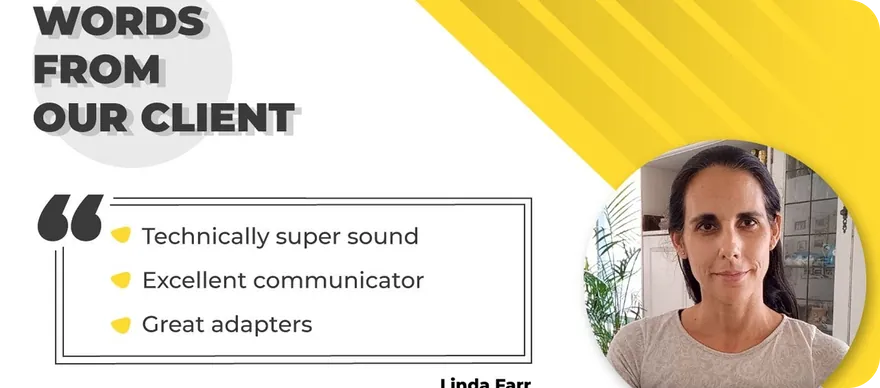
Uplers' talents consistently deliver high-quality work along with unmatched reliability, work ethic, and dedication to the job.
Linda Farr
Chief of Staff
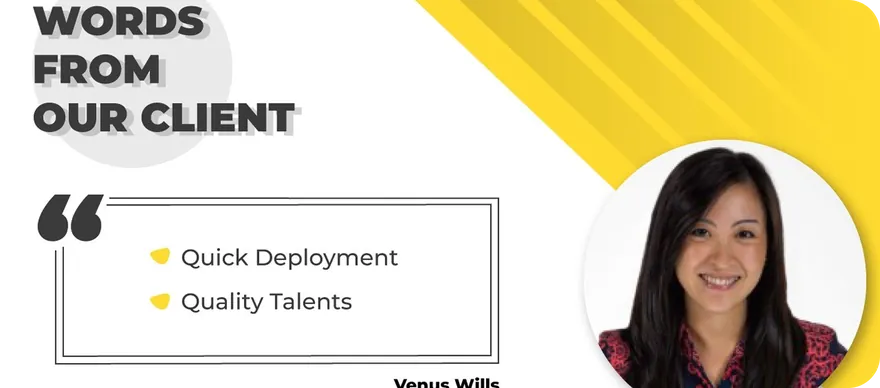
Uplers helped Tanium successfully grow their distributed team and achieve business goals in 2020, amidst the pandemic and talent shortage. Tanium was able to onboard the right fit on time to launch their marketing campaign, which played a crucial role in its growth story. Tanium found Uplers' talents to be quick, efficient, and remarkable.
Venus Wills
Senior Director of Demand Execution
Uplers impressed me with their speed. They onboarded us, found a great candidate (Imran), and had us up and running in less than a week. The process was smooth, and while Imran had more experience than I initially expected, I felt confident he'd be a perfect fit.
Candice Marshall
Chief Marketing Officer
Uplers earned our trust by listening to our problems and finding the perfect talent for our organization.
Barış Ağaçdan
Director
Uplers helped to source and bring out the top talent in India, any kind of high-level role requirement in terms of skills is always sourced based on the job description we share. The profiles of highly vetted experts were received within a couple of days. It has been credible in terms of scaling our team out of India.
Aneesh Dhawan
Founder
Uplers efficient, quick process and targeted approach helped us find the right talents quickly. The professionals they provided were not only skilled but also a great fit for our team.
Melanie Kesterton
Head of Client Service
Uplers' talents consistently deliver high-quality work along with unmatched reliability, work ethic, and dedication to the job.
Linda Farr
Chief of Staff
Uplers helped Tanium successfully grow their distributed team and achieve business goals in 2020, amidst the pandemic and talent shortage. Tanium was able to onboard the right fit on time to launch their marketing campaign, which played a crucial role in its growth story. Tanium found Uplers' talents to be quick, efficient, and remarkable.
Venus Wills
Senior Director of Demand Execution
Uplers impressed me with their speed. They onboarded us, found a great candidate (Imran), and had us up and running in less than a week. The process was smooth, and while Imran had more experience than I initially expected, I felt confident he'd be a perfect fit.
Candice Marshall
Chief Marketing Officer
Uplers earned our trust by listening to our problems and finding the perfect talent for our organization.
Barış Ağaçdan
Director
Uplers helped to source and bring out the top talent in India, any kind of high-level role requirement in terms of skills is always sourced based on the job description we share. The profiles of highly vetted experts were received within a couple of days. It has been credible in terms of scaling our team out of India.
Aneesh Dhawan
Founder
Uplers efficient, quick process and targeted approach helped us find the right talents quickly. The professionals they provided were not only skilled but also a great fit for our team.
Melanie Kesterton
Head of Client Service
Uplers' talents consistently deliver high-quality work along with unmatched reliability, work ethic, and dedication to the job.
Linda Farr
Chief of Staff
Uplers helped Tanium successfully grow their distributed team and achieve business goals in 2020, amidst the pandemic and talent shortage. Tanium was able to onboard the right fit on time to launch their marketing campaign, which played a crucial role in its growth story. Tanium found Uplers' talents to be quick, efficient, and remarkable.
Venus Wills
Senior Director of Demand Execution
Uplers impressed me with their speed. They onboarded us, found a great candidate (Imran), and had us up and running in less than a week. The process was smooth, and while Imran had more experience than I initially expected, I felt confident he'd be a perfect fit.
Candice Marshall
Chief Marketing Officer
Case Studies of Tech Companies
Case study
Getting a storefront ready to carry the growth it was built for
01
The situation
The D2C startup's storefront had outgrown its quick-launch build. Slow mobile performance and increasing traffic were creating a clear need for a front-end rebuild, but the two engineers on the team were already committed to product and backend work. The startup needed a front-end developer who could independently own the rebuild, with strong React and Next.js experience and a track record in performance optimization, mobile-first development, and early-stage environments.
02
Solution
Uplers understood from the first call that this wasn't a normal-paced hire - the marketing spend was already scheduled. The search was narrowed immediately to front-end developers who had specifically worked in early-stage environments before - comfortable owning a storefront rebuild largely independently, without a large team or detailed specs to lean on and screened for performance optimization and mobile-first rebuilds under real ad-spend pressure. The matched developer joined and was rebuilding the storefront within 3 weeks of the founders first flagging the problem.
Check Our Latest Blogs
Why Do You Need a Front-end Developer?
Your front-end is what users see. A slow or broken UI is what they remember.
The choices you make in the first build, be it component structure, state management, or loading states, directly affect how fast you can ship six months from now.
A good front-end engineer helps make sure you get:
User experience: Clean, responsive interfaces that guide users to the right actions without friction.
Brand consistency: Every screen reflects the design system, not a patchwork of one-off decisions.
Cross-browser and cross-device reliability: Your app works the same on Chrome, Safari, Firefox, and every screen size.
What a Strong Front-End Engineer Owns
From component architecture to load time, they're accountable for how your product feels and performs.
Islands Architecture & React Server Components
Islands Architecture is a front-end pattern where most of the page loads as static HTML. The interactive parts, such as search bars, carousels, and CTAs, load as JavaScript components. The rest of the page stays lightweight.
React Server Components (RSC) let you render components on the server and send only the result to the browser. No JS bundle required for those parts. This directly cuts your JavaScript payload and speeds up Time to Interactive.
Edge caching delivers content from servers that are closer to each user, which lowers the Time to First Byte (TTFB), the delay between a request and the first data received. For global products, this is often the quickest way to boost performance with minimal engineering work.
Custom Web App Development
Building a custom web app isn't just about making something that works, it's about making something your team can keep building on.
Clean, componentized front-end code isn't a luxury, it's what lets you keep shipping past the first six months without the codebase becoming a bottleneck.
For AI-native products, the front-end has to handle things most web apps don't, such as streaming responses, uncertain load times, partial outputs, and fallbacks when a model call fails. They are core UX requirements.
Headless CMS & Visual Editors
A headless CMS separates content from your front-end. Content lives in a platform like Contentful, Sanity, or Strapi, gets delivered via API, and your front-end consumes it independently.
For early-stage startups, skip it on day one. Once your marketing team needs to update content without filing dev tickets, it pays for itself fast.
When paired with a visual editor like Builder.io or TinaCMS, it allows non-technical teammates to edit content without coding. Developers keep full control of the front-end.
If you are building Shopify-based products, prefer Hydrogen, a React framework for custom storefronts. It provides full front-end flexibility with Shopify's commerce infrastructure (payments, inventory, checkout) intact underneath.
Ongoing Support & Maintenance
Many founders don't realize how much front-end work is needed after launch. Browsers change, dependencies can break, and performance often drops as you add new features.
Plan for ongoing front-end support from the beginning. You'll definitely need it, even if you can't predict exactly when.
How to Hire the Right Front-end Engineer
The front-end engineer you hire will directly impact how users experience your product from the very beginning.
If your UI is slow, interactions don't work, or the layout breaks on mobile, users will notice right away. These are front-end problems, not back-end ones.
Most founders underestimate this hire until they've made a bad one.
The problem is that most hiring advice is written for HR teams, not founders. It focuses on process over judgment, what stages to run, not what to actually look for.
This guide fixes that. It covers how to define the role, what to evaluate in candidates, where to find them, and how to run an interview process that actually tells you something useful.
A Founder's Guide to Hiring the Right Front-End Engineer
This isn't an HR checklist. It's what you actually need to evaluate before making the hiring decision.
Define What You Actually Need
Before you post a job, take a moment to answer these three questions honestly:
What are you building?
Building a static marketing site, a SaaS dashboard, or an AI-focused product each requires different skills. Be clear about your tech stack before you start looking for candidates.
What skill level do you need?
Hire a beginner for scoped, supervised tasks. Mid-level engineers work for feature ownership. Senior engineers are best for architecture and cross-functional decisions.
Developer or developer-designer hybrid?
If you have a designer, you need someone who can execute. If you don't, you need someone who can make visual judgment calls, too. Different role, different hire, different budget.
Write a Clear Job Description
A vague JD attracts a wide, low-quality pool. A specific one attracts fewer but better candidates.
Specify your stack: List the tools, such as Next.js App Router, Tailwind CSS, Zustand, and Vercel. Candidates will self-select based on this. So, someone with deep Next.js experience will apply, while someone who's only worked in Angular probably won't.
Describe what they'll own: If you are hiring for a mid-to-senior role, mention, "Will build and maintain the core product UI independently." But for a junior role, specify, "Will work under the direction of a senior engineer." Be honest about the role and what support you can offer.
List real responsibilities: For example, the person will own a component library, collaborate with the design team, and lead performance optimization efforts. This clearly tells them what the job is.
Include soft skills: Mention communication, ownership, problem-solving, and initiative skills, which are key to surviving a startup.
Give a salary range: Many experienced engineers skip listings without one. It also signals you've scoped the role properly, which matters to candidates.
Find a Reliable Hiring Source
Standard job boards like LinkedIn and Indeed work, but front-end roles attract a lot of noise. You may spend a lot of time filtering. Here are better options:
GitHub Jobs and community: Candidates are actively engaged here.
Hiring platforms: Filtering for technical skills and startup-readiness cuts filtering time significantly.
Referrals and network: Ask other technical founders or engineers who they'd hire. A warm referral with a technical endorsement is faster and more reliable than cold sourcing.
Evaluate Front-End Candidates
Here are the skills that separate a strong front-end hire from a mediocre one:
Framework fluency: React and Next.js proficiency is expected. Test technical depth, too. Do they understand why to use React Server Components over client components? Ask them to walk you through an architectural decision they made on a past project. How they explain it tells you more than a coding test.
Core Web Vitals: Ask if they have optimized LCP (Largest Contentful Paint), CLS (Cumulative Layout Shift), or INP (Interaction to Next Paint). These Google benchmarks affect SEO and user experience. Good candidates can explain what changes they made and the results.
GitHub activity: Look for candidates with steady commits, open-source work, or code reviews on GitHub. This shows they care about coding beyond just their job. It also gives you real code to review before the interview.
AI pair programming: Engineers who use tools like GitHub Copilot or Cursor effectively write faster and catch more issues. Ask candidates how they use these tools and how they verify the output.
TypeScript: If you're building anything you plan to maintain and scale, TypeScript is non-negotiable. It catches type errors at compile time, makes refactoring safer, and makes the codebase significantly easier for a new engineer to pick up. Ask to see TypeScript code from a past project.
Accessibility basics: WCAG compliance indicates an engineering discipline. A developer who builds accessible components by default writes cleaner, more intentional code overall.
Structure the Interview Process
Each stage of this interview process serves a specific purpose and keeps you from making expensive gut-feel decisions.
Phone/video screen (20–30 min): Confirm experience and check communication. Engineers who explain technical decisions in plain language are easier to work with on a mixed team.
Technical interview: Ask about real projects they've worked on, what they built, the tradeoffs they made, and what they might do differently. How they think through problems is more important than just knowing syntax.
Skills test: Keep it under two to three hours and make it relevant to your actual work. Ask them to build a small feature with Next.js App Router, or give them a slow-loading component to diagnose and fix.
Final interview: Focus on working style and how they handle ambiguity. Ask how they'd approach a feature with unclear requirements, or push back on a design that's technically impractical.
Reference check: Ask specifically about code quality, how they handled feedback, and whether the reference would hire them again. Vague praise is a soft red flag.
What Skills to Look For When Hiring a Frontend Engineer?
When hiring a frontend developer, don't focus on the skills that look impressive on a resume.
You need someone who can own performance, implement design systems without hand-holding, and build interfaces that scale as your product grows.
Many front-end hires don't work out because founders focus on visual polish and overlook architectural skills. If a developer makes a great-looking interface but doesn't organize components for growth, you'll likely need a full rebuild in six months.
Here's how to tell the difference.
Skills that actually predict a good frontend hire
Before you post a job description, know which skills are non-negotiable at your stage and which ones you can hire for later.
Skill
Why it matters for startups
Can you hire without it?
Component architecture and design systems
Prevents expensive refactoring as the team grows
No, this compounds fast
Performance optimization (Core Web Vitals, bundle size)
Directly affects SEO and user retention
Depends on stage, critical by Series A
Responsive design
60%+ of web traffic is mobile
No, non-negotiable
Accessibility (WCAG compliance)
Legal risk in most markets, affects SEO
Negotiate on timeline, not on inclusion
Monorepo tooling (Turborepo, Nx)
Matters at scale, not pre-product
Yes, hire for this later
AI-assisted testing (Playwright + GPT)
Emerging best practice, not yet standard
Yes, strong signal in senior hires
Technical Skills Worth Screening For
JavaScript and frameworks: Look for hands-on experience with React, Angular, or Vue. The framework matters less than how well they can reason about state, component structure, and rendering behavior.
HTML and CSS: A developer who relies entirely on frameworks without understanding the underlying markup will struggle when things break in production.
CSS-in-JS: Check for their experience with zero-runtime tools like Linaria, which handle styles at build time, or type-safe systems like Panda CSS that use design tokens for consistent themes.
Responsive design: With over 60% of web traffic coming from mobile devices, this is not optional. Look for experience with fluid grids, Flexbox, and breakpoints that are specific to actual user behavior.
Performance optimization: Hire someone who has worked with lazy loading, code splitting, and Core Web Vitals. If they can't cite a specific metric they improved on a past project, they probably haven't owned performance.
Version control: What separates good collaborators from average ones is pull request quality, how they give code reviews, and whether their documentation is useful to the next person on the codebase.
Design System Ownership: Why It Matters
Design systems are not style guides. They keep your product consistent even when the team grows, and multiple developers work on the same components. A frontend developer who can own one will save you from design-developer friction and expensive visual inconsistency down the line.
Look for candidates who have:
Built and documented reusable components in Storybook.
Implemented visual regression testing with tools like Chromatic.
Worked with designers to establish consistent design tokens and patterns.
Ensured accessibility compliance across all components.
Created component APIs that other developers actually want to use.
Ask them to walk you through a design system they built or contributed to. Listen for how they talk about adoption. A developer who built something nobody used hasn't really owned a design system.
AI-Powered Testing: A Strong Signal In Senior Engineers
It is a meaningful differentiator in 2026. Frontend developers who are integrating AI into their testing workflow are ahead of the curve.
What this looks like in practice:
End-to-end testing with Playwright, enhanced with AI for test generation.
Visual regression tests that identify meaningful UI changes.
Smart test selectors that stay resilient when the UI changes.
Automated accessibility testing with AI-assisted remediation.
What a Front-end Engineer Does
Beyond the skills, founders often underestimate how much coordination the role requires. A front-end developer sits at the intersection of design intent and engineering reality. When communication fails there, it shows up directly in the product.
Core responsibilities:
Translating design files into functional, production-ready interfaces.
Maintaining and updating the codebase for performance and security.
Testing for functionality and usability, and debugging issues before they reach users.
Collaborating with backend developers on API contracts and data flow.
Flagging design gaps early, not after implementation.
Technical Interview Questions to Hire Frontend Developers
To hire the right front-end developer for your team, you need to go beyond a portfolio review or a GitHub repository check.
Startups need engineers who can balance design fidelity and performance optimization across modern frameworks like React, Angular, and Flutter.
As a founder, your job is not just to evaluate technical know-how, but also to assess developers' problem-solving, communication, and product-thinking. The following 10 technical interview questions will help you uncover the depth and adaptability of frontend capabilities. Each one will help you understand how a developer works under real-world scenarios, across platforms, teams, and browsers.
As a frontend developer, how would you troubleshoot an issue where ReactJS fails to update the UI even after a state change?
This question probes the candidate's knowledge of React's rendering behavior and debugging techniques. Promising applicants will discuss using React DevTools to track state and props, confirm render conditions, and examine state immutability.
What it indicates:
Depth of expertise in React
Knowledge of debugging tools
Awareness of state management
How would you manage the interaction between the Angular frontend and backend teams to improve the user experience?
Cross-team cooperation is assessed by this question. Seek answers regarding the use of TypeScript interfaces, Swagger/OpenAPI documentation, and shared API contracts to facilitate data interchange across frontend and backend teams.
What it indicates:
Communication and teamwork abilities
Experience with API consumption
UX-centered development methodologies
How would you safeguard data during the exchange between the frontend and backend?
Frontend security is often overlooked. Look for responses that mention input validation, HTTPS protocols, token-based authentication (e.g., JWT), and encryption during transmission.
What it indicates:
Knowledge of online security
Knowledge of authorization and authentication
Knowledge of safe communication techniques
What's your approach to handling cross-device consistency in UI design?
This reveals the candidate's approach to responsiveness. Seek expertise in media queries, Flexbox, Grid, and mobile-first design principles. Bonus points for mentioning performance tests on actual devices and accessibility (A11y).
What it indicates:
Knowledge of UI adaptability
Using UX across devices
Designing with mobile devices in mind
In instances where you've had to implement your design with HTML/CSS, how did you ensure design integrity across different browsers?
Even pixel-perfect designs might be derailed by browser quirks. The right candidate will discuss leveraging preprocessors, such as SCSS for consistent styling, testing in BrowserStack, CSS resets, and tools like Normalize.css.
What it indicates:
Paying attention to the nuances of the design
Skills for cross-browser development
Understanding CSS and rendering behavior
How do you approach and solve a Flutter layout challenge where the UI adapts to multiple screen sizes and orientations?
This assesses a developer's proficiency with Flutter and responsive design. Promising applicants will discuss how to construct dynamic user interfaces (UIs) with LayoutBuilder, MediaQuery, Expanded, and Flexible widgets.
What it indicates:
Solving problems with mobile layout
Knowledge of widgets unique to Flutter
Understanding UI responsiveness
Can you devise a strategy to maintain feature parity across web, iOS, and Android while handling separate UI requirements with React Native and Next.js?
Seek out thinking at the architecture level. Strong applicants will recommend API services, shared business logic layers, and platform-specific or conditional rendering to modify user interfaces.
What tools or techniques do you recommend for cross-browser compatibility in React applications?
Anticipate useful responses, including libraries such as Modernizr, Babel, polyfills, and PostCSS. Real device/browser testing or automation tools ought to be mentioned as well.
What it indicates:
Project maturity for React
Knowledge of support for legacy browsers
Experience with frontend build tools
Can you discuss how Figma collaboration has impacted your front-end development workflow in React projects?
This question reveals the candidate's level of collaboration with designers. Seek clarification on developer-designer feedback loops, design tokens, component libraries, and direct handoff using Figma's inspect tool.
What it indicates:
Experience with design cooperation
The mindset of component-driven development
Awareness of workflow integration
How do you ensure smooth transitioning of UI/UX designs from Figma to CSS code in a component-based framework like React?
Modular CSS (CSS Modules, styled-components), consistent font and spacing, and upholding a design system are all mentioned by competent developers. Accuracy and maintainability are their objectives.
What it indicates:
A keen eye for details
Awareness of component structure
Best practices for CSS
Frequently Asked Questions
Uplers ensures a seamless hiring experience by combining AI and human intelligence to source top-quality Front-End developers. You receive carefully shortlisted profiles within 48 hours and can onboard the right talent in as little as 2 weeks, helping you hire faster without compromising on quality.
You can receive the top 1% shortlisted profiles within 48 hours through Uplers. Once you finalize the most suitable Front-End developer, Uplers handles the entire hiring and onboarding process. Depending on your requirements and decision-making timeline, onboarding typically takes 2-4 weeks.
The modes of communication through which you can get in touch with a hired Front-End Developer include:
Email
Phone
Messaging apps such as WhatsApp, Slack, or Microsoft Teams
If the developer doesn’t meet your expectations, we offer a 90-day replacement guarantee for full-time hires and a lifetime replacement for contract roles, at no additional cost. Additionally, you can opt for a 30-day cancellation policy with no extra charges, giving you complete flexibility to make changes as needed.
The average cost of hiring a Front-End Developer from Uplers starts at $2500. The number varies depending on the experience level of the developer as well as your requirements.
At Uplers, candidates are thoroughly evaluated for communication skills and overall suitability for collaboration. Beyond language proficiency, cultural alignment is also assessed to help ensure seamless integration with your team, fostering effective communication, collaboration, and long-term success.
Yes. The network includes front-end developers experienced in modern technologies such as React.js, Next.js, Three.js, WebGL, Svelte, SvelteKit, and WebAssembly. Whether the requirement is for SSR/SSG applications, interactive 3D experiences, performance-focused builds, or compute-intensive browser applications, talent can be matched based on proven project experience in the specific technology stack.
Front-end developers in the network go through a multi-stage evaluation process focused on practical skills. Assessments cover code quality, problem-solving, design-to-code accuracy from Figma handoffs, responsive UI development, Core Web Vitals awareness, and performance optimization. The process combines AI and human intelligence evaluations to ensure strong technical expertise and communication capabilities before matching.
Absolutely. Whether you're building a team of two or ten, we can provide a curated batch of developers tailored to your tech stack and scalability roadmap. We also help match talent based on team culture and collaboration style.
Yes. You're encouraged to run custom technical rounds. We often share AI-based report cards and code samples upfront, but you can supplement it with hands-on tasks or direct access to GitHub repos for deeper validation.
Yes. Flexible hiring models make it possible to onboard front-end developers from India who can align with preferred working hours across the USA, UK, Europe, Australia, and other regions. Many developers in the network have experience collaborating with global teams and adapting to distributed workflows, communication tools, and international delivery standards.
Front-end developers in the network have built products and digital experiences across industries such as Startup, eCommerce, healthcare, fintech, edtech, and media. Their experience includes dashboards, onboarding flows, storefronts, patient portals, real-time data interfaces, LMS platforms, and high-traffic content websites. Developers can also be matched based on relevant domain experience and project background.
Yes. Many front-end developers in the network have experience building enterprise-grade applications where scalability, performance, and maintainability are critical. They are familiar with best practices such as modular architecture, reusable component systems, and performance-focused development to support long-term product growth and complex user environments.
Yes. Front-end developers in the network are experienced in building responsive and cross-platform interfaces using modern frameworks and technologies such as Tailwind CSS, Bootstrap, and media queries. They focus on creating seamless user experiences across desktops, tablets, and mobile devices.
Yes. Many front-end developers in the network are experienced with modern development toolchains and workflows, including Webpack, Babel, NPM, Yarn, Git, and CI/CD environments. They can work within established deployment pipelines, version control systems, and collaborative development processes.
Finding top talent from India is like finding a needle in a haystack.