How AI-driven recruitment platforms actually work and where they fall short
- Aayushi Pandya
- March 2, 2026
- 3 Minute Read
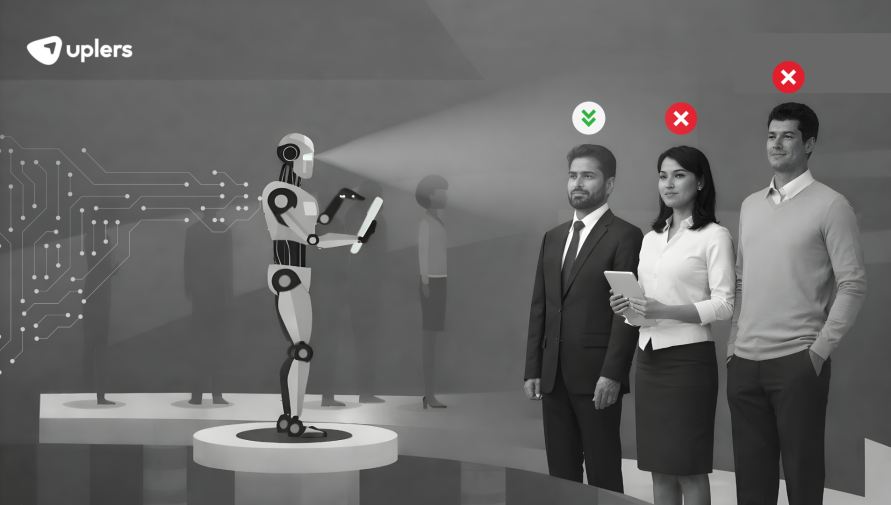
AI hiring platforms generally train their models using machine learning and algorithms so that they can analyze candidates quickly and more efficiently.
AI can be used in different hiring stages right from resume mapping to taking an interview to predicting which hire can have the most impact.
There are different ways to use it across the process of hiring.
How AI is used across the hiring funnel
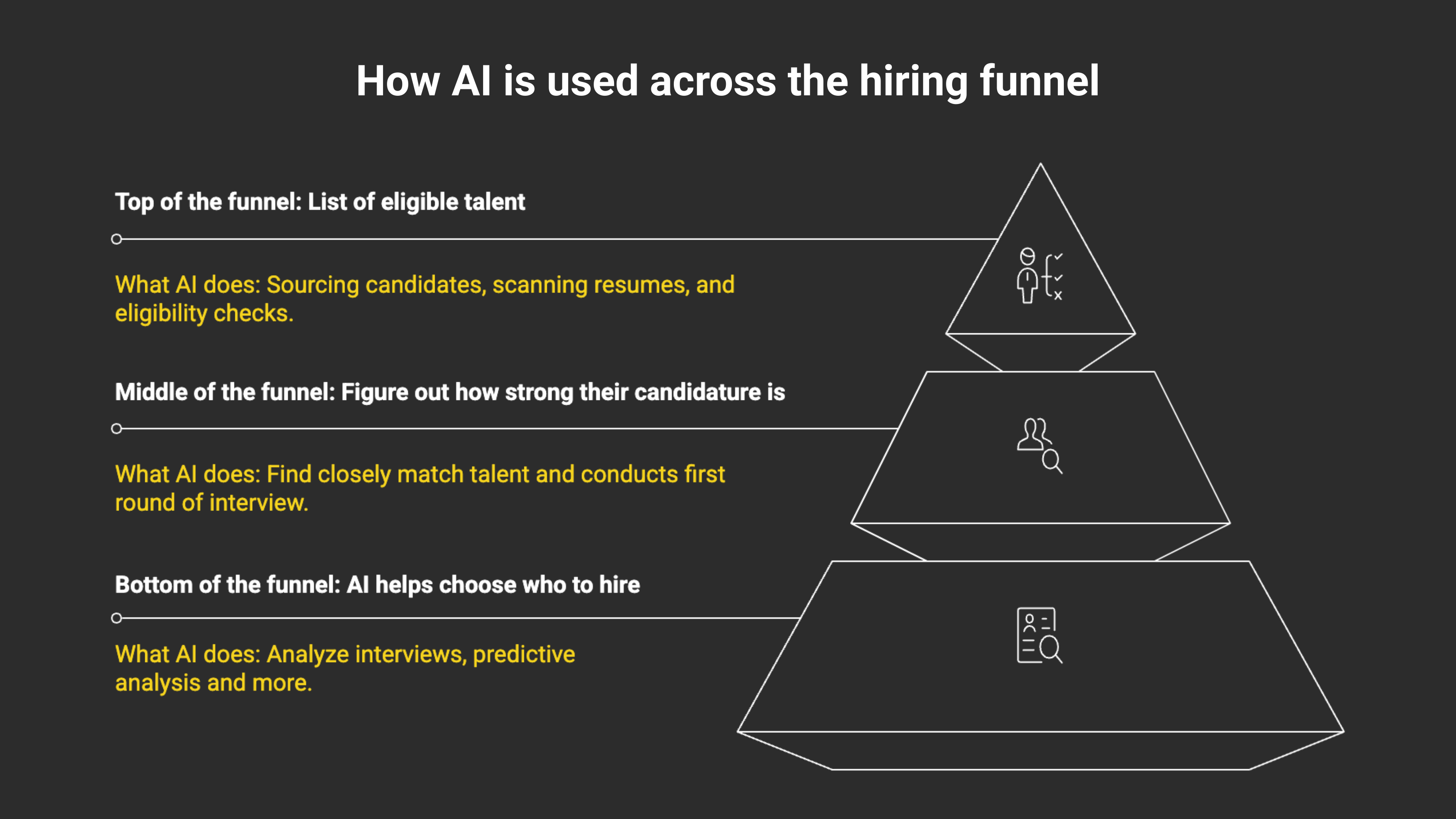
- Top of the funnel: At the top of the funnel, you are considering who can possibly enter the talent pipeline. What AI does: It helps in sourcing candidates, scanning resumes, and does basic eligibility checks.
- Middle of the funnel: In the middle of the funnel, you want help in figuring out if this person can do the job and how strong is their candidature. What AI does: It ranks candidates based on how closely they match the job description, role-fit assessment, and also conducts a first round of interview or technical tests. Although it is a huge time saving activity, it also means that you are relying heavily on historical data meaning AI can filter out good profiles and you also risk missing out on any fresh or unconventional candidates.
- Bottom of the funnel: In the last leg, AI helps choose who to hire. What AI does: Some platforms leverage AI to analyze interviews. They help in predictive analysis, offer management, and even overall candidate management support.
So where should you use AI in your hiring process?
In our opinion, AI recruitment platforms are most effective to only filter out the noise. This means when resume volume is high and requirements are standardized, it is easy and also the most efficient way to use AI in hiring.
You can remove obvious mismatches and save time. So using AI as the top of the funnel makes the most sense.
AI breaks down when hiring decisions depend on context rather than patterns.
For instance, AI cannot reliably assess the context like:
- What kind of an environment they have worked in & will suit them
- If their career breaks or rapid switching were intentional or necessary
- The depth of their work not just projects
- Ownership, judgment, and adaptability
- Predict their success in a given setup
AI also makes its judgement based on the data it was trained on. If historical hiring patterns were biased or narrow, AI will reinforce those patterns rather than correct them.
If you are evaluating an AI recruitment platform
- Be clear about which hiring stages you want AI to support
- Measure success by shortlist quality, not just speed
- Keep final evaluation accountable to humans
- Regularly audit AI outputs against real hiring outcomes
Why this works
One of our clients, Cloudwerx, a US-based company, wanted to hire an AI/ML Engineer. After spending over two months reviewing hundreds of resumes, the role was still open.
Once they reached out to us, we changed the approach. We became super selective. AI removed basic mismatches, and experienced recruiters applied human judgment to assess real outcomes, depth of work, and startup readiness.
Only three profiles (from our entire network) were shared. Cloudwerx interviewed the first candidate in the list and closed the hire in 25 days.
Now you see, this is the goal of an AI-powered hiring platform. When it is used correctly, it leads to fewer profiles and better hiring decisions.