How to Reduce Time-to-Hire for Critical Roles at Startups
- Aayushi Pandya
- March 13, 2026
- 3 Minute Read
For critical roles at early-stage startups, every day that a key seat remains empty costs the organization in terms of delayed roadmaps, overloaded teams, and compounding opportunity loss.
The biggest bottleneck isn’t the judgment but the friction. Sourcing takes too long, feedback loops are delayed, and interview rounds stretch on without purpose.
From sourcing to onboarding, you should be able to wrap up the hiring process in under 3 weeks, especially when filling a critical role.
There are several things you can do to reduce time-to-hire for important roles, both internally and externally. From ensuring clearly defined roles to a structured interview process to onboarding a hiring partner, there are different ways and means.
Your final route depends on the strength of your team, their bandwidth, and whether you have a dedicated recruiting arm or not.
Use your network & leverage communities
Referrals don’t just convert faster, they are quicker to get onboarded, and also stay longer.
Use your alumni network: Post directly in your batch’s WhatsApp Group/Slack/community. Also look for your university’s broader communities in terms of your professors, seniors, juniors since this will expand your alumni network significantly.
Join communities for founders: These communities discuss challenges, offer networking opportunities, and help hire relevant folks. They’re free (or low-cost) to join, active on a daily basis, and often have dedicated channels for job posts or referrals. Unlike job boards, these communities have context: people know what it means to hire at an early-stage startup. Here’s a few for starters:
- Startup Study Group (6,000+ members) — founders, investors, advisors; active hiring channels.
- Indie Hackers Discord — execution-focused community for builders and early-stage operators.
- Product Tribes (invite-only, 10,000+ designers/devs/PMs) — strong for product and engineering hires
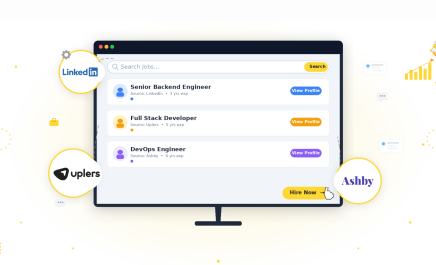
Leverage LinkedIn: When posting a role, use 3 focused tags rather than flooding the post.
- For engineering: #TechHiring #SoftwareEngineering #DeveloperJobs.
- For product: #ProductManagement #StartupHiring #WeAreHiring.
- For general startup roles: #Startups #StartupJobs #Hiring.
Note: Post consistently from your personal founder profile, not your company page. Personal posts get 5–10x more reach.
Onboard a hiring partner
Nothing helps you hire faster, smarter, and better in a startup than a specialized hiring partner who can scout people specific to your organization type. There are two ways to go about it:
Bring in a sourcing partner: They have an existing warm pipeline and they provide basic screening for a fee. Imagine getting 10-20 vetted profiles vs hundreds of irrelevant resumes.
Bring in a hiring partner: They will do the sourcing, the pre-screening, and send you only a few (not bombard you with 100 odd profiles) curated profiles.
After that, they will manage all the scheduling on both ends and all you have to do is have a representative take the interview rounds. Post that, they even help with onboarding.
You still make the final decision while outsourcing coordination and management.
What to look for in a partner:
- Do they specialize in your stage (early-stage vs. growth) and function (engineering, product, GTM)?
- What’s their time-to-first-shortlist? Anything over 2 weeks is concerning.
- Do they understand your product and culture enough to qualify candidates on fit, not just credentials?
Compress the interview process
Here’s what actually works (and what to stop doing) when hiring for tech and product roles.
|
Round |
Stage | Purpose | Who takes it | If you don’t have that role |
Timeframe |
|
1 |
Screening call | Confirm the basics, share context of the role | HR lead or hiring manager | Founder or co-founder |
Within 48 hrs of application |
|
2 |
Technical / skills round | Assess core competency | CTO, VP Eng, or Director of Engg | Most senior engineer on team |
Days 3–5 |
|
3 |
Culture + leadership fit | Values, working style, team alignment | CEO or hiring manager | Founder who will work closest with this person |
Days 6–8 |
|
4 |
Offer | Move fast once decided | CEO or co-founder | Same person who ran the final round |
Within 24–48 hrs of final round |
Work samples > Extra interview rounds
Don’t add rounds in hopes of landing the perfect candidate. More often than not, you won’t have the luxury of extended rounds due to time and bandwidth constraints.
Give finalists a short, real-world assignment. It could be a 2-hour task, a case study, or a brief audit of something relevant. It’s faster than scheduling another panel, and it tells you more.
Build a talent pipeline before you need it
Even when you think you’re close to rolling out an offer, don’t forget to keep the pipeline warm. Have backup candidates for each role, at least 2–3 people.
Also, keep the candidate you’ve finalized warm by staying engaged through regular check-ins or meetups.
Conclusion
Speed in hiring comes from removing friction that has nothing to do with the actual decision. When your process is clean with a clear role, short loop, fast feedback, pre-aligned compensation, a critical hire can go from first conversation to signed offer in under three weeks.